

Why Does Choosing the Right Plastic Mold Determine the Success of Your Product?
2026-02-25
When I first began working closely with global manufacturers, I noticed how often product delays, cost overruns, and quality complaints traced back to one overlooked factor: the Plastic Mold. At Aicheng Electronic Technology Co, Ltd., we gradually introduced advanced Plastic Mold solutions into our production workflow as customer expectations increased and product designs became more precise. What seemed like a simple tooling decision quickly proved to be a strategic advantage for companies seeking stable quality and scalable production.
In today’s competitive manufacturing environment, I have seen firsthand how a well-designed Plastic Mold can reduce defect rates, shorten lead times, and strengthen brand reputation. The difference between average tooling and professional-grade tooling often defines whether a product merely reaches the market or truly succeeds in it.
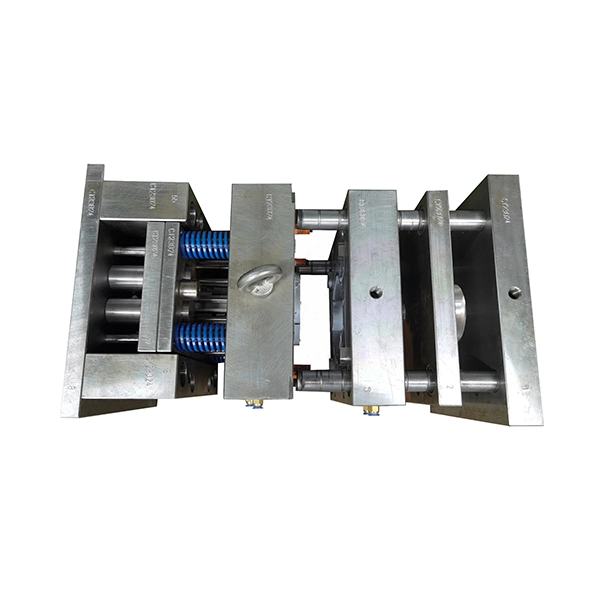
Why Do So Many Production Problems Start with an Inadequate Plastic Mold?
Over the years, clients have approached me with similar frustrations. Their injection molding machines function properly. Their materials meet specification. Yet production efficiency drops or product quality fluctuates. In most cases, the core issue lies within the Plastic Mold itself.
- Inconsistent cavity design leads to dimensional variation.
- Poor cooling channel layout increases cycle time.
- Substandard steel selection shortens mold lifespan.
- Improper gate design causes surface defects and flow marks.
- Insufficient venting results in burn marks and trapped air.
When tooling is designed only to reduce upfront cost, long-term production stability often suffers. I always advise clients that the real cost of a mold is measured over its lifecycle, not just its initial quotation.
How Can a High-Quality Plastic Mold Improve Product Precision and Consistency?
Precision tooling is not just about tight tolerances. It reflects engineering logic, material science understanding, and production foresight. When we develop a Plastic Mold, we evaluate shrinkage rates, resin behavior, thermal expansion, and long-term wear resistance.
Here is how a professional mold design improves measurable outcomes:
| Factor | Standard Mold | Optimized Plastic Mold |
| Dimensional Accuracy | ±0.05mm or higher deviation | ±0.01mm controlled tolerance |
| Cycle Time | Longer cooling period | Optimized cooling channels reduce cycle time |
| Mold Lifespan | 300,000–500,000 shots | 1,000,000+ shots with hardened steel |
| Maintenance Frequency | Frequent polishing and repair | Stable surface finish and minimal downtime |
When tolerances are stable and cycle times decrease, production output increases naturally. This directly impacts profitability and delivery reliability.
What Should You Evaluate Before Investing in a Plastic Mold?
Before confirming a tooling order, I recommend reviewing several critical points with your supplier:
- Has the supplier performed mold flow analysis?
- Is the mold steel grade clearly specified?
- Are spare parts and inserts standardized for easy replacement?
- Does the cooling system match your expected production volume?
- Is there clear communication regarding testing and sampling stages?
When I work with clients, I encourage transparent discussion at the early design stage. A properly engineered Plastic Mold eliminates unexpected redesign costs later.
Why Does Long-Term Partnership Matter in Plastic Mold Manufacturing?
Tooling is not a one-time transaction. It becomes a long-term asset integrated into your production chain. I have seen how stable cooperation between manufacturer and tooling partner reduces risk during product upgrades or design adjustments.
At Aicheng Electronic Technology Co, Ltd., our approach focuses on understanding application scenarios. Whether the molded part is used in electronic housings, industrial components, or consumer products, we align mold structure with actual usage requirements. This ensures that each Plastic Mold performs reliably under real-world conditions.
When design updates are required, a well-documented mold system allows modifications without rebuilding from scratch. This flexibility protects both budget and project timelines.
How Does Advanced Engineering Increase the Value of Your Plastic Mold Investment?
Modern tooling integrates digital design, CNC precision machining, EDM processing, and controlled heat treatment. Each stage influences mold durability and final part quality.
From my experience, the following engineering practices significantly enhance performance:
- Balanced runner systems for uniform material flow.
- Optimized venting design to prevent gas accumulation.
- Hardened core and cavity inserts for wear resistance.
- Mirror polishing for cosmetic surface requirements.
- Interchangeable components to simplify maintenance.
When these elements are built into the Plastic Mold, production becomes predictable rather than reactive. Instead of troubleshooting defects, manufacturers focus on scaling output.
Can the Right Plastic Mold Reduce Overall Manufacturing Costs?
Many buyers focus on initial tooling price, yet true savings come from operational efficiency. A robust Plastic Mold reduces scrap rate, minimizes downtime, and shortens injection cycles. Over time, these factors outweigh small differences in tooling quotation.
I often calculate return on investment by analyzing:
- Reduction in defective units.
- Lower maintenance downtime.
- Shorter production cycles.
- Extended mold lifespan.
- Stable dimensional accuracy reducing rework.
When these savings accumulate across thousands or millions of parts, the value becomes clear.
Are You Ready to Upgrade Your Plastic Mold Strategy?
If you are experiencing inconsistent quality, frequent mold repairs, or rising production costs, it may be time to reassess your tooling foundation. A professionally engineered Plastic Mold is not just a manufacturing tool. It is the structural backbone of your product quality and supply chain reliability.
I believe that strong tooling decisions shape long-term success. If you would like to discuss your project specifications, production targets, or custom tooling requirements, I invite you to contact us today. Let us work together to build a solution that strengthens your manufacturing performance and delivers consistent results in every production cycle.