

Why the Best Borderless All Steel Anti-Static Raised Floor Is Essential for Modern Facilities
2026-11-16
When a single static discharge can wipe out server racks or compromise sensitive research, the floor beneath your feet becomes more than just a surface—it becomes a strategic asset. Modern facilities, from data centers to semiconductor cleanrooms, demand flooring that eliminates electrostatic threats while bearing heavy loads and adapting to ever-shifting infrastructure. That’s where the best borderless all steel anti-static raised floor makes its mark. With no edge strips to harbor dust or disrupt airflow, it offers seamless performance that conventional systems can’t match. Huahong, a name trusted in advanced raised flooring, has engineered solutions that address these exact pressures—blending durability, precision grounding, and effortless maintenance. Understanding why this flooring matters is the first step toward building a facility that won’t be undone by invisible risks.
Static-Sensitive Environments Need More Than a Surface-Level Fix
Static electricity rarely announces itself. In cleanrooms, electronics assembly lines, and repair benches, a single unnoticed discharge can degrade a component weeks before it fails in the field. The common response—wrist straps, dissipative flooring, ionizers—creates an illusion of control. But those measures address only the immediate contact point. What slips through are the less obvious pathways: charged insulators sliding across work surfaces, clothing that generates thousands of volts with a simple shift, or even the slow accumulation on a plastic tray that was never part of the audit checklist.
A true fix demands a layered view of the environment, not just the equipment list. Think of it as designing for drift rather than for a static snapshot. Materials that shed charge gradually are more forgiving than those that promise zero potential. Routine monitoring of humidity, surface resistivity, and operator movement patterns reveals where the conventional methods quietly fail. For instance, a well-grounded mat does little if the technician leans against an unpainted metal cart that has built up its own isolated field. The real difference comes from treating every object in the room—tools, packaging, even the air itself—as part of one dynamic system.
Ultimately, the goal is not to eliminate static; that is rarely practical or even measurable in real time. The smarter approach is to shrink the zones where a damaging potential can build unnoticed, and to build in redundancy at points where failure would be most costly. Frequent, small corrections beat a once-a-year certification. When the fix goes beyond surface-level, the environment becomes resilient not because every risk is gone, but because the risks that remain are known, bounded, and continuously watched.
Where All-Steel Construction Meets Anti-Static Reliability
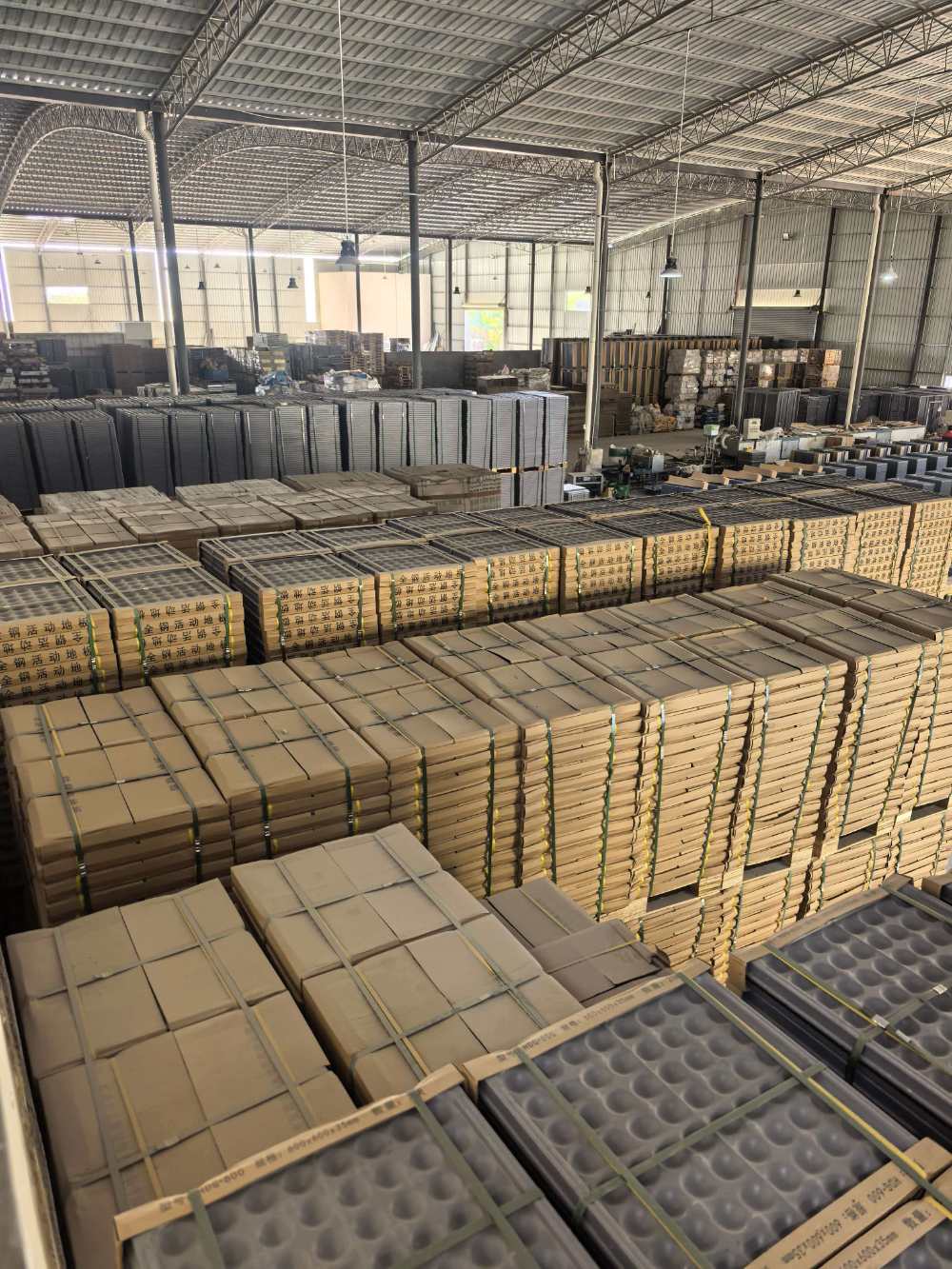
The real advantage of an all-steel structure shows up when you look past the spec sheet. Welded joints and reinforced corners keep the frame from flexing under heavy loads, but the material choice also gives you a continuous grounding path. There is no wooden core to trap moisture or warp over time, which means the anti-static surface stays flat and predictable in daily use.
Static control often gets treated as a coating problem, yet the base material matters just as much. Steel drains residual charge quickly when paired with a proper ground wire, and a durable powder-coated finish resists chipping that could expose conductive layers unevenly. That combination keeps sensitive components safer without requiring constant retesting or special handling.
In practice, this means fewer interruptions from unexpected electrostatic discharge. The work surface stays level, tools and parts rest on a stable conductive plane, and the entire assembly works as one grounded unit rather than a collection of mixed materials. For labs and assembly lines that depend on repeatable results, that physical consistency is worth more than a long list of features.
Why Borderless Panels Reduce Long-Term Maintenance Headaches
Traditional framed panels look neat on day one, but the seams and bezels quickly become dust traps. Every groove catches debris, and cleaning means working around edges that loosen over time. Borderless designs eliminate those crevices entirely, so there's nowhere for grime to settle. Less dirt accumulation means fewer cleaning cycles and no gradual degradation from abrasive scrubbing.
Another hidden issue with framed panels is thermal expansion. Frames and screens expand at different rates, causing stress points that lead to warping or panel separation after a few seasons. A borderless panel moves as a single unit, distributing heat evenly across the surface. This reduces the risk of micro-fractures and keeps the display structurally stable without periodic re-tightening of frame screws.
Maintenance teams also appreciate the simplicity of borderless replacements. If one unit fails, you swap it out without needing to match frame colors or deal with alignment clips. The flush surface means no protruding edges to snag on cleaning cloths or bump during routine inspections. Over a decade of service, that translates to fewer service calls and a visibly cleaner install that still looks current.
How Modern Facilities Avoid Costly Electrostatic Discharge Events
At assembly plants and server rooms alike, the first line of defense against ESD damage is usually invisible: a carefully maintained grounding network. Workbenches, floor mats, and equipment chassis are tied to a common earth ground, while operators wear heel straps or dissipative footwear so static charges bleed away before they can reach sensitive components. Humidity levels are kept in a controlled band—often 40–60% RH—because drier air encourages charge buildup on skin and packaging.
Many facilities now rely on continuous monitoring rather than periodic checks. A wrist strap that loses contact with skin or a bench mat that develops a hairline tear can quietly reintroduce ESD risk for days before anyone notices. Continuous monitors sample the resistance path from worker to ground and sound an alarm the moment it drifts outside the acceptable range. Ionizers are used at points where grounding alone is impractical, such as over fast-moving conveyor lines or when handling plastic trays that can’t be made conductive.
Beyond hardware, modern ESD control programs lean on operator habits and regular audits. Workers are trained to handle boards by the edges, keep insulative plastics away from open assemblies, and store parts in shielded bags or conductive totes. Monthly walk-throughs with field meters and resistance testers catch worn-out mats, missing floor wax, or unauthorized cardboard boxes before they turn into a scrap event or a latent failure that reaches a customer.
The Hidden Link Between Flooring and Equipment Uptime
Most facility managers rarely connect a concrete slab to a forklift's repair log, yet the two share a direct line. Uneven joints, worn coatings, and surface cracks transmit vibration straight into axles, bearings, and electronic controls. Over time, that constant low-level shaking loosens fasteners, fatigues weld points, and shortens the life of onboard computers. A floor that looks merely tired is often quietly consuming hours of unscheduled downtime.
The problem isn't just visible damage. Micro-deflections under wheel loads—imperceptible to the naked eye—create repetitive stress cycles in equipment frames. Soft spots from degraded underlayment or moisture intrusion force motors to work harder, driving up heat and amperage draw. Even static discharge from certain polymer floors can scramble sensitive guidance systems. None of these show up on a routine floor inspection, which is why the link stays hidden.
Fixing it starts with treating the floor as an active machine component. Joint fillers that match the slab's modulus, densifiers that stabilize surface porosity, and impact-absorbing coatings don't just protect concrete—they protect the equipment riding on it. Track downtime against floor condition for a quarter, and the correlation becomes unmistakable. The floor is not a passive stage. It is either extending equipment uptime or quietly stealing it.
Designing for Cleanliness Without Compromising Load Capacity
Cleanability and structural strength often pull in opposite directions. Smooth, crevice-free surfaces are easier to wash down but tend to concentrate stress at fewer points, while heavy ribbing and thick walls add load capacity yet trap debris in corners. One approach that bridges this gap is using closed-form profiles—think box sections or rounded rectangular tubing—instead of open channels. These shapes eliminate inaccessible pockets while distributing bending and torsional loads more evenly than a simple flat plate of the same mass. Pairing that with a slight outward slope on any horizontal surface (a 3 to 5 degree fall) lets rinse water carry residue away without needing deep drain grooves that would weaken the cross-section.
Material selection also plays a quiet but critical role. Duplex stainless steels, for instance, offer nearly twice the yield strength of standard 304 while retaining excellent corrosion resistance and a surface that polishes to a sanitary finish. Where steel is too heavy, fiber-reinforced polymers can be molded with integral stiffening ribs on the non-product-contact side, leaving the exposed face completely flush. The trick is to treat the load path as a separate layer from the cleanable envelope: put the reinforcement where it will never see product, and let the visible surfaces stay as simple, continuous sheets. That way you do not have to choose between a machine that survives a full washdown cycle and one that can handle the rated payload without flexing or fatigue.
FAQ
Traditional systems often rely on carpeted or vinyl-covered panels with visible seams and plastic edge trims. A borderless all-steel version eliminates those seams and edge strips, so the surface stays smooth even under heavy foot traffic. The steel panel itself carries the static-dissipative property, so you don't need a separate conductive covering that can peel or wear away.
Static charges need a controlled path to ground before they reach server boards or lab instruments. The steel panel surface and its conductive contact points with the pedestal stringers create that path, bleeding off charge from shoes, carts, or air movement instead of letting it arc into equipment. The grounding grid under the floor does the real work, but the panel-to-pedestal connection has to stay intact.
Carpet fibers shed particles and can hold static in dry air; vinyl tiles often curl or lift at the edges after years of rolling loads. Facilities that run high-density computing need a walking surface that doesn't add contaminants or create uneven joints under racks. Steel panels stay flat, don't outgas, and handle rolling weight from equipment dollies without cracking.
Yes, if the panel gauge and pedestal spacing are matched to the load. A typical all-steel panel rated for 1,500 to 2,000 pounds concentrated load can hold a fully loaded rack when placed over four pedestals. Borderless designs distribute weight evenly because the panel edges don't rely on snap-in trim pieces that can deform and cause unequal bearing.
The raised floor cavity becomes a supply plenum, so cold air can be delivered exactly where racks need it through adjustable grates. All-steel panels don't sag or leak significantly under pressure, so the static pressure stays more uniform. That means fewer hot spots and less fan energy wasted pushing air through leaky seams or around warped panels.
Because there are no edge trims or carpet inlays to peel, the surface doesn't trap debris in gaps. When a panel needs to be lifted for cable access, you only deal with the pull-up tool and the panel itself, with no trimming to realign. After reinstallation, the seam stays tight, so pedestrian tripping hazards are reduced.
Bare steel can amplify footstep noise if the understructure is loose. High-quality systems use stringers with anti-vibration gaskets and pedestal heads that grip the panel corners. This cuts rattle and keeps the floor from resonating when heavy carts pass through. Some facilities also add a thin acoustic pad under the pedestal base, but the main fix is proper torque on the pedestal bolts.
Look at panel flatness tolerance, edge straightness, and the powder coat or chemical finish on the steel surface. In cleanrooms, you want a finish that doesn't shed particles and resists repeated cleaning with alcohol or hydrogen peroxide. Also check how the grounding clip attaches to the panel underside, since exposed metal contact points should be accessible for periodic resistance testing.
Conclusion
Modern facilities that house sensitive electronics cannot afford to rely on superficial coatings or temporary mats for static control. A borderless all-steel anti-static raised floor provides a structural path for static dissipation that remains effective under real-world conditions. Unlike conventional raised panels with exposed edges and gaskets, the borderless design removes crevices where dust, conductive debris, and contaminants collect. This directly reduces long-term maintenance headaches and cleaning effort. At the same time, all-steel construction ensures that the electrical conductivity path never breaks down from delamination, cracking, or moisture absorption. That reliability is vital in data centers, laboratories, and advanced manufacturing spaces, where one electrostatic discharge can damage components or corrupt critical data. The floor becomes an integral part of the overall ESD control strategy rather than an afterthought.
Beyond static protection, borderless panels simplify cleanliness and uphold load capacity under demanding traffic. With no seams or edge strips to trap particles, facilities maintain higher hygiene standards without sacrificing strength. Heavy equipment, rolling carts, and server racks sit on a stable, grounded platform that resists deflection and wear. This hidden link between flooring and equipment uptime is easy to overlook: static buildup on personnel or moving carts can cause intermittent faults and premature failures. A borderless all-steel anti-static raised floor prevents those costly events by maintaining consistent conductivity across the entire surface, even after years of use. In the end, choosing this type of floor is a long-term investment in operational continuity, cleanliness, and equipment reliability.
Contact Us
Contact Person: Hai-Bo Xiao
Email: [email protected]
Tel/WhatsApp: 8618898711810
Website: https://www.huahongfloor.com