

What Makes China Laundry Detergent Capsules a Top Choice for Global Buyers
2026-11-16
Sourcing laundry detergent capsules from China often means navigating a sea of similar offers, but a few suppliers manage to stand out. One name that keeps surfacing in serious buyer discussions is LANJIEYA. The reason isn't just competitive pricing or fast delivery—it's the way their capsules balance concentrated cleaning power, controlled foaming, and reliable dissolvability across different water conditions. For global buyers tired of inconsistent quality, that combination starts to explain why LANJIEYA has become a preferred partner rather than just another factory quote.
Speed to market without the usual supply chain surprises
Most launch delays don't start with the product. They start with a part that's suddenly out of stock, a supplier that changed a material without telling anyone, or a lead time that was copied from a spreadsheet last year. By the time the problem surfaces, the timeline has already moved.
A faster launch depends on removing those unknowns before they become emergencies. That means locking critical component choices early, keeping close tabs on the handful of suppliers that can actually stop production, and adjusting inventory levels around the parts with the longest or least stable lead times. It's a narrow, practical focus instead of trying to track everything.
With that kind of supply chain setup, acceleration doesn't come with nasty surprises. Teams can compress schedules with fewer last-minute air freight bills, fewer supplier phone calls, and a much better chance of hitting the original market window. The speed feels deliberate rather than lucky.
Formulation know-how that adapts to hard water and hot washers
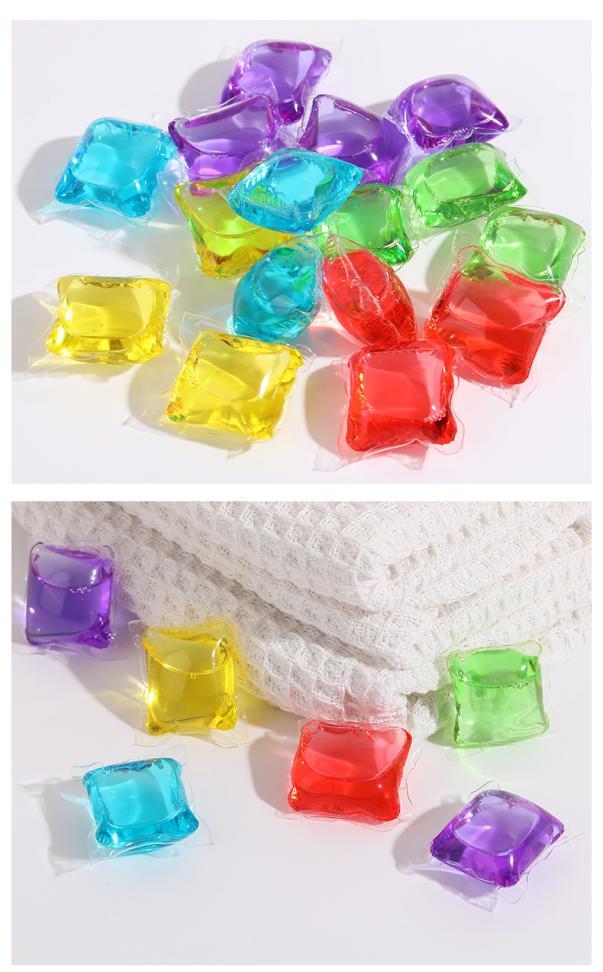
Formulating detergents that hold up in hard water and high-temperature washing cycles is less about chasing a single magic ingredient and more about balancing chelation, soil suspension, and thermal stability. Hard water minerals like calcium and magnesium can crash out surfactants, reduce foaming, and leave film on fabrics or dishes, while hot washers accelerate hydrolysis and oxidation of sensitive components. The trick is to build a system that tolerates both stresses at once, not just survive one in a lab test.
One practical approach is to pair a robust chelating agent—such as methylglycinediacetic acid or a citrate-polymer blend—with a nonionic surfactant that resists salting out. Ethoxylated alcohols with a mid-range cloud point often perform well in hot water, but the real differentiation comes from tuning the builder package to hold hardness ions in solution without creating scale under heat. In our work, we have seen better results from using a dispersant polymer that prevents re-deposition of calcium carbonate than from simply increasing chelant dosage, especially when rinse temperatures exceed 140°F.
It also helps to test formulations under realistic failure conditions rather than ideal ones. A formula that passes a standard hard-water titration at room temperature can still leave white residue when hot water evaporates quickly from a surface. By adjusting the ratio of hydrotrope to builder and using a short-chain co-surfactant to keep the system clear during temperature swings, you can create a formulation that cleans reliably in field conditions where water hardness and heat vary day to day.
Compliance paperwork that arrives before the shipment does
Paperwork often lands on a freight forwarder's desk days or even weeks before the vessel reaches port. That head start is useful only if someone actually opens the file, checks the details, and confirms the shipment can clear. When nobody looks until the container is already at the terminal, a missing certificate or a mismatched product code becomes an expensive waiting game.
The typical packet includes the commercial invoice, packing list, bill of lading, and depending on the cargo, permits, origin certificates, or inspection documents. Problems rarely come from dramatic omissions. They usually show up as a slight difference in the consignee name, an outdated HTS code, or a declared value that does not match the invoice. Customs officers notice these inconsistencies quickly, and every correction means the cargo sits longer.
Building a habit of reviewing documents before the shipment arrives changes the way a team handles imports. Send the draft documents to the broker early, flag anything that looks off, and get the supplier to correct it while the goods are still in transit. That way, when the ship docks, the paperwork is already in order and release can happen without unnecessary storage charges or last-minute scrambling.
Private label options that do not start from a template
When a private label project doesn’t start from a template, the conversation shifts from “which base do you want?” to “what should this product do that yours cannot?” That question pushes formulation toward choices that rarely survive a pre-set recipe, such as an unusual emulsification system for a lighter feel, a deliberately short ingredient list, or a fragrance that isn’t available in the supplier’s standard library. The result is built around a brand’s constraints rather than a catalog’s defaults.
Without a template, each stage leaves room for revision. A first sample might be too rich, so the oil phase gets adjusted by a few percent. The dropper might deliver more than intended, so the viscosity changes until the daily dose feels precise. These are not cosmetic tweaks; they alter how the product behaves on skin, how it sits on a shelf, and how easily it fits into an existing routine. That kind of control matters most for brands selling into niche audiences or categories where small performance differences decide repurchase rates.
The trade-off is time, but it also protects the final formula from being easily copied or compared. Because the starting point is blank, the development team documents decisions that were made for a specific reason, not inherited from a template that hundreds of other labels are already using. It’s a slower route, yet the finished product tends to carry a much clearer reason to exist.
Unit costs that hold steady when volume climbs
A jump in order volume usually gets framed as a chance to spread fixed costs thinner, but not every expense behaves that way. When unit costs stay flat as output rises, it typically means variable inputs such as materials, packaging, and direct labor are moving in lockstep with production. There is no automatic discount from scale, just a steady per-unit bill that tracks each additional item made or shipped.
That steadiness can actually be useful. It forces pricing and capacity decisions to rest on realistic margins instead of hopeful assumptions about volume-driven savings. If suppliers hold firm on raw material prices and the line is already running near its current efficiency limit, the cost per unit won't drift downward simply because more orders arrive. Watching for that flat line helps teams separate true operating leverage from activity that only adds revenue without improving unit economics.
Production lines built for small trials and big reorders
Most factories force you to choose between a pilot run and a full production schedule. This line is set up to move from a few dozen units to several thousand without reworking the process, changing tooling, or losing the settings that made the first batch pass inspection.
Short-run trials get the same fixture precision and operator attention as repeat orders, so what you approve is what gets scaled. When demand spikes, the same workstations, checklists, and tolerances carry over, which keeps lead times predictable and quality consistent across release cycles.
Capacity is staged rather than fixed. Small orders move through without waiting for a large batch to finish, while reorders can be scheduled in parallel lanes without disrupting new samples or ongoing pilot work.
FAQ
It comes down to a mix of cost control and production scale. Many plants run high-speed lines that can switch between pod sizes and film types quickly, so buyers are not locked into one narrow spec. The per-unit price often lands well below what European or North American producers quote, but the quality on things like film dissolution and leak resistance has improved sharply in the last few years.
Look beyond the sample box. Ask for batch consistency data, the type of PVA film they use, and whether they have in-house filling and sealing rather than outsourcing steps. Also request a small trial run with your own fragrance or enzyme blend. Suppliers that handle everything under one roof tend to have fewer delays and clearer accountability.
Most established suppliers now formulate for cold-water and HE cycles by default. The film grade matters more than the detergent inside for cold dissolution. Reputable factories use fast-dissolving PVA films and run cold-water residue tests, but it is worth confirming the exact film thickness and test conditions before committing.
Many factories offer more than just a logo on the tub. You can adjust pod size, number of chambers, scent intensity, enzyme profile, and even the water-solubility speed. The practical limit is usually minimum order quantity and film inventory. Shorter runs are possible, but unit costs rise if you need a custom film made from scratch.
Yes, but do not assume it is automatic. Strong suppliers keep updated SDS, REACH, CLP, and biodegradability documentation and can provide samples for third-party testing. Ask for recent test reports and the specific fragrance allergen declarations. The best factories build compliance into their base formulas rather than treating it as a special request.
Vertical integration is a big part. Many manufacturers are near raw material sources for surfactants and PVA film, and they run very large automated lines. Labor still matters, but the bigger savings come from energy contracts, packaging scale, and not over-engineering formulas. Quality is maintained because lines are newer and calibrated for export orders.
Watch out for very low MOQs paired with vague film specifications, delayed sample delivery, and unwillingness to share production videos. Also be wary if the supplier cannot explain how they prevent capsule sticking in humid conditions. These are practical signs they might be trading rather than manufacturing.
Many are shifting to plastic-free tubs, concentrated formulas that cut water weight, and PVA films that fully biodegrade in wastewater conditions. Some are also introducing paper-based pouches and refill formats. The push is uneven, so buyers should request specific test data on film biodegradability rather than relying on broad eco claims.
Conclusion
Global buyers keep returning to Chinese laundry detergent capsule suppliers for reasons that go well beyond price. A large part of the appeal is operational predictability: production lines in many facilities are set up to handle small pilot batches and full container loads on the same equipment, so brands can test a new scent or formula without committing to enormous minimums, then scale quickly when the SKU proves itself. That flexibility is paired with faster lead times and clearer communication around raw material availability, packaging lead times, and shipping schedules, which removes many of the surprises that typically slow a launch.
On the formulation side, manufacturers have learned to adapt surfactant systems and capsule film chemistry to hard water markets, high-temperature washes, and regional fragrance preferences, rather than offering a one-size-fits-all product. Private label work is treated as a development project, not a template: buyers can adjust capsule size, color, dissolvability, scent intensity, and packaging format while still receiving documentation that matches target market requirements before goods arrive. This combination of dependable unit economics at higher volumes, technical adaptability, and smoother compliance handling makes Chinese suppliers a practical choice for brands that need both speed and consistency.
Contact Us
Contact Person: Zhao Yanlong
Email: [email protected]
Tel/WhatsApp: 8615832007309
Website: https://www.gzlanjieya.com