

Wardrobe Rail Supplier Reveals What to Look for in Quality Rails
2026-09-05
Most wardrobe rails don’t fail suddenly—they sag, scratch, and loosen over years because of choices made before installation. Peak Fasten, a wardrobe rail supplier that has audited countless returned and failed rails, says three factors separate a quality rail from a disposable one: the grade and thickness of the tube, the durability of the coating, and the load-rated design of the end brackets. In this post, we break down exactly what to check before you buy, so you can skip the guesswork and avoid the mid-season rail collapse.
The Metal Test Most Buyers Skip
When you buy metal stock, you probably check the thickness, width, and surface finish. But there’s one quick test that often gets overlooked, even though it can tell you a lot about what you’re actually holding. It’s called the spark test, and it’s been used in workshops for decades to sort steels and spot mix-ups before they turn into expensive problems.
The idea is simple: touch a sample to a bench grinder and watch the sparks fly. Low-carbon steel throws long, straight streams with only a few small bursts near the end. High-carbon steel, on the other hand, produces a dense shower of bright, bushy sparks with lots of repeating forks. Alloying elements change the picture too—stainless steel often gives shorter, orange-red spark streams with very little branching, while cast iron tends to produce dull red sparks that break apart close to the wheel.
Skipping this test can be costly. A batch of mild steel accidentally cut from a high-carbon bar might machine fine but fail later under load. Mixed inventory or a supplier error is easier to catch at the receiving dock than after parts are welded and painted. Thirty seconds with a grinder costs nothing and can save you from scrapping a whole job.
When a Smooth Finish Isn't Just Cosmetic
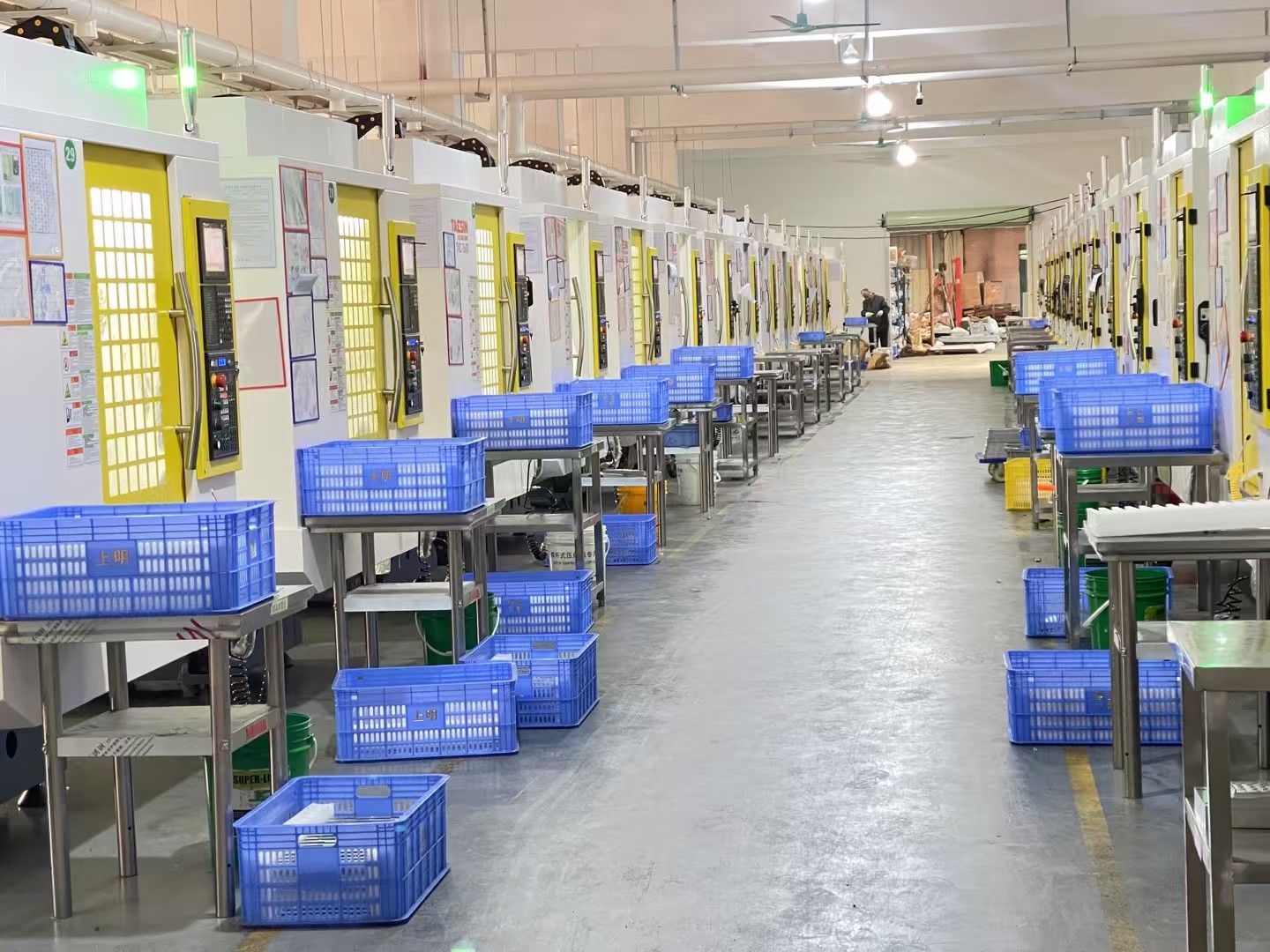
A smooth surface often gets judged by its sheen or how it catches the light, but in many fields that polished look is merely a side effect of a far more practical choice. Consider fluid dynamics: a pipe or an impeller with a meticulously honed interior reduces turbulence and drag, which directly translates into lower energy costs and less wear on pumps. Engineers chase that glassy finish not because it photographs well, but because every microscopic ridge and valley becomes a source of friction that slows flow and invites buildup.
The same logic applies in food processing and medical device manufacturing, where surface texture can mean the difference between a safe product and a contamination risk. A stainless steel mixing tank or a surgical instrument with a mirror-like finish leaves bacteria and residue with nowhere to anchor. Cleaning becomes faster, more thorough, and less dependent on aggressive chemicals, which matters when downtime eats into production schedules or when patient safety hangs in the balance. Here, smoothness is less about appearance and more about creating a surface that resists hosting unwanted guests.
Mechanical assemblies reveal yet another layer: moving parts that slide, rotate, or seal against each other rely on controlled surface roughness to manage friction and oil retention. A crankshaft journal or a hydraulic cylinder rod gets polished to a precise microinch range so that a thin film of lubricant can separate metal from metal under load. Too rough, and you get scoring and premature failure; too smooth in the wrong way, and the oil squeezes out, causing seizure. Achieving the right smoothness is a tuning exercise that determines how long a machine runs before it needs a rebuild.
Brackets: The Silent Load Bearers
Walk through any well-organized workshop or glance behind a clean wall-mounted shelf, and you'll likely spot them: small metal or plastic forms doing an outsized job. Brackets rarely call attention to themselves, yet they quietly redirect weight, brace corners, and keep heavy objects from crashing down. Their real skill is turning a single point of strain into a distributed load, which lets thin shelves hold thick books and lets countertops float without visible legs.
The variety is wider than most people assume. L-shaped corner brackets reinforce right-angle joints; flat mending plates bridge cracked wood; heavy-duty shelf brackets with gussets carry far more than their slim profile suggests. Materials matter too—powder-coated steel resists rust in damp garages, while solid brass adds a decorative note to open shelving. Choosing the right bracket often comes down to reading the load rating and matching the fastener length to the wall material, because even the strongest bracket fails if its screws pull out of drywall.
What makes brackets truly silent is their consistency. Unlike hinges or slides that wear visibly over time, a properly installed bracket can sit unchanged for decades. That dependability is why they show up everywhere from heavy machinery mounts to picture ledges. Next time you lean on a floating desk or pull a dish from an overhead cabinet, consider the small angled pieces underneath—they're holding more than their share without a word.
Why Wall Anchors Decide Rail Lifespan
Rail anchors might look like small, static pieces of hardware, but they are the silent gatekeepers of a track's service life. When a train passes, the rails don't just sit there—they breathe, expand, contract, and try to creep along the ties. Without a properly set wall anchor, that longitudinal movement slowly tears at the fastening system and shifts the rail out of alignment. Over time, this microscopic drifting turns into visible gauge widening, uneven wear, and stress fractures that shorten the lifespan of the entire rail structure.
The real reason wall anchors decide rail lifespan lies in how they distribute force. A well-seated anchor grips the rail foot and presses against the tie, locking the rail into a unified, load-sharing assembly. This prevents localized stress concentrations that accelerate fatigue cracking, especially in curves and on steep grades where rail creep is most aggressive. When anchors are loose, missing, or incorrectly installed, the rail is left to fend for itself—every wheel pass becomes a tiny hammer blow, and the cumulative damage forces rail replacement years ahead of schedule.
Maintenance crews often focus on visible defects like worn rail heads or cracked ties, but the anchor is where the lifespan battle is won or lost. A cheap, poorly designed anchor might hold for a season, but a robust wall anchor that maintains consistent clamping force over decades of thermal cycling is what separates a 20-year rail from a 40-year rail. In the end, the humble wall anchor isn't just a fastener—it's a long-term investment in the structural memory of the track.
Coating Claims You Should Question
Scratch-proof, self-healing, lifetime warranty—these buzzwords sound impressive, but they rarely survive contact with real-world driving. The term 'scratch-resistant' is often confused with 'scratch-proof,' yet even premium ceramic coatings only reduce the depth of marring rather than prevent it entirely. If a detailer promises a coating will stop all rock chips or key marks, ask for a written guarantee that covers repainting, not just a bottle of touch-up fluid.
Self-healing claims are another area where marketing outruns chemistry. Heat-activated topcoats can soften fine swirls after a hot day in the sun, but deeper scratches will remain unless the panel is polished. And don't mistake a hydrophobic rinse for actual protection—beading water looks great on Instagram, but it says nothing about resistance to UV oxidation, chemical etching, or bird dropping stains. A coating can sheet water beautifully yet still allow clear coat fading within a year.
Finally, question any 'permanent' or 'lifetime' coating. True permanence would mean the coating bonds at the molecular level and never degrades, which no polymer can claim under daily UV exposure, road salt, and automatic car washes. What you're often buying is a maintenance program with annual inspections and booster applications—which can be valuable, but only if the fine print is clear. Ask what the warranty actually covers, who performs the inspection, and what counts as 'normal wear.' If the answer is vague, move on.
Reading the Ends: What Caps Reveal
A worn brim tells you more than a name tag. The way a cap folds at the edges, the sweat line just above the stitching—these aren't flaws but fingerprints. You can spot the guy who grabs his hat by the front panel every time, crushing the foam with two fingers, leaving a permanent crease that no amount of steaming will fix. It's not carelessness; it's routine, and routines are honest.
Then there's the back strap. A frayed plastic snapback adjusted to the second-to-last hole says the owner found his size years ago and never looked back. A leather strap with a worn buckle, the kind that leaves a faint tan line on the wrist when you fiddle with it, suggests someone who treats a cap less as headwear and more as a pocket for nervous hands. Those little teeth marks on a fabric strap? That's not a dog; that's a human chewing while thinking.
Even the underside of the brim, where the label used to be, carries clues. A circular sweat stain shaped like a coffee ring might mean the cap doubles as a coaster during long desk hours. A scraped patch near the temple, where the fabric has thinned to a translucent fuzz, points to a person who pushes the cap up when concentrating—over and over, until the weave gives up. Caps don't just cover heads; they keep score of habits.
FAQ
Don't just look at the diameter. A 25 mm tube with a 0.8 mm wall will flex, while a 19 mm tube with a 1.2 mm wall can carry much more. Ask for the wall thickness and check the bracket load rating. If a supplier won't give you a load figure, move on.
Chrome plating beats powder coating in most interiors. Powder coat can chip at the ends after a few years of hangers scraping. A good chrome layer should be at least 8 microns thick; anything less starts showing rust spots around the screw holes.
Not necessarily. A 1.2 mm wall steel rail will span 1200 mm without sagging, but beyond that you should add a center bracket. If you're only hanging shirts, you can push it to 1500 mm. Heavy coats need support every 900 mm.
That's usually the bracket, not the rail. Loose screws or plastic inserts let the tube rub against the metal cup. A proper bracket should grip the rail tightly enough that you need a small tap to seat it.
Round is fine for most reach-in closets. Oval rails become useful in walk-in wardrobes where you're face-on and want a bit more stiffness side to side. The shape matters less than the wall thickness.
Yes, if it's plain steel or chrome. Use a fine-tooth hacksaw and deburr the edge. But don't cut flanged rails or ones with welded end caps. You'll destroy the coating and create a spot that rusts.
Buying based on diameter and finish alone. A thick-looking rail can be hollow wallpaper over a weak tube. Ask about wall thickness, bracket material, and whether the load rating is for evenly spread weight or a single point. If the answer is vague, keep looking.
Conclusion
Most people pick a wardrobe rail by sight and price, but a supplier will tell you the real differences hide in the metal itself. Check the gauge and alloy—cheap rails often use thinner steel or soft aluminum that bends under a full load of coats. A quick flex test in the store reveals more than any label. The finish matters too; it’s not just about looks. A rough or uneven chrome or powder coat chips easily, and once the base metal is exposed, rust follows. Then there are the brackets. They might seem like an afterthought, but they carry every pound. Look for thick, well-formed brackets with deep cup ends that grip the rail firmly, not flimsy stamped pieces that twist.
Wall anchors are where many rails fail, even if the rail itself is solid. A quality rail means little if it pulls out of drywall because the anchors were too short or the screws too thin. For anything heavier than a few shirts, you need anchors rated for shear and pull-out, and they should match the wall type—plasterboard, masonry, or timber. When it comes to coatings, don’t blindly trust words like “rust-resistant” or “premium finish.” Ask what the coating actually is: electroplated zinc, powder coat, or just a thin lacquer. Run a fingernail along an inconspicuous spot; if it marks, reconsider. Finally, look at the end caps. They are not just decorative. Properly fitted caps protect the cut ends from moisture and prevent the rail from sliding sideways in the brackets. Loose, ill-fitting caps often signal imprecise manufacturing and a rail that will annoy you every time you pull a hanger across.
Contact Us
Contact Person: Mason Lv
Email: [email protected]
Tel/WhatsApp: +86 13027998452
Website: https://www.peakfastentech.com