

Top Pasteurizer Manufacturer: What Sets the Best Apart
2026-07-20
In the dairy and beverage industry, pasteurizers are critical for safety and quality, but not all manufacturers deliver the same performance. When searching for a top pasteurizer manufacturer, innovation, reliability, and tailored solutions make the difference. INTOP Machinery stands out by combining cutting-edge technology with decades of expertise, offering systems that maximize efficiency and product consistency. This article explores the key factors that define the best in the field—and how the right partner can transform your production line.
Engineering Precision That Redefines Thermal Processing
Every component in our thermal systems is machined to micron-level tolerances, ensuring that heat distribution remains uniform and repeatable cycle after cycle. This exacting approach eliminates hot spots and cold zones, transforming what was once an art into a measurable, controllable science.
Advanced feedback loops continuously adjust heating elements, airflow, and timing in real time, adapting to load variations without sacrificing stability. The result is a process that holds temperature deviations to within a fraction of a degree, even during rapid ramp-ups or prolonged holds.
By integrating predictive analytics into the control architecture, our equipment anticipates thermal drift before it occurs and compensates proactively. This level of foresight not only safeguards product integrity but also extends the lifespan of critical components, making precision a built-in asset rather than an afterthought.
Built to Outlast: The Material Integrity Behind Reliable Pasteurizers
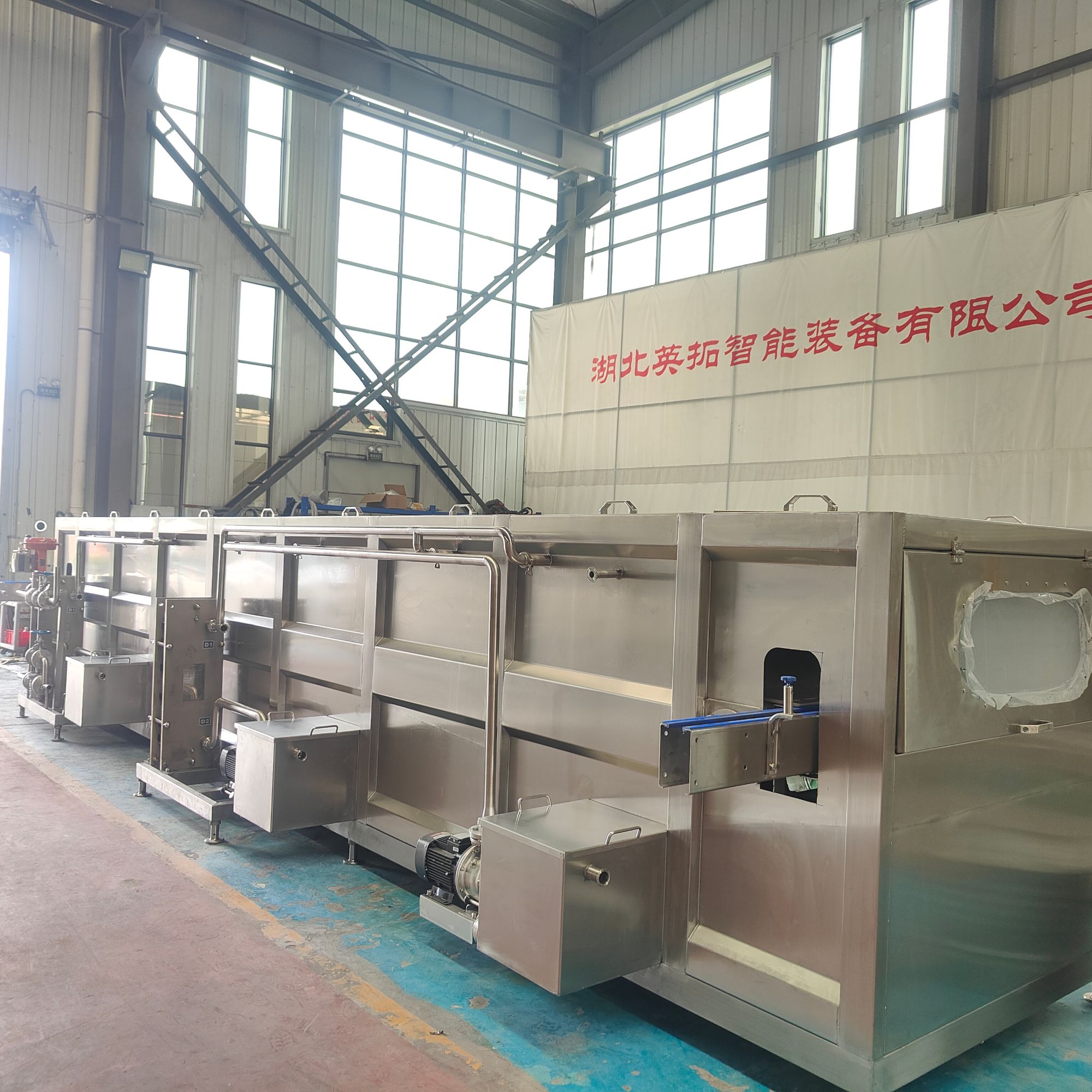
The foundation of any pasteurizer that stands the test of time lies in the metals and alloys chosen for its construction. High-grade stainless steel, particularly 316L, is a common thread among durable systems because it resists the corrosive effects of acidic foods, harsh cleaning chemicals, and constant moisture. Beyond the grade, the thickness of the steel and the quality of welds determine whether a unit can handle daily thermal cycling without developing micro-cracks or warping. Cheaper alternatives may look similar on the surface, but their tendency to pit and corrode eventually compromises product safety and leads to costly downtime.
Gaskets, seals, and other non-metallic components are equally critical and often overlooked. Silicone or EPDM materials with high temperature tolerance and minimal compression set ensure tight closures over thousands of cycles. A pasteurizer’s reliability is only as strong as its weakest seal—when these parts degrade prematurely, water or product ingress can ruin bearings, electrical enclosures, and even the batch itself. Premium manufacturers invest in custom-molded seals and rigorously test them under realistic operating conditions, rather than settling for off-the-shelf solutions that may not match the machine’s exact thermal and pressure profiles.
Even the frame and support structure contribute to the long-term integrity of the equipment. A fully welded, reinforced chassis made from the same corrosion-resistant alloy as the vessel prevents alignment drift and uneven stress distribution. This design philosophy extends to mounting points for pumps, valves, and instrumentation—each connected with vibration-dampening mounts and protected from accidental impact. When every material choice is guided by a mindset of building for decades rather than years, the result is a pasteurizer that maintains consistent performance and requires minimal intervention, even in demanding production environments.
Custom Solutions Before One-Size-Fits-All Answers
Every business carries its own fingerprint—unique challenges, distinct goals, and a rhythm that off-the-shelf fixes simply can’t match. That’s why we push past the generic, diving straight into what makes your situation different. It’s not about reinventing the wheel for the sake of it; it’s about reshaping it to roll smoothly on your terrain, right from the start.
Cookie-cutter approaches often leave gaps, forcing you to twist your operations to fit the tool instead of the other way around. We’ve seen too many teams struggle against rigid frameworks that ignore nuance, so we lean into flexibility. By listening closely and adapting our methods around your actual pain points, we design a path that feels less like a forced detour and more like a natural next step.
When we treat tailored thinking as the baseline, results tend to stick. You’re not patching problems with temporary fixes; you’re building from a foundation that respects your context. That shift means fewer workarounds, less wasted time, and a solution that actually ages well alongside your business.
Energy Efficiency as a Core Design Principle, Not an Afterthought
Embedding energy efficiency from the very first sketch transforms how buildings and products interact with their environment. Instead of retrofitting insulation or optimizing systems late in the process, designers start by studying local climate, solar orientation, and natural ventilation patterns. This early commitment often leads to passively heated and cooled spaces that feel more comfortable while slashing energy consumption by half or more, without relying on complex mechanical add-ons.
When energy performance shapes the initial design language rather than merely tweaking it, the result is a seamless integration of form and function. Façades become dynamic filters that balance daylight and thermal gain, while building mass serves as a thermal battery, storing coolness overnight and releasing it during peak hours. These solutions feel intuitive—almost inevitable—because they emerge organically from the design ethos itself, making high performance indistinguishable from good architecture.
Shifting efficiency upstream also unlocks creative possibilities that are often stifled when treated as a compliance checklist. Teams experiment with materials, spatial layouts, and smart zoning, knowing that every element can pull double duty: a shading device that also diffuses light, a staircase that drives natural airflow. The result isn't just a low-energy building or product, but one that actively learns from its surroundings and rewards occupants with fresher air, softer light, and a deeper connection to the rhythms of the day.
Support That Extends Far Beyond the Initial Purchase
Our commitment doesn’t end the moment a transaction is finalized—it truly begins there. We believe that real value is delivered through an ongoing partnership, not just a one-time handover. From day one, you’re paired with a dedicated account specialist who takes the time to understand your unique setup, ensuring you never feel like you’re navigating alone.
Beyond reactive troubleshooting, we proactively monitor your systems and reach out with tailored advice before small issues become headaches. You’ll receive personalized check-ins, firmware update reminders, and practical training sessions that actually fit your schedule. It’s the kind of attention that typically gets reserved for enterprise clients, but we extend it to every relationship we build.
The result is a sense of quiet confidence: you can focus fully on your own priorities, knowing that a capable team has your back. When technology evolves, we’re there to help you adapt gracefully—not with pressure, but with genuine guidance. This is support that feels less like a service contract and more like an extension of your own team.
Compliance Mastery That Turns Regulatory Hurdles into Advantages
Many organizations treat compliance as a box-ticking exercise, funneling resources into rigid frameworks that stifle innovation. True mastery lies in reframing these obligations as catalysts for operational refinement. When your team internalizes regulations as strategic guardrails rather than roadblocks, they begin to spot opportunities where others see only constraints. This shift transforms compliance from a cost center into a driver of competitive differentiation.
The practical leap comes from embedding compliance thinking into product design and service delivery from day zero. Instead of retrofitting solutions to meet standards, you build offerings that naturally exceed them—turning regulatory demands into inherent selling points. Clients and partners recognize this embedded integrity, which fosters deeper trust and often shortens sales cycles. Over time, your reputation for proactive adherence becomes a quiet engine for growth, insulating you from scandals that derail less-prepared competitors.
Mastery also requires looking beyond the text of rules to their intent. When you anticipate the direction of regulatory evolution, you can shape industry practices rather than just react to them. By collaborating with bodies that draft standards, or by openly sharing your compliance innovations, you position your firm as a thought leader. This proactive stance not only future-proofs your business but can also influence the development of more sensible, innovation-friendly regulations—turning a potential minefield into a landscape you helped design.
FAQ
Leading manufacturers integrate advanced PID controllers and multi-point sensors. They rigorously test thermal distribution under various load conditions to eliminate cold spots, ensuring every drop is treated uniformly without over-processing.
The best equipment uses 316L stainless steel for product contact surfaces, offering superior corrosion resistance over standard 304. Critical components like plates and holding tubes are often electropolished to prevent fouling and simplify cleaning.
It's the heart of pasteurization timing. Top manufacturers engineer these tubes with precision-bent, seamless construction to avoid dead zones. They also incorporate validated residence time calculations and easily accessible inspection ports for mandatory verification.
They go beyond standard models by collaborating on bespoke flow configurations, integrated homogenizers, or multi-stage regeneration sections. Their engineering teams use CFD modeling to simulate your specific product's behavior before cutting metal.
Premium devices feature oversized regeneration sections that can reclaim over 90% of thermal energy. Combined with variable-speed pumps and smart standby modes, they significantly cut utility costs per liter processed versus basic machines.
Think full CIP integration with self-draining frames and minimal gasket grooves. Leaders provide detailed, automated wash protocols and off-the-shelf spare part availability for decades, not years, treating support as a partnership rather than a transaction.
Look beyond basic CE or UL. Top firms have their equipment independently certified to 3-A, EHEDG, or ASME BPE standards. Their quality management often meets ISO 9001, and their documentation simplifies your own FDA or USDA facility validations.
Scrutinize their installed base. The best offer client references older than five years and share uptime data openly. They also provide on-site commissioning by experienced engineers who train your staff, ensuring the machine runs right from the first day and for years after.
Conclusion
Truly exceptional pasteurizer manufacturers distinguish themselves through a relentless commitment to engineering precision that transforms thermal processing from a routine step into a competitive advantage. They don’t just heat and cool; they orchestrate heat transfer with surgical exactness, ensuring every drop of product achieves uniform pasteurization without compromising taste, texture, or nutritional integrity. This obsession with precision is anchored in material choices that resist corrosion, thermal fatigue, and mechanical wear, enabling systems that perform year after year under punishing production schedules. Instead of pushing off-the-shelf equipment, the best partners begin by listening—designing custom configurations that align with a processor’s unique product characteristics, facility constraints, and long-term goals. They see pasteurization not as a commodity but as a tailored solution that can elevate product quality and streamline process flow.
Equally vital is how top-tier manufacturers bake energy efficiency into the system’s DNA, using clever heat recovery, smart controls, and low-utility designs that slash operating costs while shrinking the carbon footprint. Their support extends far beyond installation, encompassing proactive maintenance, rapid parts access, and deep process consultation that turns operators into process experts. When it comes to food safety regulations, these manufacturers don’t just comply—they excel, weaving traceability, data integrity, and hygienic design into the framework so that audits become opportunities to demonstrate world-class practices. Ultimately, what sets the best apart is a holistic philosophy: every weld, every logic cycle, every customer interaction is infused with the purpose of delivering safe, consistent, and sustainable pasteurization that gives producers an enduring edge in the marketplace.
Contact Us
Contact Person: Laura
Email: [email protected]
Tel/WhatsApp: +86 13957758832
Website: https://www.intopmachinery.com