

Top 10 Aluminum Checkered Plate Manufacturers Worth Considering
2026-11-16
The difference between a good aluminum checkered plate and a mediocre one often shows up only after installation—warped edges, inconsistent patterns, or premature wear. That is why this list focuses on details that actually matter in the field. Among the ten manufacturers we highlight, Sanhe Steel stands out for its consistent surface finish and responsive support, but the full ranking includes several other names worth a closer look before you commit.
What separates repeat-order mills from one-off bargain suppliers
Repeat-order mills build their reputation on consistency that extends far beyond the first shipment. They maintain raw material sourcing calendars, track batch-level tolerances across months of production, and document every adjustment made on the line. This creates an institutional memory that one-off bargain suppliers simply don't accumulate, because their business model never demands it.
The difference shows up in how problems are handled. A repeat-order mill treats a minor dimensional drift or surface finish variation as a process failure to be traced to its root, while a bargain supplier often treats it as an acceptable deviation for a price-sensitive buyer. Over a dozen shipments, that gap compounds into either a trusted partnership or a constant stream of rework and inspection costs.
Capacity planning also separates the two. Mills that expect follow-up orders hold buffer stock for critical materials, schedule preventive maintenance around your delivery windows, and assign dedicated quality staff to long-term accounts. Bargain suppliers chase the spot market, which means their lead times swing wildly and their quality control resources get stretched thin during peak periods.
Five-bar versus diamond tread patterns in high-traffic installations
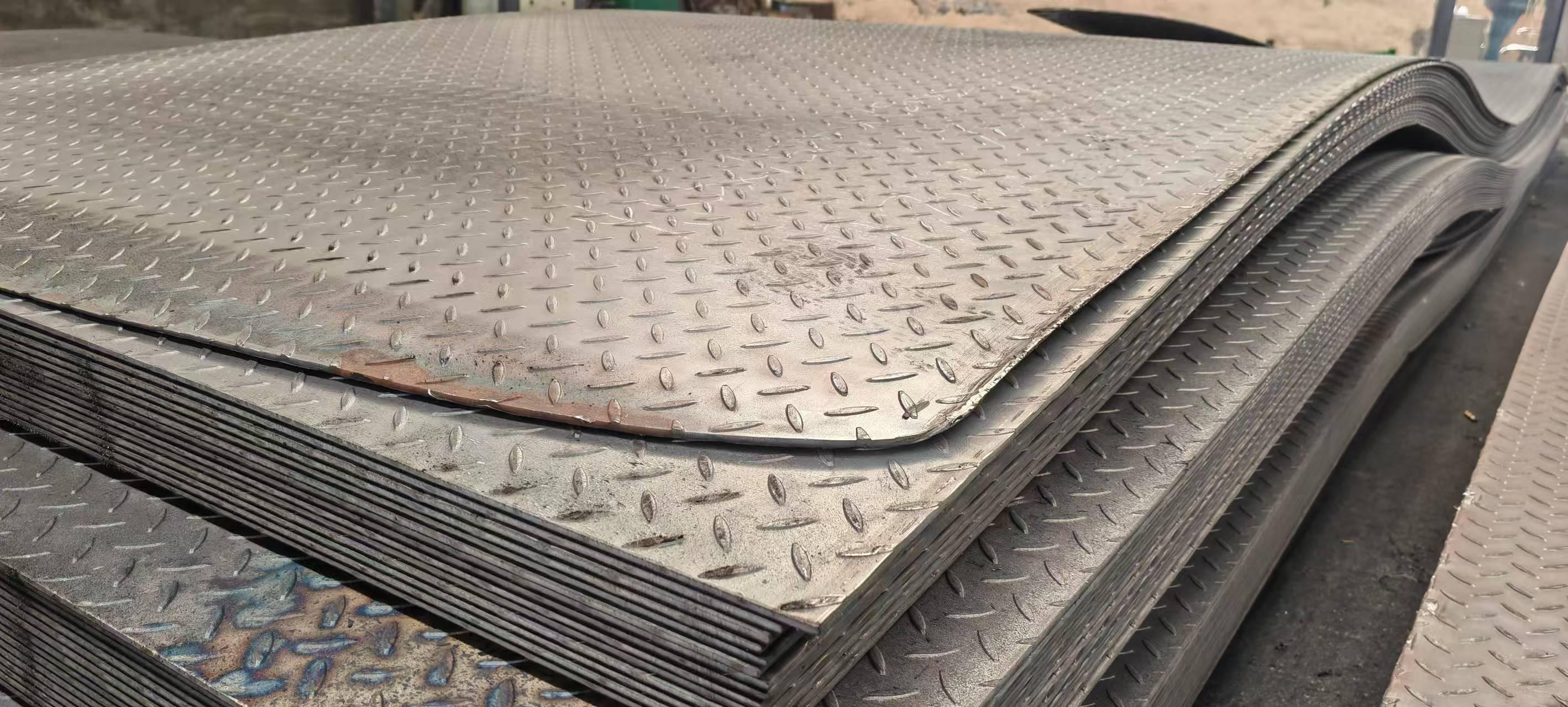
In busy loading docks and airport walkways, the choice between a five-bar and a diamond tread rarely gets a second thought until a mat starts peeling or a forklift slips. Five-bar patterns run as five parallel raised ribs, so most wheel traffic hits the outer bars first and grinds them down before the center shows much wear. Diamond tread spreads the contact points across a grid, which can feel more stable underfoot but leaves the valleys prone to catching caster wheels and sharp heels.
Where the two really part ways is drainage and debris. The straight channels of a five-bar let water and oil run off quickly, but fine grit gets trapped between the bars and acts like sandpaper on the rib bases during every pass. Diamond patterns slow the liquid down as it zigzags through angled grooves, yet that same geometry funnels grit toward low points instead of letting it abrade the raised sections. Forklift turns tend to leave directional wear on five-bar within a few months, while diamond shows a more even loss of thickness over the same period.
Neither pattern wins outright. If a corridor sees heavy cart, pallet jack, or metal-wheel traffic, the dispersed contact of diamond usually holds up longer in the areas where wheels pivot. If the main issue is rain, grease, and frequent mopping, the straight channels of a five-bar are easier to keep clear. Some facilities mix both: diamond down the main aisle where equipment turns, five-bar near ramps and drains, which can cut replacements noticeably compared to using one pattern everywhere.
Why alloy choice quietly decides how long a plate stays slip-resistant
Slip resistance isn't just a surface pattern stamped into the metal at the factory. It's a property that lives and dies with the alloy underneath. A floor plate made from a softer aluminum grade might feel gritty on day one, but foot traffic, cart wheels, and cleaning chemicals wear down those raised textures faster than anyone expects. Harder alloys or those with better work-hardening behavior keep their bite for years before the profile starts to flatten.
Corrosion plays an even sneakier role. In damp or salty environments, some alloys form a thin oxide layer that actually protects the peaks and valleys of the tread pattern, while others pit and roughen unevenly. That pitting can create slippery smooth spots right next to rough patches, which is worse for footing than uniform wear. Choosing an alloy that resists localized attack keeps the surface predictable underfoot.
There's also a less obvious factor: how the alloy responds to repeated loading. A plate that flexes slightly with every step may feel fine initially, but micro-movements work the raised pattern like a fatigue test. Alloys with higher yield strength and better fatigue resistance hold their shape longer, meaning the anti-slip texture stays crisp instead of slowly polishing itself smooth under normal use.
Rolled or stamped surfaces and what flatness says about fatigue life
The fatigue performance of a formed metal part rarely depends on bulk material properties alone. Two parts made from the same alloy can fail at very different cycle counts when one comes off a rolling line and the other leaves a stamping press. Rolling typically leaves a surface with fine, directional texture and residual compressive stress, which suppresses crack initiation. Stamping, especially near cut edges or deep draws, can introduce micro tears, local thinning, and tensile residual stress. These differences mean the same nominal stress amplitude translates into very different fatigue lives.
Flatness is often treated as a cosmetic or fit-up issue, but its effect on fatigue is more direct. A surface that is out of flat by even a small amount can create unintended contact patterns when the part is clamped, bolted, or mated with another component. The resulting stress concentrations are not captured by simple axial fatigue calculations. In many cases, a wavy rolled sheet that has been straightened can retain enough geometric deviation to cause localized bending stresses under cyclic loading, shortening the crack initiation phase.
Checking flatness after rolling or stamping is therefore not just about meeting drawing tolerances. It provides a practical hint about internal residual stress gradients and surface integrity. Parts with poor flatness often carry signs of forming strain imbalance, which correlates with earlier fatigue crack formation at the high spots or along ridges. Rather than relying on a single fatigue test, production engineers should read flatness data together with surface condition and forming history to estimate service life more accurately.
The regional logistics behind dependable lead times and bulk pricing
A tightly woven network of regional warehouses does more than just shorten the map between a supplier and its customers—it removes the guesswork from delivery schedules. When inventory sits in hubs positioned within a day’s drive of major demand centers, the risk of cross-country delays or port congestion fades into the background. Orders move along predictable corridors, often on dedicated lanes that have been refined over years of volume data, so a quoted lead time of three days means three days, not a hopeful estimate.
Bulk pricing rarely survives without this kind of logistical backbone. Freight consolidation makes sense only when a regional network can aggregate outbound shipments into full truckloads without forcing customers to hold excess stock. Carriers operating under established contracts with local distribution centers can offer per-unit transport costs that drop sharply as pallet counts rise, and those savings get passed downstream. Instead of relying on national carriers with variable surcharges, suppliers negotiate flat regional rates that hold steady across larger orders, allowing volume discounts to stay profitable rather than promotional.
There’s also a resilience factor that quietly supports both lead times and pricing. Regional hubs act as shock absorbers: if one route gets disrupted, inventory can be rebalanced from a neighboring facility without triggering expedited freight charges or missed delivery windows. This buffer means suppliers can commit to aggressive bulk deals without fearing that a single weather event or dock strike will wipe out their margin. The result is a quiet consistency—customers place large orders, receive them on the promised date, and pay a rate that reflects the efficiency of moving goods through a well-worn regional grid rather than an ad-hoc scramble.
Key mill certificates worth reading before you commit to a shortlist
When you're down to a handful of mills, don't skim the cover page. Ask for EN 10204 3.1 or 3.2 certificates depending on whether you need independent verification. A 3.1 tells you the mill's own test results match the cast or batch, but a 3.2 adds an inspector not employed by the manufacturer. If your project involves pressure equipment or structural steel with high consequence of failure, 3.2 is often the bare minimum. Also check that the certificate lists actual heat numbers, not just a generic grade.
Beyond the standard type, look at the values behind the numbers. Charpy impact tests at the temperature your component will actually see, not just room temperature. Confirm the chemical composition includes trace elements like boron or vanadium if your welding procedure assumes them. And don't ignore the fine print on heat treatment: a normalised or quenched-and-tempered condition can change how the steel behaves in service. A certificate that skips the grain size or fails to state the delivery condition is a red flag, no matter how clean the layout looks.
Finally, hold the certificate against the physical tags on the material. Match the heat number, dimension, and quantity exactly; a mismatch suggests the paperwork was copied from another lot. Look for a signature from an authorised representative and a test lab accreditation like ISO/IEC 17025. Without those, even a well-formatted certificate is just a nicely typed piece of paper.
FAQ
Consistency in pattern depth, flatness across the sheet, and clean edges are the first things to examine. Reliable mills also issue mill test reports without hesitation and use interleaving paper or plastic film to prevent surface marks during shipping.
Often the list includes Novelis, Constellium, Alcoa, UACJ, Hindalco, Norsk Hydro, Chalco, AMAG, Kobe Steel, and Elval. These companies run wide hot-rolling lines and typically deliver more uniform tread patterns than smaller regional mills.
3003 is widely used for general indoor flooring and trailer beds because it forms easily and costs less. 5052 brings extra strength and better saltwater resistance, so it fits marine and chemical handling jobs. Some fabricators also order 6061 checkered plate for structural components that will be welded.
Plates from about 1.2 mm to 8 mm are common. A higher raised pattern improves grip but can collect dirt in food-processing areas. For heavy vehicle traffic, choose a thicker base, while pedestrian walkways often work fine with lighter gauges.
Flatness tolerance, actual alloy verification, and packing quality are easy to miss. A cheaper quote may arrive without proper export wrapping or with soft edges from worn rollers. Request a sample or recent photos of the mill's finished packs before committing to a large order.
Yes, but the route usually goes through a service center or distributor connected to the mill. Cut-to-length lines and slitting services let them supply non-standard widths or small batch runs without requiring a full coil order.
Stock sizes from regional warehouses often move in one to three weeks, while special alloys or unusual thicknesses can take a month or more. Price is shaped by alloy, gauge, pattern profile, and volume, with direct mill contracts favoring large repeat buyers and distributors handling smaller mixed loads.
Conclusion
Selecting an aluminum checkered plate supplier is less about scanning a catalog and more about reading the signals that separate repeat-order mills from one-off bargain sellers. Mills that consistently earn reorders tend to hold tighter control over alloy composition—5000-series grades often retain slip-resistant texture longer than cheaper 3000-series alternatives, especially in wet or high-traffic settings. Pattern choice also matters. Five-bar tread tends to shed debris and water better under heavy foot traffic, while diamond patterns can pack with grime faster and become slick. Surface formation plays a quieter role: rolled plates with stable flatness indicate better fatigue resistance than stamped variants with subtle waviness, which can concentrate stress at fastener points.
Regional logistics often shape the real cost more than the per-pound quote. A supplier close to your assembly or job site with dependable truck routes can shorten lead times and make bulk orders less painful, whereas a distant low quote may hide freight and delay risks. Before shortlisting, review mill certificates for tensile strength, elongation, and actual alloy designation—not just a generic aluminum tread plate line. These documents reveal whether the plate was produced to a consistent standard or merely cut from mixed stock. Factories worth considering tend to provide traceable heat numbers and batch test results without being asked. The top manufacturers stand out because they combine material transparency, sensible pattern guidance, and logistics reliability rather than competing on price alone.
Contact Us
Contact Person: Zoey
Email: [email protected]
Tel/WhatsApp: +86 15865577002
Website: https://www.sanhesteels.com