

Spout Pouch Manufacturer Reveals Key Packaging Innovations for Modern Brands
2026-11-16
Packaging rarely gets the spotlight, but when a spout pouch manufacturer starts rewriting the rules, brands pay attention. The latest wave of innovations goes far beyond leak-proof seals and ergonomic spouts—think materials that extend shelf life, designs that slash waste, and formats that feel genuinely new on the shelf. Central to this shift is Kody, whose approach to spout pouch engineering is quietly setting a new benchmark. Here's what modern brands need to know.
The Hidden Engineering Behind Leak-Proof Spout Seals
Spout seals look deceptively simple from the outside—just a rubbery ring sitting between the cap and the neck, right? But the real magic happens in the geometry you never see. The sealing lip isn't a flat disc; it's slightly undercut at an angle that lets liquid pass easily when pouring but snaps shut the moment pressure equalizes. That microscopic taper is what keeps the last few drops from dribbling down the side of the bottle and ruining your bag.
Material choice matters just as much as shape. Most modern spouts use a thermoplastic elastomer with a Shore hardness carefully tuned between 50 and 70—soft enough to conform to the rim, firm enough to spring back after each pour. Engineers run dozens of compression-set tests under heat and repeated flexing to make sure the seal won't take a permanent dent after months of use. If it does, you get that annoying slow leak that no amount of cap-tightening can fix.
Then there's the venting trick nobody talks about. A good spout seal often has a tiny secondary channel—sometimes a groove, sometimes a pinhole—that lets air rush back into the bottle as liquid comes out. Without this, you'd get the classic glug-glug-glug chug, followed by a splash of product on your shirt. That little air return is engineered to be just narrow enough that liquid surface tension holds it shut when the bottle is upright, but opens instantly when tilted. It's a tiny piece of physics you feel every time you squeeze a sauce bottle or take a sip from a sports cap.
Why Curved Spouts Are Replacing Straight Ones on Store Shelves
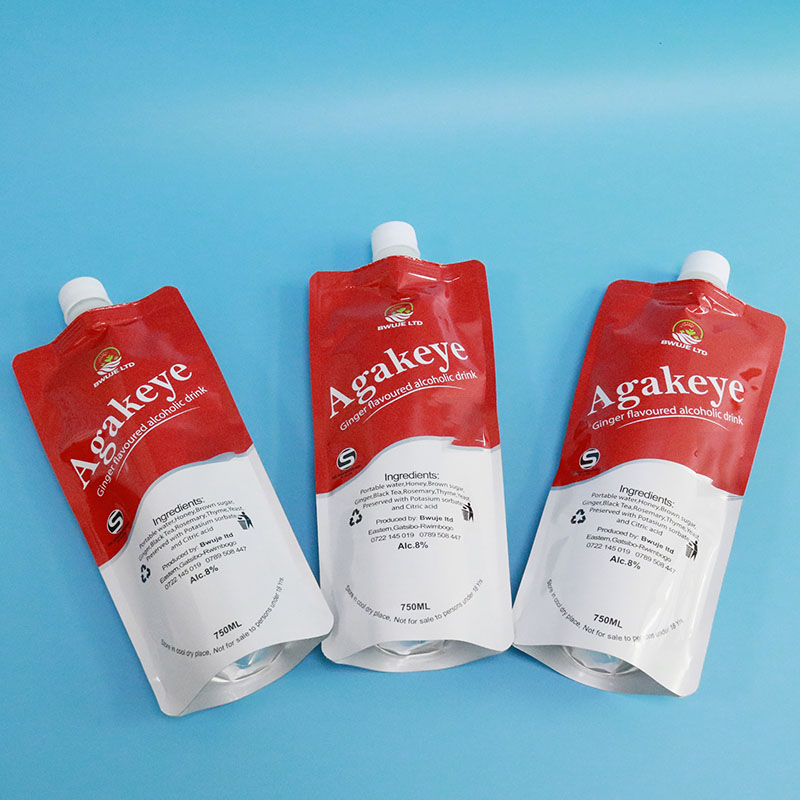
The shift started with a simple annoyance: straight spouts tend to leave a last drop running down the bottle after pouring. On a store shelf, that drip can smear labels or pool on the cap, making the product look messy before anyone even buys it. A curved spout breaks the liquid's path more cleanly at the tip, pulling the last bit back into the container. It's a small change, but it keeps the bottle and the shelf around it looking sharper.
Pour control is another reason shoppers are reaching for the curved version. The arc allows a wider range of tipping angles without the flow suddenly gushing or sputtering. Whether it's olive oil, dish soap, or a specialty syrup, the curved tip gives a steadier, narrower stream that's easier to aim. People notice that difference immediately in the kitchen, and it's often enough to justify switching brands.
There's also a visual shift happening on the shelf. Straight spouts read as utilitarian and boxy, while a curve adds a softer, more considered line to the package. In a crowded aisle, that gentle bend stands out—it suggests a product designed with care rather than just filled and capped. Brands are leaning into this because it quietly signals a more premium experience without needing louder graphics or extra labels.
Mono-Material Pouches That Finally Recycle Without Compromise
Most flexible packaging has forced brands into a quiet trade-off: add an aluminum foil or a nylon layer for shelf-life protection, and the pouch becomes nearly impossible to recycle. Mono-material pouches break that pattern by rebuilding the barrier inside a single polymer family. All-polyethylene and all-polypropylene structures now use orientation, thin coatings, or micro-layer extrusion to block oxygen, moisture, and aroma loss without relying on mixed materials.
The difference shows up at the recycling plant. Instead of being sorted out as a multi-layer reject, these pouches stay in the PE or PP stream and can be pelletized into clean regrind for new film or molded parts. That means a stand-up coffee pouch or a liquid detergent refill no longer has to choose between a two-year shelf life and a credible end-of-life story.
Performance isn't dialed back either. Seal strength, puncture resistance, drop survival, and print quality match or beat conventional laminates on high-speed filling lines. By adjusting polymer grades and coextrusion ratios, converters keep the pouch stiff enough to stand on shelf but ductile enough to survive shipping, so the switch to mono-material is a process upgrade rather than a compromise.
Soft-Touch Finishes That Make Packages Feel More Premium
A soft-touch finish does more than change how a package looks—it rewires the first physical contact. The moment fingertips meet that velvety, almost rubberized surface, the brain registers something closer to leather or suede than paperboard. It’s a quiet signal that the object inside has been considered, not just manufactured. Many luxury cosmetics and electronics brands lean on this effect because it slows the customer down, turning a quick pickup into a brief, tactile pause.
The chemistry behind these coatings has matured well beyond a simple matte varnish. Water-based polyurethane dispersions and UV-cured formulations can now deliver a consistent, durable skin that resists scuffing and fingerprints while preserving that plush feel. Some versions incorporate a slight drag—like stone fruit skin—while others feel dry and powdery, almost like a fine dusting of cocoa. That subtle variation lets designers match the finish to the product’s personality: a dense, pillowy drag for skincare, a crisper, drier nap for tech accessories.
What makes the effect truly premium is its restraint. No gloss, no loud texture, no need for metallic inks. The finish works by withholding visual noise and letting touch carry the message. It also hides minor production imperfections better than high-shine surfaces, which keeps packages looking fresh longer on retail shelves. When a customer picks up a box and their thumb instinctively strokes the edge, you know the material has done its job—it’s not just packaging anymore, it’s an object worth holding.
Heat-Seal Tweaks That Prevent Bursting During Transit
Most burst failures trace back to seal corners where film layers bunch up under pressure. A simple fix is to round the sealing jaw profile slightly at the corners instead of keeping a sharp 90-degree edge. This small geometry change distributes heat more evenly across the film, reducing thin spots that give way when boxes get stacked or tossed during shipping. You can also try lowering the dwell time by 0.2–0.4 seconds while raising the temperature a notch—this avoids over-melting the outer layer while still achieving a strong bond.
Another tweak that often gets overlooked is adjusting the cooling phase. After the seal bar lifts, the film needs a brief moment to crystallize under light pressure. Adding an air knife or a chilled platen just downstream of the sealer lets the seal set without shrinking unevenly. We've seen drop tests pass far more reliably after adding just 150–200 milliseconds of active cooling, especially with polyethylene-rich films that stay soft longer.
Finally, check your seal layout against the fill level. If the product settles or shifts, a seal that sits too close to the top edge of the pouch is more likely to flex and split. Moving the seal line down by even 3–5 mm creates a small buffer zone that absorbs shock without pulling on the weld itself. Pair that with a slightly wider seal bar—going from 2 mm to 3 mm—and you'll get a surprising jump in transit survival without adding measurable cost.
Portion-Control Spouts Built for Snackable and Single-Serve Formats
For brands chasing the snackable and single-serve trend, portion-control spouts turn ordinary packaging into a precision tool. These spouts are engineered to dispense just the right amount with every tilt, whether it's a squeeze of yogurt, a dash of sauce, or a mini serving of smoothie. The key is in the valve geometry—it slows the flow just enough to prevent messy over-pours while keeping the product texture intact, from thin broths to thick purees.
What sets these spouts apart is their adaptability to on-the-go lifestyles. Think of a commuter cracking open a single-serve applesauce pouch, or a gym-goer squeezing a protein gel mid-workout. The spout's design reduces dribble and keeps the opening clean, so the last drop ends up in your mouth, not on your shirt. Makers are also pairing them with resealable caps, letting users pace their snack instead of gulping it in one go.
Beyond function, these spouts open creative doors for portion-led product lines. A tapas-style olive oil sampler, a flight of dessert toppings, or a kids' smoothie pouch that meters out tiny sips—each format feels purposeful rather than gimmicky. By matching the spout's flow rate to the product's viscosity, brands can deliver a consistent experience that makes every single serving feel intentional.
FAQ
Several shifts stand out. Makers now offer recyclable all-polyethylene structures that maintain high barrier without aluminum foil, which used to be a trade-off. There is also a move toward thinner yet tougher films, resealable spouts with audible click feedback, and digitally printed short runs that let smaller brands test designs without massive inventory.
Beyond the obvious weight savings, spout pouches ship flat and save warehouse space before filling. They also give designers a broader canvas because the entire front panel can carry graphics, and the flexible shape feels more premium in the hand compared to a standard cylinder. For products like baby food or energy gels, the pouch collapses as it empties, reducing air exposure.
Yes, but it depends on the specific barrier needs. Many manufacturers now pair a recyclable PE body with a thin EVOH oxygen barrier layer that stays within recyclability guidelines. For cold-filled pasteurized products, post-consumer recycled content in the outer layers is increasingly viable. The main limitation is high-temperature retort applications where compostable films still struggle.
They underestimate fill line compatibility. Spout pouches require specific grippers and sealing jaws, and the spout itself needs to match the capping equipment. Drop test performance is another common surprise—because the pouch flexes, the seal around the spout undergoes stress that rigid containers don't experience. Running a small pilot with the actual product is essential.
A wide-diameter spout works better for thicker products like yogurt or apple sauce, while a narrow, elongated spout suits thin liquids and precise pouring. Adding a silicone valve can prevent messy drips, and a tamper-evident band gives consumers confidence. Some brands are even experimenting with spouts that have a textured grip zone for wet hands.
Often yes, if the shape supports the product's use case. A contoured waist can improve grip for one-handed use, and a stand-up bottom gusset makes the pouch more stable on a shelf. Digital printing has lowered setup costs dramatically, so a small brand can order a few thousand pouches with full-color graphics and a unique silhouette without paying for expensive plates.
Look for more inline quality control, like vision systems that inspect spout placement and seal integrity at high speed. Also, monomaterial structures are getting better at surviving retort processing, which would open spout pouches to more shelf-stable meals. And there is growing interest in integrated RFID or QR codes printed directly on the pouch for traceability and consumer engagement.
Conclusion
Modern pouch manufacturers are quietly rethinking every detail that shapes consumer experience. The hidden engineering behind leak-proof spout seals now goes far beyond simple gaskets—new compression geometries and multi-layer crimping create a bond that survives both air freight pressure drops and the rough handling of a warehouse floor. Meanwhile, curved spouts are edging out straight ones on busy shelves, not just because they look different but because they track the natural pour angle, reducing the splash and dribble that used to frustrate parents and campers alike. Alongside these shape shifts, mono-material pouches have finally shed the old trade-off between recyclability and performance, letting brands hit sustainability targets without sacrificing oxygen barrier or shelf life.
The tactile side of packaging has also been reworked from the inside out. Soft-touch finishes now use micro-textured films that feel like velvet yet resist fingerprint smudges and store shelf scuffs, making a cheap pouch feel like a considered purchase. Heat-seal tweaks, often invisible to the naked eye, involve slightly lower dwell temperatures and precision pressure curves that prevent the seal from thinning at the corners—meaning fewer burst pouches in transit and fewer angry emails to customer service. For the snackable and single-serve market, portion-control spouts have been redesigned with narrower orifices and mid-spout flow restrictors, so a child's yogurt pouch or a hiker's energy gel releases a consistent, controlled dollop instead of a messy gush. These are not headline-grabbing breakthroughs but persistent, practical refinements that keep modern brands ahead of the pack.
Contact Us
Contact Person: Cindy Lee
Email: [email protected]
Tel/WhatsApp: 8613622669331
Website: https://www.dgkody.com