

Roto Moulding Machine Company Selection Tips for Manufacturers
2026-11-03
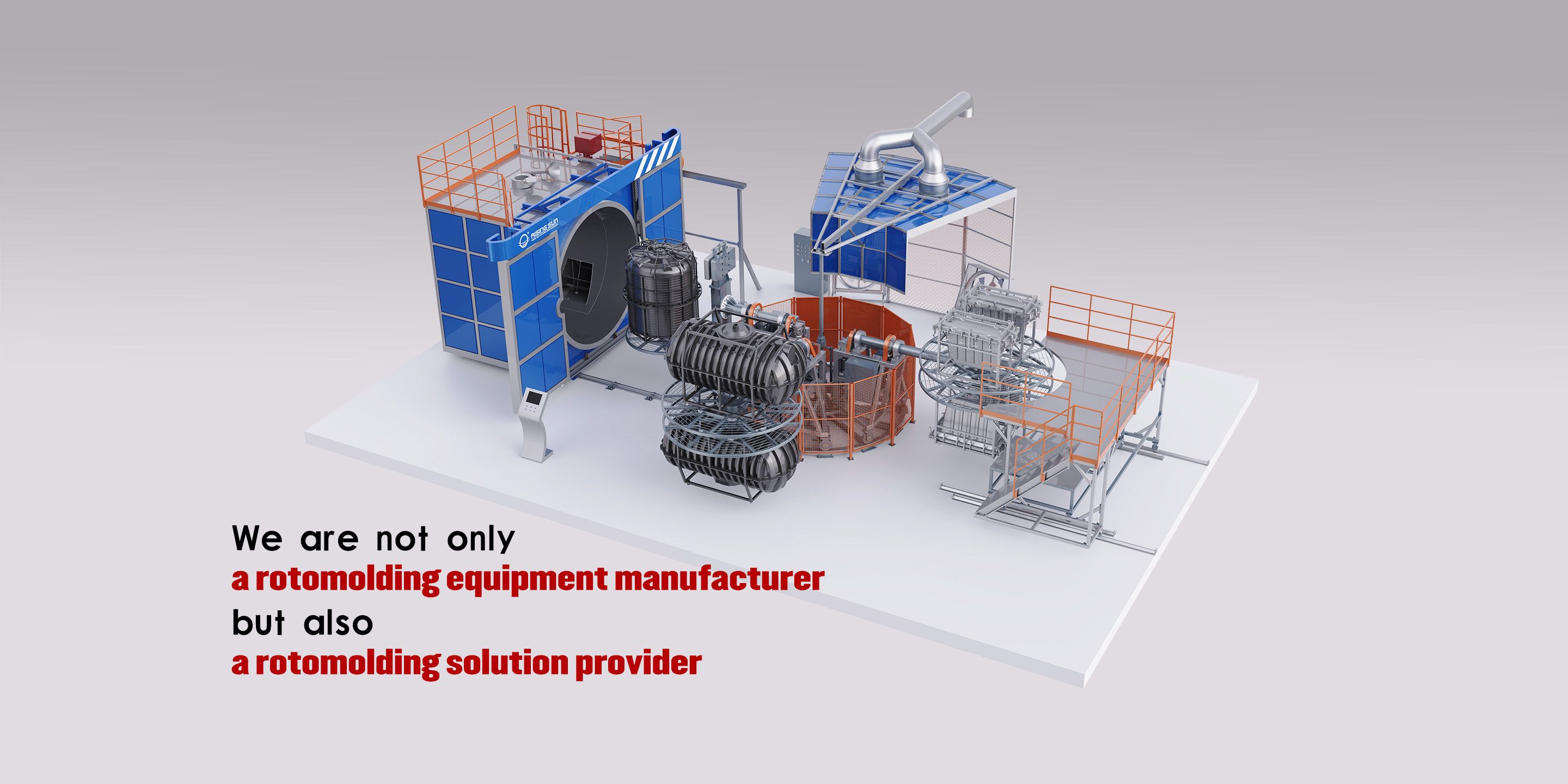
Selecting a roto moulding machine company is rarely about the lowest quote. It is about avoiding downtime, material waste, and design limitations that quietly eat into margins. Before you sign a purchase order, you need to look beyond the brochure and assess the supplier like a production partner. From tooling expertise to service response times, the right questions make all the difference. Manufacturers who want consistent output often find their answer with Rising Sun, a company built around rotomoulding performance rather than sales scripts. Here is what to check first.
Start with the Shape, Size, and Wall Thickness You Actually Need
Forget guessing games. The first real decision you'll make is the profile shape—round, square, or rectangular—because it dictates how the tube behaves under load, how it welds to other members, and even how light it feels in your hands. A round tube handles torsional stress beautifully and looks clean, while a square tube offers flat faces for easy joining and a more industrial look. Rectangular sections often give you more stiffness in one direction, which can be a lifesaver when you're spanning a gap or building a rack that needs to resist sagging without adding a third leg.
Then there's the wall thickness, and here's where people usually overdo it. A thicker wall adds weight and cost, but it doesn't always add strength where you need it. If your project sees mostly static loads and the occasional bump, a 16-gauge wall might be plenty. If you're building a bumper or a roll cage that has to survive an impact, stepping up to 11-gauge or even 1/4-inch wall makes sense—but only if the size is right first. A 2x2 with a heavy wall can be heavier than a 3x2 with a lighter wall, yet the larger tube will often resist bending better. Check the actual dimension and think about where the stress is going, not just what the chart says.
Size is the last piece that ties it all together. You might think you need a 4x4 post, but if your load is spread across four smaller tubes, each one can shrink and the whole assembly gets lighter and easier to clamp, cut, and weld. Measure your attachment points, not just the overall footprint. A tube that's too large in one direction can eat up space you need for hardware, while one that's too small forces you to add gussets and braces you didn't plan for. Start with the shape and size that actually fit the mating parts, then choose a wall thickness that keeps you from swearing during the weld—distortion, burn-through, and unnecessary grinding all trace back to that initial choice.
Compare Oven Airflow Patterns, Not Just Temperature Ratings
Temperature settings only tell half the story. Two ovens can both claim 450°F, yet one roasts a chicken with crackling skin while the other steams it. The difference comes down to how air moves inside the cavity. A basic oven with a single bottom burner and no fan leaves hot spots near the top and cool pockets near the door. Convection models with a rear fan push heat around more evenly, but even those vary: a small fan that just stirs air is not the same as a wide-blade fan paired with a third heating element. Checking airflow patterns—where the vents sit, how the fan cycles, and whether the oven has separate top and bottom controls—tells you far more about real cooking performance than a temperature dial.
Look at the fan placement and ventilation design when comparing models. A rear-mounted fan paired with a circular heating element creates a horizontal cyclone effect that browns trays of vegetables evenly without rotating pans. Side-mounted fans, common in cheaper convection ovens, tend to blast one corner and leave the opposite side underdone. Also note whether the oven has a true European convection system, which adds a third element behind the fan, versus a simple fan that just recirculates existing heat. The difference shows up quickly in baked goods: a true convection oven can handle three trays of cookies at once, while a basic fan oven still needs shelf swapping halfway through.
A practical test beats spec sheets. Take a loaf of white bread, slice it thick, and toast the slices on a single tray. An oven with balanced airflow will give you uniform browning across every slice, including the one near the door. If the pattern shows a dark ring around the edges and pale centers, the fan is too weak or the vents are poorly placed. For roasting, place a whole chicken on a rack and check the thigh and breast temperatures after an hour. Uneven airflow leaves the breast dry while the thighs lag, while a well-designed convection oven cooks both zones within a few degrees. These small experiments reveal more than any temperature rating printed on the box.
Separate Real Cycle Times from Showroom Numbers
Many teams mistake the cycle time recorded on the floor for the neat figure displayed in a showroom or summary deck. The showroom version usually reflects a best case, an average that hides waiting, rework, and operator fatigue. Planning from that number quietly undercuts real throughput.
To pull them apart, timestamp actual work steps at the station, not at the end of the shift. Capture every pause, defect, and tool change. Compare that raw spread against the official cycle time. The gap is where the hidden downtime lives.
Once the difference is clear, let the real cycle time drive scheduling and staffing. Leave the showroom version for marketing or leadership summaries, but never use it to set line balancing or inventory targets. Keeping the two separate protects both delivery dates and team credibility.
Map Out the Service Network Before You Need It
When your sink starts spraying water at 11 p.m. or the car makes that clunking sound on the highway, the last thing you want is to scroll through dozens of random listings. Building a list of dependable contacts before anything breaks turns a panic moment into a quick phone call. Start with the trades you are most likely to need in the next year, then add a backup for each.
Ask neighbors, coworkers, or a local community group for names they have actually used more than once. A personal referral usually tells you more than any polished ad. Once you have a few candidates, test them with a small task, such as a furnace tune-up or a minor repair, so you can see how they communicate, show up on time, and handle the bill.
Keep the list somewhere you can reach in a hurry, not buried in an old email thread. Include the person’s name, phone number, typical availability, and any notes about pricing or quirks. Review it once or twice a year, drop anyone who has become unreliable, and add new names as your home, vehicle, or family needs change.
Bring Your Own Mold for a Trial Run
Testing a mold before committing to full production is a practical step many overlook. When you bring your own mold for a trial run, you get a clear picture of how your design performs under real machine conditions—not just in simulation. Minor gate placement issues, cooling inconsistencies, or ejection problems often surface only when plastic actually flows through the tool.
A trial run also lets you evaluate the surface finish, dimensional accuracy, and cycle time without locking into a large order. If adjustments are needed, it's far cheaper to modify the mold after seeing sample parts than to discover a flaw halfway through a production batch. Bring your mold, run a limited quantity, and inspect the results before scaling up.
Many shops allow you to supply a mold you already own, whether it's new or previously used. The trial run typically includes machine setup, material drying, parameter tuning, and a short production window. You'll receive the sample parts along with basic measurement data, so you can decide whether the mold is ready for full-scale work or needs further refinement.
Plan for the Second Machine on Day One
We’re not treating the second machine as a copy-paste job. The first unit gave us a clear read on where the bottlenecks sit, so the day-one plan starts with a short walkthrough of the new hardware before anyone touches a switch. Electrical and air connections get checked against the updated schematic, and we’ll run the spindle through a low-speed warm-up cycle while the coolant lines are bled. That half-hour of patience usually saves us from chasing alarms later in the week.
Once the basics are stable, the lead operator takes over for the first tool offset checks and a light test cut on scrap stock. The goal isn’t full production speed; it’s to confirm the machine holds tolerances without fighting the setup. By mid-afternoon we should have enough data to adjust the fixture locations and finalize the shift handover notes. If anything drifts outside the expected range, we stop and fix it before the next shift inherits a problem.
FAQ
Start by looking at the range of machine sizes and configurations they've actually delivered, not just what's on their website. Ask for references from companies making parts similar to yours in terms of wall thickness, material, and cycle time. A supplier who mainly builds small shuttle machines may not be the best fit for a large rock-and-roll line, so match their track record to your production reality.
It matters more than most buyers realize. Rotomoulding behaves differently with polyethylene, nylon, PVC plastisol, or custom compounds, and the heating and cooling profiles need to be tuned accordingly. If the supplier can show you successful projects using your exact material family, you'll spend far less time debugging temperatures and cycle times after installation.
Look for a supplier who can walk you through the first few production runs remotely or on-site, not just send a manual and disappear. You want access to spare parts that ship quickly, clear documentation for the control system, and a service team that understands both the mechanical and electrical sides. Ask how they handle emergency breakdowns and whether they offer training for your operators as part of the package.
Yes. Watch out for quotes that lump everything into one line item without listing the brand and specs of key components like burners, blowers, PLC, and drives. Vague phrases like 'high-quality parts' should be pushed back on. Also be cautious if a supplier won't provide a detailed cycle time estimate for a representative part or seems unwilling to discuss what's excluded from the base price.
Request close-up photos and videos of machines currently being assembled, not just finished showroom units. Ask about the frame construction, bearing and seal choices, and how the oven insulation is installed. If possible, speak with a recent customer who has run the machine for at least six months and ask about any cracks, alignment issues, or unexpected maintenance they've encountered.
It depends on your product mix. If you're making a narrow range of parts with stable demand, a well-proven standard model often saves money and reduces lead time. But if you plan to introduce new shapes or need special features like multiple stations, automated loading, or enhanced mould release, a supplier with in-house engineering can save you from expensive retrofits later.
Factor in energy consumption for heating and cooling, typical spare part prices, and how easy it is to access burners, fans, and sensors for routine maintenance. A machine that costs less upfront but has poor insulation or a complicated control interface can quickly eat up the savings through higher fuel bills and longer downtime. Ask for realistic utility consumption figures from existing users.
Conclusion
Choosing a rotomoulding machine supplier starts with the part itself. Forget generic capacity charts - define your largest expected shape, overall dimensions, and the wall thickness range you truly need to produce. A machine that can't swing a deep, narrow cavity or maintain consistent thickness at the corners will cost you later. Then look past the temperature readout on the brochure. Ask how the oven circulates air: does it create even heat around the mold from all sides, or are there hot spots that force you to slow the cycle just to avoid warping? Real cycle times come from running your geometry, not from a showroom demo with an easy open mold. Get the supplier to commit to a production rate using your part profile, including cooling and unloading, otherwise the quoted number is worthless.
Service is where many buyers get burned. Don't wait until a drive motor fails to discover the nearest technician is two countries away. Map out the actual response time, spare parts availability, and whether the company has local agents who can do more than answer emails. Before you sign anything, bring your own mold - not their sample - and run it on the machine you're considering. Watch how the operator handles your specific parting line, inserts, and demolding challenges. Finally, plan floor space and utilities for a second machine on day one. Even if you only install one now, building the layout for two avoids costly retrofits later and gives you a clear path when demand spikes or you need redundancy.
Contact Us
Contact Person: Sharon Zhu
Email: [email protected]
Tel/WhatsApp: 8615712666272
Website: https://www.risingsunroto.com