

Professional MNO Core Network Solutions: Building the Backbone of Modern Telecommunications
2026-05-10
In the fast-evolving world of telecommunications, the core network is the silent engine that powers every call, text, and data session. As mobile network operators (MNOs) race to deliver seamless 5G experiences, the demand for robust, scalable core solutions has never been greater. At the heart of this transformation lies a critical choice: who can you trust to build the backbone of your network? IPLOOK emerges as a proven innovator, offering professional MNO core network solutions that turn complexity into reliability. Step behind the scenes and discover what truly makes modern connectivity possible.
The Unseen Framework: Core Network Architecture Demystified
Behind every streaming video, instant message, or online transaction lies a labyrinth of protocols and hardware that most users never see. The core network is less a single entity and more a stratified collection of specialized layers—each one handling a distinct aspect of data delivery without stepping on the others' toes. At its foundation, the physical infrastructure (fiber, switches, routers) moves bits as pulses of light or electrical signals, but that raw capacity means little without the logical overlays that partition traffic, enforce policies, and keep the whole mesh from collapsing under its own complexity.
What really makes the core tick isn't the gear itself, but the control plane's quiet choreography. Routing protocols like BGP and IS-IS don't just find paths—they weave a constantly shifting map of reachability that adapts to fiber cuts, congestion, and misconfigurations. Meanwhile, MPLS and Segment Routing add a layer of abstraction, letting operators steer traffic along pre-calculated paths without touching every intermediate router. This separation of brain from brawn means a handful of engineers can juggle traffic for an entire continent, tweaking policies in software while the underlying hardware dutifully forwards packets at line rate.
But none of this works without the unsung hero: the transport layer's error correction and flow control mechanisms. TCP's sliding window and modern equivalents like QUIC hide the ugly reality of a lossy, jittery physical world, presenting applications with what looks like a pristine pipe. The clever part is how these mechanisms adapt—ramping up throughput when the path is clear, then backing off just enough to avoid drowning the buffers of a congested router. It's a stark reminder that the network's intelligence isn't centralized; it's smeared across every endpoint, every switch, and every line of code that silently retransmits a dropped packet.
Cloud-Native Transition: Modernizing MNO Core Infrastructure
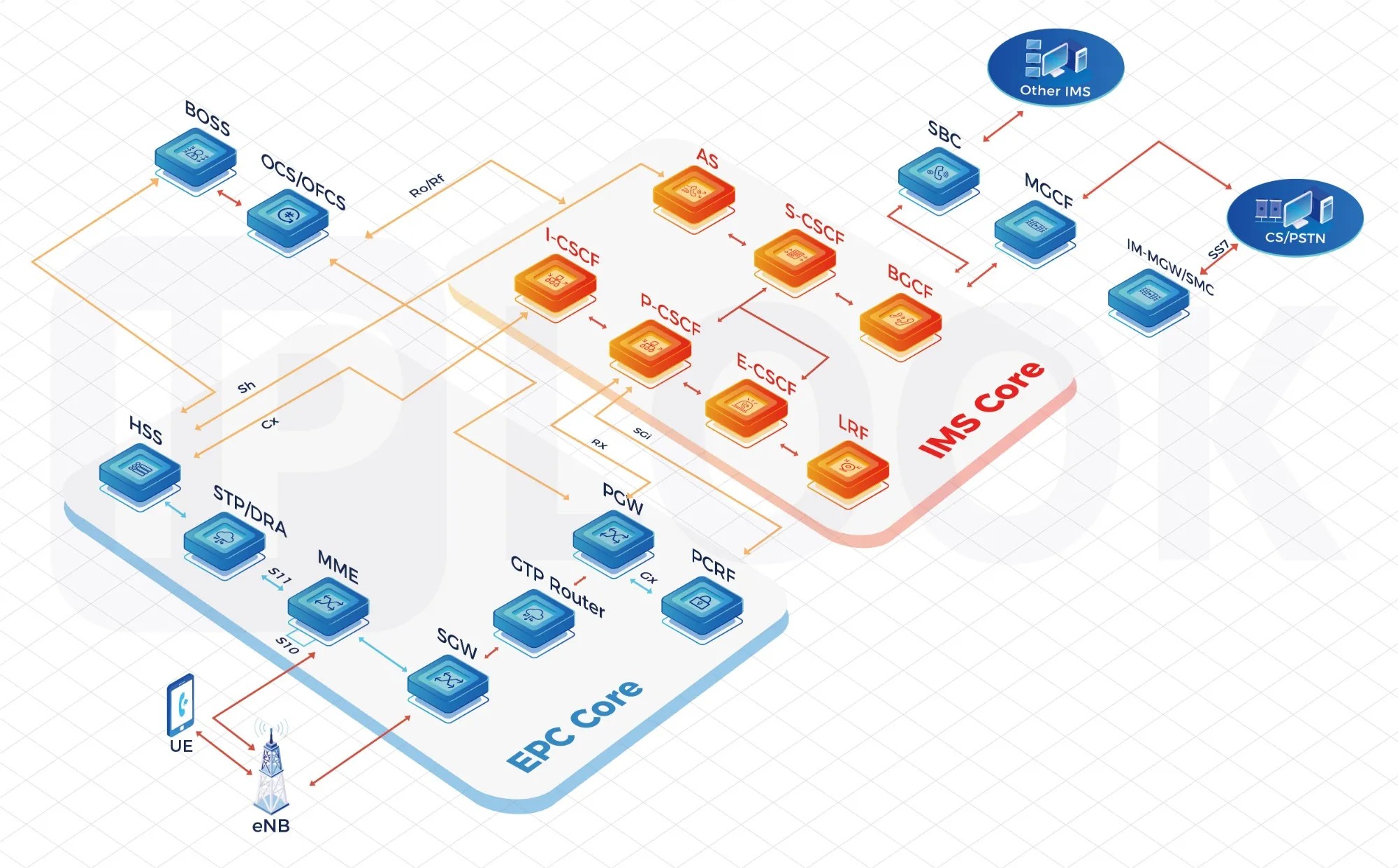
The shift to cloud-native architectures is reshaping how mobile network operators build and run their core networks. Rather than simply lifting and shifting legacy virtualized functions into the cloud, the real transformation lies in decomposing monolithic systems into microservices that can be independently scaled and updated. This approach allows operators to roll out new features faster, reduce downtime during upgrades, and allocate compute resources exactly where demand spikes—something that was nearly impossible with traditional appliance-based cores.
Containers and Kubernetes become the de facto runtime for these modernized core functions, but the operational change goes deeper. Telco teams used to thinking in terms of rigid capacity planning now manage a dynamic environment where network functions can heal automatically and scale horizontally in seconds. That demands new skill sets around observability, CI/CD pipelines, and infrastructure-as-code, yet it also opens the door to running core network slices on shared hardware with strict performance isolation—a foundational requirement for efficient 5G standalone deployments.
Perhaps the most understated advantage is how cloud-native principles enable a more resilient network. By designing for failure from the start—embracing chaos engineering, graceful degradation, and stateless processing where possible—operators move from hoping for five-nines to architecting it into the fabric of the system. This isn't just a technical uplift; it's a cultural pivot that challenges decades of telco wisdom, but one that ultimately delivers a core network that feels less like a fixed utility and more like a programmable fabric ready for whatever services come next.
Tailored Connectivity: Network Slicing Strategies for MNOs
Mobile network operators face a critical balancing act: delivering specialized services to vertical industries while maintaining efficient use of scarce spectrum and infrastructure. Network slicing emerges as the linchpin, allowing a single physical network to be partitioned into multiple virtual slices, each tailored to specific performance attributes such as ultra-low latency for autonomous vehicles, massive bandwidth for immersive media, or massive IoT connectivity for smart factories.
Successful slicing strategies demand more than just technical prowess. MNOs must navigate a complex landscape of customer segmentation, pricing models, and operational orchestration. From the granular isolation of radio resources to the nuanced policy controls at the core, every slice must be dynamically adaptable. The art lies in automating the slice lifecycle—design, deployment, and decommissioning—while preserving service level agreements. This calls for an agile operations framework that marries deep domain insight with real-time analytics, ensuring slices can scale in lockstep with business demands.
Monetization pathways are equally diverse. Instead of a one-size-fits-all approach, MNOs can craft tiered offerings—premium slices for mission-critical applications, standard slices for enterprise productivity, and on-demand slices for event-driven surges. Partnering with system integrators and vertical specialists can accelerate go-to-market efforts, turning the network from a dumb pipe into a platform for co-innovation. Ultimately, the operators that master the strategic dimension of slicing will redefine connectivity, not merely as a commodity, but as a customized, intelligent fabric woven into the digital economy.
Securing the Backbone: Advanced Threat Mitigation in Core Networks
Modern core networks form the nervous system of global communication, yet they remain prime targets for sophisticated attacks that exploit their complexity and critical role. As these infrastructures evolve with virtualization and cloud-native designs, threat surfaces expand beyond traditional perimeter defenses, demanding a shift toward proactive, multi-layered mitigation strategies. From stealthy protocol manipulations to large-scale DDoS campaigns, adversaries continuously refine their methods to bypass conventional safeguards, emphasizing the need for adaptive intelligence that can identify anomalies before they cascade into service degradation.
Deploying advanced threat mitigation in this context means weaving together real-time telemetry, behavioral analytics, and machine learning models that understand the baseline of normal operations. By scrutinizing control-plane traffic patterns and inter-signaling behaviors, operators can uncover subtle indicators of compromise—such as abnormal routing updates or unexpected session initiation bursts—that often precede more destructive actions. The integration of automated response mechanisms further shrinks the window of exposure, allowing networks to isolate compromised nodes or throttle malicious flows without human intervention, thereby preserving availability and integrity.
Yet technology alone cannot carry the burden; the human element remains pivotal in refining detection logic and orchestrating incident response. Continuous purple-teaming exercises that simulate real-world adversarial tactics sharpen both the tools and the intuition of security teams, turning the core network into a self-defending ecosystem. This fusion of cutting-edge detection frameworks with hands-on expertise not only fortifies the backbone against current threats but also builds resilience against the unknown, ensuring that the arteries of the digital world stay robust under constant pressure.
AI-Powered Operations: Automating Core Network Management
Managing core networks has always demanded constant attention, but the shift toward AI-driven operations is finally relieving engineers from repetitive firefighting. Instead of manually parsing alarms or tracing faults, machine learning models now detect subtle anomalies in real time, often flagging issues before they escalate into outages. This isn't just about faster response—it's about giving operations teams the space to focus on strategic improvements rather than drowning in routine maintenance.
Automation in core network management extends well beyond simple scripted tasks. Intelligent systems are now capable of correlating events across distributed infrastructure, dynamically adjusting configurations to optimize traffic flow, and even predicting capacity bottlenecks hours in advance. By learning from historical patterns, these platforms continuously refine their decision-making, reducing the need for predefined rules that quickly become outdated. The result is a self-tuning network that adapts to changing demands with minimal human intervention.
What makes this evolution practical is the marriage of operational data with purpose-built AI models. Telemetry streams from routers, switches, and virtualized functions feed into algorithms designed to understand network topology and service dependencies. When a link degrades, the system doesn't just alert—it can reroute traffic, spin up backup resources, and generate a plain-language summary of actions taken. This closed-loop approach slashes mean time to resolution and helps smaller teams manage increasingly complex environments without scaling headcount.
Edge-Cloud Synergy: Extending Core Capabilities to the Periphery
Edge-cloud synergy rethinks how computation is distributed. Instead of funneling every byte back to a remote data center, the edge handles critical, time-sensitive tasks—analyzing sensor data, triggering alerts, or making split-second decisions—right where data is born. The cloud then steps in for heavier lifting: model training, long-term storage, and cross-site analytics. This division of labor keeps response times in the milliseconds, not seconds, and dramatically cuts the cost of shipping raw telemetry across the internet.
When you watch a manufacturing line self-correct within a machine cycle, or a traffic camera instantly flag an anomaly, you’re seeing this partnership in action. Edge nodes run inference using lightweight versions of models that were trained in the cloud, occasionally syncing updated weights when connectivity allows. It’s not about replacing the cloud—it’s about giving it a capable counterpart that extends its reach into constrained environments, from offshore rigs to retail shelves, without sacrificing intelligence or autonomy.
FAQ
They are the centralized systems that manage mobile subscriber data, session control, mobility, and service delivery, essentially functioning as the intelligent hub that routes and connects all traffic in a telecom operator's network.
Because it underpins every communication service—voice, data, messaging—ensuring reliability, security, and seamless interconnectivity across different networks and devices, without which the entire mobile ecosystem would collapse.
They streamline network resource allocation, enable faster service provisioning, automate troubleshooting, and provide advanced analytics, resulting in reduced downtime, lower operational costs, and a better user experience.
Key elements include 5G standalone core, IMS for voice over LTE/5G, network function virtualization (NFV), software-defined networking, and edge computing, all working together to support high throughput and ultralow latency.
It offers network slicing to create dedicated virtual segments for diverse requirements, supports massive device density with efficient signaling, and provides built-in edge processing to minimize latency for real-time applications.
Compatibility issues with older hardware, complex integration with existing OSS/BSS, ensuring uninterrupted service during transition, managing multi-vendor environments, and maintaining security levels comparable to the old setup.
By adopting cloud-native architectures, embracing open APIs for vendor flexibility, continuously updating with software-based upgrades, and aligning with global standards like 3GPP releases to support next-generation capabilities on demand.
Virtualization decouples network functions from dedicated hardware, allowing them to run on commercial-off-the-shelf servers, which dramatically improves scalability, accelerates service deployment, and cuts capital expenditure.
Conclusion
Modern mobile network operators face an increasingly intricate landscape where core infrastructure defines service quality and innovation potential. The core network, often an unseen framework, orchestrates authentication, session management, and data routing with remarkable precision. Today’s shift toward cloud-native architectures dismantles legacy hardware dependencies, enabling dynamic scaling and rapid feature deployment that align with 5G’s stringent demands. Through this transformation, network slicing emerges as a strategic tool, allowing operators to carve dedicated virtual networks tailored to diverse use cases—from ultra-reliable low-latency communications for autonomous vehicles to massive IoT connectivity. Securing this backbone demands equally advanced threat mitigation, weaving AI-driven anomaly detection and zero-trust principles directly into the fabric of packet processing and control planes, thereby safeguarding critical signaling and user data against ever-evolving attacks.
Beyond the centralized core, the synergy between edge computing and cloud resources extends capabilities to the network periphery, reducing latency and enriching user experiences. AI-powered operations fundamentally alter core network management, automating fault prediction, capacity planning, and closed-loop optimization with minimal human intervention. This intelligent orchestration fuses real-time analytics with policy control, ensuring seamless service continuity even as traffic patterns fluctuate. By embracing these interconnected solutions, MNOs construct a resilient, adaptable backbone that not only meets today’s connectivity demands but also lays the groundwork for emerging realities like the metaverse and industrial automation. The professional integration of cloud-native, sliced, secured, and AI-enhanced core networks transforms telecommunications into a truly adaptive platform, driving the next wave of digital society.
Contact Us
Contact Person: Shimmy
Email: [email protected]
Tel/WhatsApp: 85253392231
Website: https://www.iplook.com