

Professional Corrugated Rotary Die Making Equipment Essential for Modern Packaging Production
2026-08-30
Corrugated packaging has moved far beyond simple boxes—today's modern packaging production demands intricate die-cutting precision at speeds that were unimaginable a decade ago. That's where professional rotary die making equipment becomes a game changer, and where ADEWO stands out as a key innovator. If you're still relying on conventional methods, you're likely leaving efficiency and quality on the table. Read on to see how the right equipment can transform your production floor.
Precision Dies That Prevent Flute Crush on First Pass
Precision dies built for corrugated converting don't just cut cleanly—they protect the flute structure from the first contact. The key sits in the creasing profile and the depth control. Instead of relying on generic rubber or wide, blunt crease rules, these dies use a matched crease channel and a precisely machined rule height. That combination lets the liner fold along a controlled line while the flutes keep their shape, so the board doesn't get compressed before the cut even finishes.
What makes the difference is how the die handles the first pass. Many setups crush the medium slightly at the score, and once that happens, the board loses stack strength. These precision dies counter that with stepped relief areas and balanced ejection material. The pressure is distributed where it belongs—around the cut, not across the flute tips. Operators notice it in the finished pad: crisp, square edges without the soft, spongy feel that signals crushed flutes.
Field results back it up. Converters running multi-pass jobs often see flute damage appear only after the second or third hit, but the damage actually starts in that initial pass. By eliminating crush there, these dies reduce rejected loads and let you run lighter board without sacrificing performance. The consequence is a more consistent product from the first sheet to the last, and die changes don't have to become troubleshooting sessions.
The Servo Advantage in High-Mix Corrugated Production
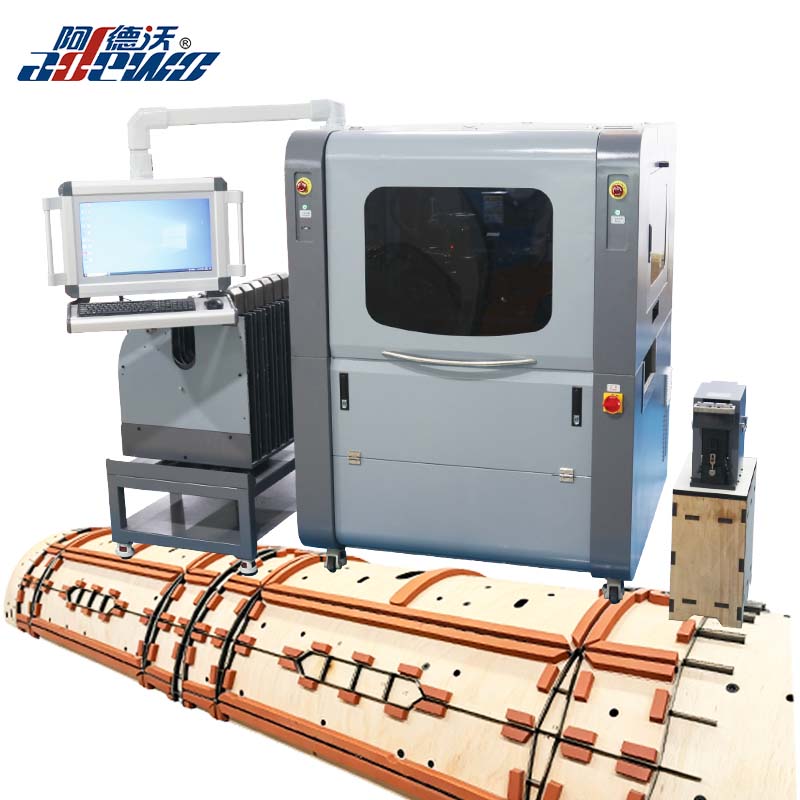
On high-mix corrugated lines, the real conversion cost often hides in the gaps between orders, not in the running speed. Servo positioning changes that math. When a plant shifts from a B-flute carton blank to an E-flute point-of-sale tray, the slitter, creaser, and cut-off sections can reset themselves in the time it takes the old stack to clear the dry end. There’s no manual dial-in, no lock collar to fight, and no reason to slow the wet end for a long mechanical changeover.
That repeatability also cleans up the quality side. Servo systems hold registered print, fold lines, and glue tabs far more consistently across short runs, because the machine isn’t relying on operators to nudge stops back into place after every order. The first sheets off the stack are usable more often, and the trim waste that usually accompanies setup shrinks noticeably. For a box plant where sixty percent of the schedule is under five thousand sheets, those small gains repeat dozens of times a shift and add up to real margin.
Switching Substrates Without Swapping Tooling
Most production floors treat a substrate change as a scheduled interruption. Operators stop the run, unbolt fixtures, recalibrate sensors, and sometimes re-machine entire holding plates just to accommodate a slightly different material thickness or surface finish. The assumption is that each material needs its own dedicated tooling. But that assumption is falling apart. A growing number of workholding and material handling setups are built around the idea that the machine should adapt, not the operator.
The trick often lies in how the material is located and held. Instead of relying on fixed pins, hard stops, or vacuum patterns drilled for one specific sheet size, these systems use quick-adjust rails, modular clamps, or vacuum zones that can be turned on and off independently. For example, a bed with segmented vacuum pods lets you hold a thin acrylic sheet in the morning and a warped plywood panel after lunch without touching a single gasket. The tooling stays in place because it was never designed around a single substrate in the first place.
That kind of flexibility changes more than just setup time. It reduces the shelf space needed for custom jigs, lowers the risk of losing or damaging fixture components during changeovers, and makes short-run or mixed-material jobs economically viable. Shops that stop swapping tooling start thinking less about what the machine was built for and more about what the next sheet can be.
Why Vibration Control Outweighs Raw Speed
Walk into a shop running high-RPM spindles and you'll often hear chatter before you see the finish. That noise is wasted energy, and it lands directly on the part surface as ripples, on the tool edge as micro-chipping, and on the spindle bearings as fatigue. A machine pushed to 18,000 RPM without tuned damping can easily produce a rougher cut than one holding 10,000 RPM with balanced tooling and rigid workholding.
The hidden cost shows up in tool life and downtime. Uncontrolled vibration forces the insert to bounce against the material, so instead of shearing cleanly it hammers, dulling the edge in a fraction of the expected time. Every minute saved by the higher feed rate is lost to a tool change, a scrapped part, or a spindle rebuild. Vibration control keeps the cut predictable, which matters more on a production floor than a peak number on a brochure.
What buyers and machinists actually need is repeatability. A stable 12,000 RPM process that holds tolerance all shift is far more valuable than a 20,000 RPM setup that drifts after lunch. Damping, balanced assemblies, and well-chosen speeds beat raw RPM every time when the goal is consistent parts rather than a quick demo.
Bridging Rotary Die Cutting and Inline Digital Printing
Combining rotary die cutting with inline digital printing isn't just a technical upgrade—it reshapes how short-run and variable-data packaging gets produced. Instead of treating cutting as a separate downstream step, inline systems let you convert printed rolls into finished shapes in one pass. That eliminates extra handling, reduces setup time, and makes it feasible to run jobs with tight turnaround without keeping a warehouse full of pre-cut blanks.
The real payoff shows up when designs demand precision alignment. Digital printing can place fine details, micro-text, or variable barcodes exactly where they need to land, while rotary die cutting follows the same web path and registration marks to hold tight tolerances. This is especially useful for labels, folding cartons, and flexible packaging where a misaligned cut can ruin an otherwise perfect print. However, it requires careful tension control and tooling choices—magnetic dies and adjustable anvils often outperform solid dies when switching between jobs frequently.
What often gets overlooked is the workflow shift. Operators need to think less about separate printing and finishing departments and more about a continuous process. File preparation, step-and-repeat layouts, and die line coordination become part of the same conversation. Once that mindset clicks, the bridge between rotary die cutting and inline digital printing stops being a retrofit challenge and starts working like a natural extension of the press.
Lowering Cost Per Box Through Smarter Die Design
Every box starts as a flat sheet, and the way that sheet is cut determines how much of it ends up as product versus scrap. Older die layouts often leave wide gaps between blanks or force awkward nesting patterns that waste corrugated board along the edges. By reworking the die to use tighter spacing, angled nesting, or shared cut lines where possible, a plant can squeeze two or three extra blanks from the same sheet. That alone can drop the material cost per box by several percentage points, which adds up quickly on high-volume runs.
Beyond material yield, smarter die design also cuts into downtime and maintenance. A die with balanced cutting pressure reduces premature wear on the blades and the anvil, meaning fewer stops for re-sharpening or replacement. Adding micro-serrations or switching to coated steel rules can keep edges sharper longer without increasing board crush. Some plants also redesign the die with faster locking or alignment features, so changeovers between box sizes take minutes instead of half an hour. Fewer interruptions and longer tool life translate directly into lower labor and overhead per carton.
The real payoff shows up when all these gains stack together. A well-engineered die might reduce trim waste from twelve percent down to six, while also cutting die-change time by forty percent. Since the box itself isn't being weakened, customers see no difference in stacking strength or fit. But the manufacturer sees the difference on every invoice. Smarter die design isn't about buying a more expensive tool; it's about designing the tool so the entire production line spends less to make each box that ships.
FAQ
It pairs continuous rotary motion with precision-ground dies, allowing you to cut, score, and crease corrugated board at speeds that flatbed systems can't touch. That speed directly translates into higher throughput without sacrificing edge quality.
Rotary systems run continuously, so the board feeds through without stopping, which is ideal for long runs of the same box style. Flatbed machines start and stop with each cycle, making them slower for repetitive work but still useful for very thick or short-run specialty boards.
Most professional units handle single-wall, double-wall, and even triple-wall board, as well as coated or pre-printed liners. The key is adjusting the anvil gap and die pressure to match flute height and board density, so you avoid crushing the flutes while still getting a clean cut.
Tight registration between the die and anvil means every score and cut lands where it should, so boxes fold square and glue tabs align correctly. When accuracy slips, you get jammed folders, weak corners, and a lot of board headed to the scrap baler.
Daily checks of die bolt tightness, anvil surface condition, and lubrication points prevent most unexpected stoppages. Also, rotating dies out for inspection after a set number of impressions lets you catch worn creasing rules before they start tearing board instead of folding it.
Yes, especially with quick-change die modules and servo-driven registers that remember job settings. Some shops now run dozens of small custom orders a day because changeover takes minutes rather than an hour, and the machine automatically adjusts pressure and speed for each board grade.
Servo motors with independent tension control, laser-hardened die surfaces, and automated scrap stripping systems have made a big difference. Real-time monitoring of cutting force also helps operators spot dull dies early, so they can resharpen before quality drops or the anvil gets damaged.
Conclusion
In modern corrugated packaging, the difference between acceptable output and true production efficiency often comes down to the die making equipment behind the rotary cutter. The best systems are designed so that flutes survive first contact—precision-ground profiles and controlled pressure zones eliminate the crushing that silently ruins board strength. Rather than chasing raw speed, these machines rely on advanced vibration damping and servo-driven synchronization to hold tolerances across long runs and rapid job changes. The servo advantage becomes especially clear in high-mix environments: settings shift electronically between lightweight boards and heavy double-wall stock without needing to swap out bulky tooling. Operators can move from one substrate to the next in minutes, not hours, and the same platform can be tied directly into inline digital printing lines. That bridge between rotary die cutting and digital finishing lets converters offer versioned or short-run packaging without sacrificing the structural integrity that only a well-made die can deliver.
Cost per box is rarely improved by cutting corners on tooling. Instead, smarter die design spreads cutting and creasing forces more evenly, extending die life and reducing the need for touch-up grinding. When the die is built to match the natural resonance of the cutting station, vibration drops, edge quality improves, and downstream jams become rare. That stability is what allows a packaging plant to run mixed schedules with confidence—micro-flute one hour, triple-wall the next—without re-leveling or re-zeroing the machine. The result is a quieter, more predictable production floor where finished boxes meet spec on the first pass and waste stays low. In short, professional rotary die making equipment isn’t just another tool on the line; it’s the foundation that lets modern packaging producers combine speed, flexibility, and print quality while keeping flutes intact and budgets realistic.
Contact Us
Contact Person: KAELYN LEE
Email: [email protected]
Tel/WhatsApp: +86 15012673758
Website: https://www.china-adewo.com