Polyethylene Glycol Factory Processes: A Detailed Look Inside PEG Manufacturing
2026-11-27
Most discussions about polyethylene glycol stop at the final white powder or clear liquid. But step inside a modern PEG plant and the story changes—temperature control, reactor design, and purification steps decide whether the product performs reliably in pharmaceuticals, personal care, or industrial formulations. At POLYKEM, we have seen how small process variations create large differences in molecular weight consistency and purity. This guide walks through the core stages of PEG manufacturing, from raw ethylene oxide handling to final quality checks, so you can understand what truly happens behind the factory gate.
What Actually Happens Inside a PEG Polymerization Reactor
Once the ethylene oxide feed hits the preheated initiator mixture, the reactor stops being a simple vessel and starts behaving like a carefully balanced pressure cooker. The ring-opening step is exothermic enough that jacket cooling alone rarely keeps up, so most systems rely on a combination of internal coils and staged monomer addition. Operators watch the pressure curve more closely than the temperature: a sudden plateau often means the catalyst has deactivated, while a slow creep upward without a corresponding heat release signals that unreacted oxide is accumulating where it shouldn't.
The liquid phase is not the only place where chemistry happens. Ethylene oxide partitions into the vapor space, and without good agitation or a sparge loop, you get concentration gradients that translate into uneven chain lengths. That's why many production reactors use a recirculating loop rather than a simple stirred tank, pulling liquid from the bottom, passing it through an external cooler, and returning it through a dip tube that breaks the foam layer. The foam itself is more than a nuisance—it traps unreacted oxide and can create hot spots if it collapses suddenly.
Toward the end of the cook, the target molecular weight has mostly been reached, but the system still holds residual monomer and low-molecular-weight oligomers. Stripping with nitrogen or pulling a mild vacuum removes the bulk of it, though a short post-reaction hold at slightly elevated temperature helps drive those last few oxide molecules into the chain instead of out the vent. The result is a crude polyglycol that still needs neutralization and filtration, but the reactor's job is already done: building long, reproducible chains without letting the reaction run away.
Ethylene Oxide Feed Ratios and the Molecular Weight They Produce
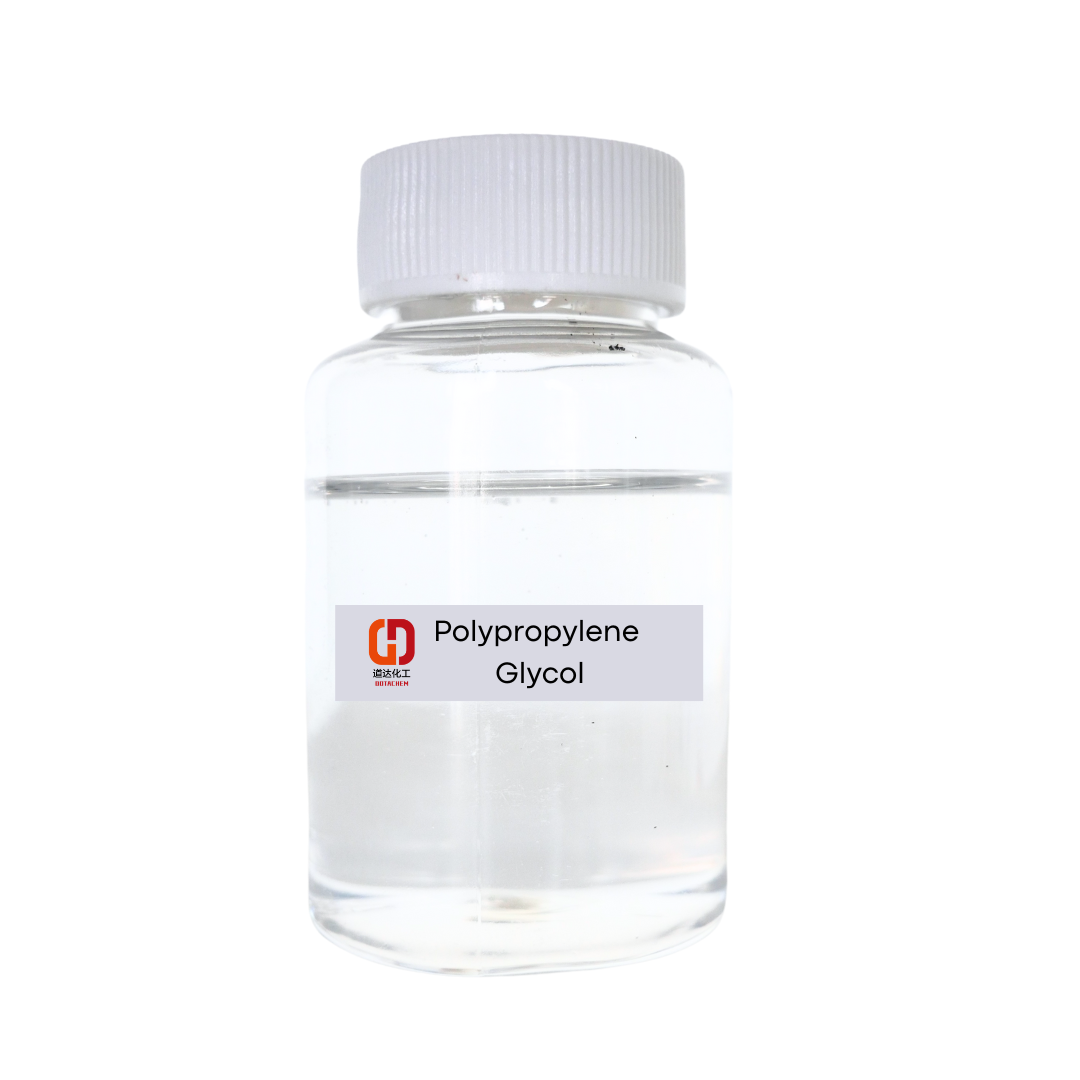
Long before the reactor reaches temperature, the molar balance between ethylene oxide and the starter already sketches the final chain length. In anionic ring-opening polymerizations, each initiating site adds EO units one after another, so pushing the EO-to-initiator ratio upward produces a longer average chain. As a rough guide, the theoretical number-average molecular weight can be estimated by multiplying the EO-to-starter molar ratio by forty-four and adding the starter's molecular weight. Real runs never match the estimate perfectly because moisture, side reactions, and feed inconsistencies distort the distribution, but the feed ratio remains the most direct control knob for molecular weight.
Batch and semi-batch configurations show the same rule from different operating angles. In a semi-batch process, operators can hold the starter charge fixed and add ethylene oxide gradually, stopping at a predetermined mass to hit a target molecular weight. Doubling the EO feed per mole of starter does not simply double solution viscosity in a neat linear way; the molecular weight rises, but rheology, solubility, and crystallization behavior all shift according to their own sensitivities. Because of this, the ratio is usually monitored as a live process variable rather than a static recipe entry.
For copolymers, the ethylene oxide feed ratio influences more than chain size. It controls the length of hydrophilic EO segments and therefore shapes water uptake, glass transition temperature, and surfactant behavior. A higher EO proportion, with the total epoxy-to-initiator ratio held constant, tends to extend the EO runs and may raise the final molecular weight. However, when ethylene oxide competes with other epoxides for the same active sites, the final molecular weight reflects the combined feed, while composition drift depends on the relative reactivities of the monomers.
Why Catalyst Traces Change the Feel of the Final Polymer
The residue left behind by a catalyst rarely announces itself in a spec sheet, yet it quietly reshapes how a polymer behaves in the hand. Even a few parts per million of a transition metal or an organometallic fragment can act as a nucleation point, nudging crystallinity toward smaller, more numerous domains. That shift in microstructure translates directly into a surface that feels less slick, more matte, or unexpectedly tacky, depending on how those traces interfere with chain packing and free volume.
More than just surface effects, catalytic remnants can seed slow degradation during processing or end use. A trace of titanium or tin may accelerate oxidation at the interface, creating a slightly rougher, more chalky texture over time. In films and fibers, this manifests as a loss of the smooth, silky hand that buyers often associate with quality. Manufacturers chasing a consistent tactile profile end up tuning their quench systems and additive packages not to eliminate the catalyst entirely, but to manage its fingerprint in the final solid state.
The sensation difference is often too subtle for instrumental gloss or coefficient-of-friction alone to capture. It lives in the way a film crinkles, how a molded part warms to the touch, or the faint drag between two surfaces. Polymer chemists who have felt both a fully quenched and a catalyst-influenced variant of the same resin know the distinction: one feels engineered, the other feels almost alive with its own stubborn memory of the reactor.
The Neutralization and Bleaching Work Most Plant Descriptions Skip
Most write-ups jump straight from harvest to the finished fiber or extract, leaving out the quiet chemistry that happens in between. Neutralization is rarely glamorous, but it determines whether a plant material will hold its color, resist microbial breakdown, or even feel right against the skin. Without it, residual acids or alkalis from earlier processing stages linger and slowly degrade the very compounds you are trying to preserve.
Bleaching gets an equally short mention. It is not simply about whitening; the goal often involves breaking down stubborn lignins or tannins that would otherwise muddy a final product. The real skill is knowing when to stop, since over-bleaching strips away natural oils, weakens cell walls, and leaves behind a brittle, lifeless result.
What plant descriptions skip, then, is the judgment work. Timing, pH shifts, temperature control, and even the choice of peroxide over chlorine-based agents all change the outcome. The best operators treat this stage as a conversation with the material rather than a fixed recipe.
Water Removal Tactics That Preserve Polymer Integrity
Drying a polymer without introducing microcracks or collapsing its free volume depends less on aggressive heating and more on how moisture is allowed to leave the matrix. A slow temperature ramp, combined with a dry inert gas sweep, lets water migrate from the bulk before the surface skins over. For backbones that are prone to hydrolysis, this stage can matter more than the final drying temperature because trapped vapor creates internal stress even at temperatures well below the glass transition.
Vacuum drying is most effective when pressure is reduced in steps rather than all at once. A sudden drop tends to nucleate bubbles inside soft domains, leaving voids that weaken the material later. If the polymer swells or degrades in water, exchanging the water with a less aggressive solvent such as ethanol or acetone before applying vacuum helps preserve chain architecture while reducing the energy required to remove the remaining liquid.
For delicate hydrogels and highly porous networks, lyophilization avoids the liquid-vapor interface altogether. Pre-freezing conditions largely determine pore shape and wall thickness, so controlled nucleation usually produces a more intact skeleton than simply plunging samples into a cold bath. After sublimation, a secondary desorption step at a slightly elevated temperature removes bound water without allowing residual ice to melt, which keeps the polymer network from collapsing under its own weight.
Batch Versus Continuous Lines and the Quality Trade-offs That Follow
Batch lines tend to reward careful attention at the boundaries. Every lot gets a defined window, and when something drifts, the damage is usually contained to that window. The trade-off is equally clear: more start-stop cycles mean more chances for cleaning gaps, setup errors, and subtle variation between one run and the next.
Continuous lines flip the equation. They hum along in a stable rhythm and can produce remarkably uniform output for hours or days, but the moment a parameter wanders, the affected volume is no longer a single pallet. It is a slice of time. That changes how quality teams think about sampling, because catching a drift early becomes less about checking a batch and more about reading the process.
FAQ
Ethylene oxide is gradually added to an initiator such as water or ethylene glycol in a pressure-rated reactor. The ring opens and chains build outward while temperature and pressure are held within narrow limits. This step determines the backbone length and the overall character of the batch.
The amount of initiator relative to ethylene oxide largely fixes the average chain length. A higher initiator share gives shorter chains and a lower molecular weight, while less initiator pushes the product toward thicker liquids or solid flakes. This is easier to adjust than redesigning the reactor.
The reaction is strongly exothermic, so jacketed reactors and external coolers are used from the start. Ethylene oxide is fed in controlled increments, and temperature interlocks can stop the feed if cooling falls behind. This prevents runaway conditions and unwanted crosslinking.
After polymerization, the mixture is neutralized to deactivate catalyst residues, then filtered or centrifuged. Vacuum stripping removes water and traces of unreacted oxide. Some grades go through carbon treatment or ion exchange for lower color and higher purity.
Polyethylene glycol is hygroscopic, so it picks up water from the air. Moisture changes viscosity, assay results, and storage behavior. Drying under vacuum and transfer in dry conditions help meet tight specifications.
A pressure-rated stainless steel reactor with agitation and jacket cooling is the core. Around it there are raw material feed systems, heat exchangers, vacuum pumps, nitrogen purge lines, filters, dryers, and often flaking or drumming equipment for solid grades.
Labs typically check hydroxyl value, average molecular weight, viscosity, pH, and water content. For pharmaceutical or cosmetic grades, additional tests may include color, residual ethylene oxide, heavy metals, and microbial limits.
Ethylene oxide leak detection, gas monitors, explosion-proof electrical fittings, emergency scrubbers, and strict handling procedures are standard. Because the raw material is toxic and flammable, safety starts at storage and unloading, not just at the reactor.
Conclusion
Inside a polyethylene glycol plant, the polymerization reactor is where ethylene oxide is fed under tight control, and the ratio of initiator to monomer largely decides whether the final product runs thin or turns waxy. Small shifts in feed proportions push the molecular weight up or down, and operators watch this closely because it shapes everything from viscosity to solubility. What often gets less attention is how catalyst residues linger after the reaction. Even trace amounts can alter the feel of the dried polymer, leaving a faint haze or a slightly tacky surface that customers notice before they can name it. Neutralization and bleaching are the quiet steps that correct these flaws, stripping out residual alkalinity and unwanted color without breaking the polymer backbone.
Water removal then becomes the delicate part. Aggressive drying can damage chain integrity, so plants use staged evaporation, vacuum stripping, or thin-film drying to pull moisture out gently. The choice between batch and continuous lines introduces another set of trade-offs: batch gives tighter control for specialty grades, while continuous runs favor consistency and volume but make mid-stream adjustments harder. In practice, a well-run PEG facility balances all of these variables, treating the reactor, purification, and drying stages as one connected system rather than isolated steps.
Contact Us
Contact Person: Levi
Email: [email protected]
Tel/WhatsApp: +86 532 84688720
Website: https://www.polykem-intl.com