

Permanent Magnet Company Delivers Custom Magnetic Solutions for Global Industries
2026-08-13
In a world where precision drives performance, one name quietly powers the custom magnets behind countless global breakthroughs. DAWA doesn’t just manufacture permanent magnets—it engineers tailored magnetic solutions that fit the exact shape, size, and strength your industry demands. From aerospace to medical devices, their team turns complex challenges into reliable, ready-to-use components. Curious how a single magnetic partner can streamline your supply chain and spark innovation? Keep reading.
Custom Magnet Geometries That Fit Your Enclosure, Not the Other Way Around
Off-the-shelf magnets rarely line up with the space you actually have. When the enclosure is already fixed—because of board layout, mounting bosses, or thermal clearances—standard rectangular or disc magnets force you to shim, mill, or add plastic fillers. Custom geometries sidestep that. The magnet gets cut, pressed, or molded to match the cavity exactly, including curved walls, off-center holes, and stepped profiles. The enclosure doesn't move; the magnetic part adapts to it.
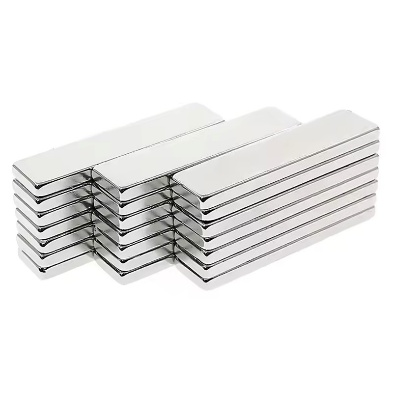
Shaping magnets this way usually involves wire EDM, profile grinding, or injection molding with magnetic compounds. Each method has different limits on corner radius and feature depth, but common shapes include arcs, notched rings, trapezoids, and thin strips with asymmetric holes. What matters is that the magnetic orientation can be set during production—radial, axial, or multipole—so the custom shape doesn't interfere with the field direction. Tolerances of ±0.05 mm on critical surfaces are typical, and tighter is possible when the application can justify it.
This approach removes the need to redesign plastic shells, metal brackets, or PCB cutouts just to accommodate a stock magnet. Instead, you hand over a CAD file or a dimensioned sketch, receive a prototype batch with the exact same geometry, and verify fit before committing to production quantities. The result is a cleaner assembly with fewer adhesive gaps, snap features that actually engage, and no wasted space filled with potting compound. For products where every millimeter of an enclosure is already committed, that kind of design freedom is the whole point.
Prototypes That Mirror Production Tolerances and Coatings
A prototype that drifts a few thousandths of an inch from the production drawing can hide fit issues until it is too late. That is why these builds are machined, molded, or printed to the same GD&T callouts as the final part, including tight hole positions, flatness zones, and profile tolerances. Nothing is relaxed for convenience.
Coatings are treated as part of the geometry, not an afterthought. If the production part will carry an anodized layer, a powder coat, or a PVD finish, the prototype receives that same treatment at the same thickness. This matters because a 25-micron coating can change press-fit behavior, electrical grounding, or optical reflection enough to invalidate test data.
The goal is a prototype that behaves like a production unit under real assembly and test conditions. By keeping tolerances and coatings identical to the released design, teams can catch stack-up problems, abrasion points, and thermal mismatches before tooling is finalized. It turns the prototype from a shape check into a reliable performance check.
Material Guidance Across Rare Earth, Ferrite, and Alnico Without Sales Bias
Rare earth magnets often become the default answer when space is tight, but treating them as one family hides a meaningful split. Neodymium-iron-boron delivers the highest flux density per unit volume yet loses coercivity quickly as temperatures climb past 150°C unless dysprosium or terbium is introduced. Samarium-cobalt costs more and is more brittle, but it holds its magnetic properties across a wider temperature band and shrugs off mild corrosion without plating. This makes the rare earth decision more about the thermal and mechanical environment than about raw pull force.
Ferrite magnets invert that trade-off almost completely. Their remanence is low, so reaching a target air-gap field usually demands a much larger cross-section. In exchange, the material is electrically insulating, which suppresses eddy current heating in dynamic applications, and it remains chemically stable in environments that would attack bare neodymium. Cost per unit of magnetic field can be lower or higher depending on the geometry, so the comparison only makes sense against a specific load line.
Alnico magnets have a reputation for being outdated, but that reputation misses where they still fit. Their coercivity is unusually low, meaning a poorly designed circuit can demagnetize them after a single current spike or removal from the fixture. However, their temperature coefficient of remanence is far better than most alternatives, and they can operate continuously at temperatures that would permanently degrade neodymium. Choosing among these three families usually comes down to the demagnetization curve you can live with, not the marketing sheet in front of you.
Magnetic Subassemblies Packaged and Labeled for Immediate Use
On production floors, time lost to sorting loose magnets or deciphering handwritten tags adds up fast. These magnetic subassemblies arrive in sealed, compartmentalized packaging with clear labels that show part number, polarity orientation, and lot trace data, so operators can grab exactly what's needed without guesswork. The magnets are pre-aligned and protected from chipping or accidental demagnetization during transit.
Each package is designed around the specific assembly sequence. For example, a kit for linear motor tracks might contain matched sets of magnets with alternating pole markings, while a sensor housing kit includes pre-bonded magnet and keep plate subassemblies. Labeling follows the same work instruction numbering used on the floor, cutting down cross-referencing errors.
This ready-to-use approach reduces bench clutter and simplifies inventory rotation. Because every label includes a date code and storage requirement, receiving inspection and stock replenishment happen without opening bags for verification. The result is fewer mixed lots and a smoother handoff from kitting to final assembly.
Regional Manufacturing Hubs That Keep Global Lead Times Short
In most industries, shortening lead times has become as important as lowering unit costs. Certain regional manufacturing hubs reduce waiting times by keeping suppliers, assembly lines, and testing operations within a few dozen kilometers, which eliminates much of the cross-border transport and customs delay. In northern Vietnam's electronics cluster, for example, many factories can replenish components within a day because circuit boards, injection-molded parts, and packaging suppliers are in the same industrial park or a neighboring province. This compact layout turns order changes and rush jobs into routine capacity scheduling instead of multi-week replanning.
Proximity to major consumer markets is another key factor. Mexico's manufacturing base does not rely only on wage advantages; it allows home appliances, automotive parts, and medical consumables destined for North America to move by truck instead of ocean freight. Goods from Monterrey or Tijuana can reach distribution centers in the southwestern and midwestern United States within two to three days. Some companies use a postponed assembly strategy, shipping base units to warehouses near the border and then configuring them according to weekly customer forecasts, which cuts inventory holding from two or three months down to about three weeks.
Central Europe follows a similar logic. Factories in Poland, Czechia, and Slovakia are often half a day to a day's drive from industrial customers in Germany and France. Small-batch machined parts, wire harnesses, and plastic assemblies can be replenished on an hourly or daily schedule rather than locked in weeks ahead as with Asian shipments. Moreover, these regional hubs frequently share production scheduling systems with Western European clients, so shortage and rework information updates in real time, and expedited orders do not need lengthy export clearance and ocean freight booking. As a result, global delivery cycles are compressed significantly.
Application-First Engineering Conversations, Not Catalog Pitches
Every project starts with a real problem on the floor, not a slide deck. We skip the glossy brochures and sit down with your engineering team to map out what actually needs to happen: torque curves, duty cycles, ambient conditions, integration space. The conversation begins with your application, not our product line.
That means talking through failure modes before feature lists, sketching load paths on a whiteboard before quoting part numbers. We ask where the last design fell short, what your operators hate about the current setup, and what a successful shift looks like at 3 a.m. Only then do we bring up components, and even then as possible paths, not predetermined answers.
The result is a working relationship built on shared engineering language. You get a partner who cares about your uptime, your maintenance crew, and your throughput targets — not someone trying to clear inventory with a scripted pitch. When we propose a solution, it comes with calculations, trade-offs, and honest limitations. That is the only kind of conversation worth having before metal gets cut.
FAQ
We produce neodymium iron boron, samarium cobalt, alnico, and bonded magnets in a range of grades, coatings, and magnetization patterns to match specific operating conditions.
Our engineers work from your drawings or field measurements, then build prototypes with the exact pole orientation, mechanical housing, and mounting features your setup requires. We test for pull force and temperature stability before shipping.
Common customers include automotive sensor manufacturers, wind turbine generator builders, medical device producers, oil and gas tooling suppliers, and aerospace component makers, though we also serve smaller industrial automation shops.
Sometimes yes. We start by reverse-engineering the flux density and operating temperature of the existing part, then propose alternative grades or production methods that lower material waste while preserving the needed coercivity and corrosion resistance.
A single prototype usually ships within 10 to 15 business days after design approval. Production quantities of 5,000 to 50,000 units typically take 4 to 6 weeks, depending on the coating line and magnetization fixtures required.
Yes. Samarium cobalt grades remain stable up to 350°C, and we offer epoxy, nickel-copper-nickel, and PTFE coatings that pass 500-hour salt spray tests for offshore and chemical processing applications.
Every batch is tested with a hysteresisgraph and gauss meter, and we include a certificate of conformance with each shipment. We also run process capability studies for repeat orders so the same lot-to-lot variation stays within agreed limits.
Conclusion
Instead of forcing engineers to adapt their designs around off-the-shelf magnets, this supplier treats the enclosure as the starting point—matching unusual geometries, tight tolerances, and production-grade coatings from the very first prototype. That early fidelity removes the usual back-and-forth between sample and final part, because what gets tested is already close to what will ship. Materials guidance is equally grounded: rare earth, ferrite, and alnico options are compared against real performance, temperature, and cost requirements rather than sales quotas, so the recommended grade reflects the application, not the warehouse. This approach consistently produces custom magnetic solutions that fit the physical space and the operating environment, rather than asking the customer to compromise.
Beyond raw magnets, the company supplies magnetic subassemblies that are packaged and labeled for immediate use on assembly lines, eliminating sorting and rework delays. Regional manufacturing hubs support short lead times across global markets, so a design team in one region does not wait on a distant plant or overseas shipping bottlenecks. Equally important, early engineering conversations center on the application’s load, motion, and environmental constraints instead of catalog pitches. The result is a responsive, technically fluent partner that delivers custom magnetics without the usual friction between prototype intent, production reality, and global logistics.
Contact Us
Contact Person: Kelvin Lo
Email: [email protected]
Tel/WhatsApp: 0769-88561131
Website: https://dawamagnetic.com/