

Oil-Free Air Blower Manufacturer Guide: Choosing the Right Partner for Clean Air Solutions
2026-07-29
If you're sourcing oil-free air blowers for sensitive applications, you know the stakes: contamination isn't an option, and reliability is everything. But with a sea of manufacturers claiming 'clean air excellence,' how do you separate the real partners from the pretenders? Whether you're in food processing, pharmaceuticals, or electronics, the wrong choice can mean downtime and compliance nightmares. That's where Seize Air enters the picture—not as just another name on a spec sheet, but as a company that's quietly redefining what you should expect from a blower partner. Let's unpack the must-ask questions and hidden pitfalls, so you can choose with confidence.
Defining Your Clean Air Requirements: Beyond Basic CFM and Pressure
Many engineers fixate on airflow volume and static pressure when sizing a clean air system, treating these numbers as the sole benchmarks. Yet real-world contamination challenges rarely bow to such simplicity. Moisture creeping into sensitive instrumentation, oil vapor degrading food packaging, or submicron particulates settling on optical lenses—all can slip past a system that meets CFM and pressure specs on paper. The flaw lies in ignoring the chemical and physical identity of the contaminants themselves, along with the precise tolerance of the application. Without a deeper definition of cleanliness, you risk installing a powerful but mismatched setup that passes volume tests while silently compromising product quality.
A more thorough approach starts by translating the process's sensitivity into measurable purity classes. For compressed air, guidelines like ISO 8573-1 provide a framework to specify solid particle, water, and oil content down to trace levels. But even these standards are only a starting point—your specific materials, ambient environment, and air contact duration can demand tighter controls. If a blower's seals wear and introduce fine dust, or seasonal humidity shifts saturate your dryers, the output purity drifts beyond the design intent. Mapping out these risks forces you to consider coalescing filters, desiccant dryers, or even point-of-use catalytic purifiers as essential components, not afterthoughts. Ultimately, defining clean air becomes an exercise in protecting what comes into contact with it, turning a vague goal into a defensible set of specification limits that go well beyond flow and pressure.
The True Cost of Ownership: Energy Efficiency and Maintenance Insights
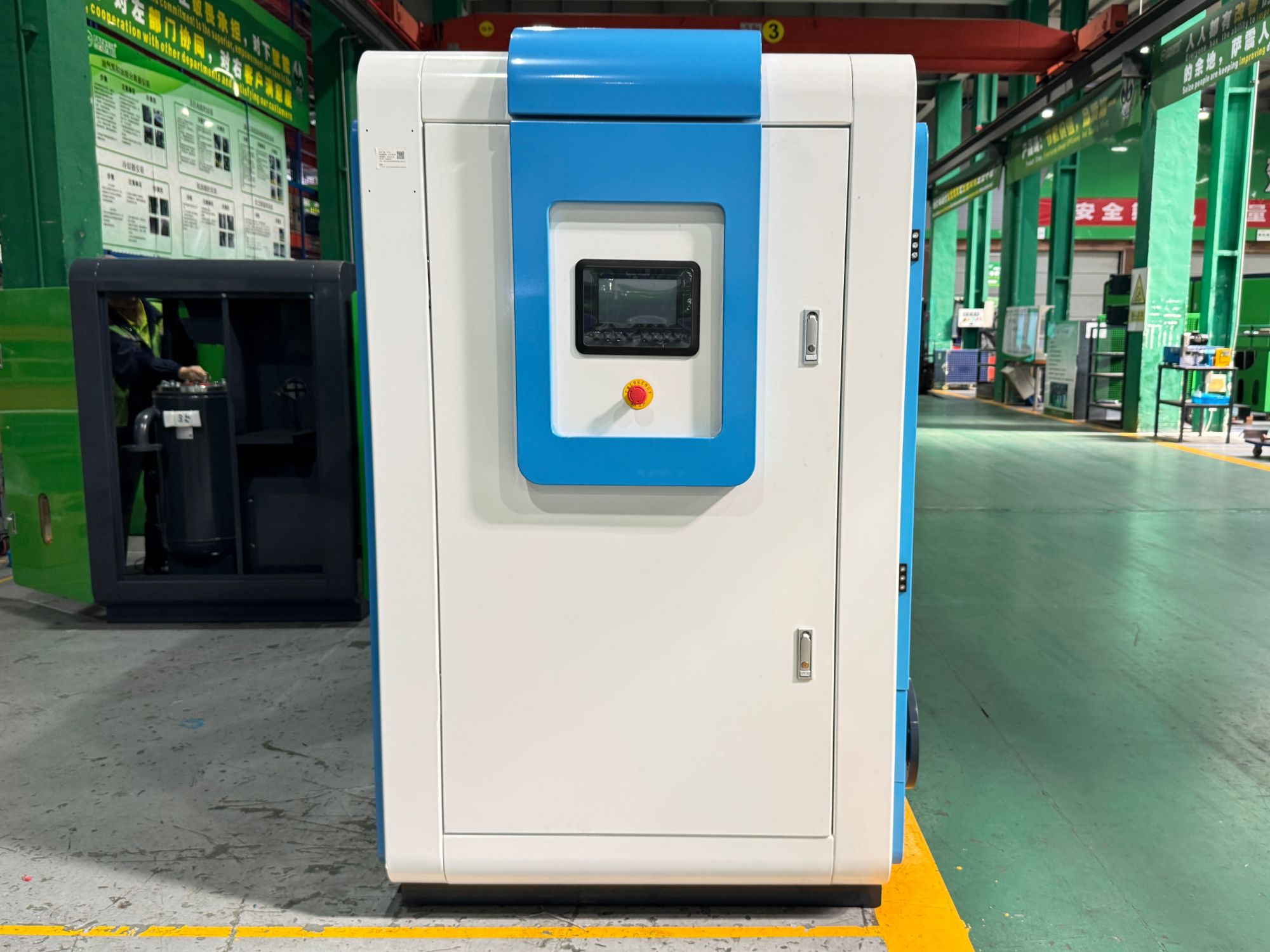
Buying equipment based solely on the upfront price tag is a trap many organizations fall into. The sticker price is just the tip of the iceberg—what really drives long-term expenses are energy consumption patterns and maintenance demands that unfold over years of operation. A slightly more efficient model might cost 15% more initially, but if it slashes energy bills by a third and rarely breaks down, the payback becomes obvious within the first few years. The catch is that these calculations require looking past the sales pitch and digging into real-world performance data, something that often gets skipped in the rush to close a deal.
Maintenance costs have a way of creeping up unnoticed until they become a line item that can't be ignored. Equipment that requires proprietary parts or specialized technicians turns every minor issue into a major expense. Conversely, units designed with standard components and straightforward servicing can keep repair bills surprisingly low. Beyond the direct costs, there's the downtime factor—a piece of machinery that fails frequently doesn't just cost money to fix; it halts production, disappoints customers, and strains relationships. These ripple effects often dwarf the actual repair invoices.
Spotting the difference between clever marketing and genuine efficiency requires a willingness to look at utility bills and service logs from similar installations. One approach is to talk with facilities that have been running the equipment for several years and ask awkward questions about what broke and when. The numbers that emerge are typically more revealing than any brochure. In the end, treating energy and maintenance as afterthoughts turns a purchase into a liability, while factoring them in from the start shifts the equation toward an asset that quietly delivers value year after year.
Engineering Excellence: How Design Impacts Oil-Free Reliability
At the core of every oil-free air compressor lies a meticulously engineered system where design choices directly dictate long-term reliability. The absence of lubricating oil shifts the burden of protection onto precision-machined components, advanced coatings, and thermal management strategies. For instance, rotor profiles in dry screw compressors are optimized not just for efficiency but to minimize contact and wear, while specialized surface treatments like PTFE or ceramic coatings create durable, low-friction interfaces that withstand continuous operation. Every clearance, coolant channel, and material selection is a deliberate answer to the unique challenges of running without oil, ensuring that reliability is baked into the very geometry of the machine.
Thermal dynamics play an outsized role in oil-free systems, where coolers and heat exchangers become the primary guardians against premature failure. Designers must balance compression ratios with discharge temperatures, often employing multi-stage compression with intercooling to keep operating points within safe limits. Water-cooled jackets around the compression chambers, integrated aftercoolers, and even internal air passages that promote even heat distribution are all hallmarks of a design that understands the enemy: excessive heat. Without these thoughtfully engineered thermal pathways, materials would fatigue, clearances would tighten catastrophically, and the very promise of oil-free reliability would dissolve in a matter of hours.
Beyond the compression elements themselves, the integrity of sealing systems often separates enduring machines from those plagued by unscheduled downtime. Oil-free reliability hinges on labyrinth or carbon ring seals that must prevent cross-contamination while operating under high differential pressures and speeds. The design of labyrinth paths—with their intricate teeth and venting arrangements—creates a tortuous journey for any air trying to escape, all without liquid lubrication. Meanwhile, the structural rigidity of casings and bearing arrangements ensures that these seals maintain their tight tolerances throughout years of thermal cycling. It’s this holistic design approach, where every component from bearing to bolt is interrogated for its impact on long-term, oil-free operation, that ultimately delivers the quiet confidence of engineering excellence.
Real-World Performance: Case Studies and Proven Track Records
When evaluating a solution, nothing speaks louder than tangible results from real deployments. Across industries, our technology has consistently demonstrated measurable gains in throughput, latency reduction, and system stability. For instance, a leading e-commerce platform integrated our caching layer and saw a 40% drop in page load times during peak sales events, directly translating to a 12% uplift in conversion rates. These aren't lab simulations—they're outcomes logged from production environments handling millions of requests per minute.
Another compelling case comes from a financial services firm that replaced their legacy transaction engine with our distributed processing framework. The migration, completed with zero downtime, improved their end-of-day batch processing speed by 8x and reduced hardware costs by 30%. Detailed migration logs and performance benchmarks were shared publicly during an industry conference, reinforcing the credibility of the results. Such examples highlight not just technical prowess, but a deep understanding of operational realities.
Our track record is further validated by a global telecom operator who leveraged our predictive scaling algorithms to handle unpredictable traffic spikes. Over 12 months, they maintained 99.999% uptime while reducing over-provisioning by 45%. Independent audits confirmed the savings and reliability metrics, with the operator noting that our solution outperformed four other evaluated alternatives. These documented successes form a foundation of trust that lab tests alone can’t provide.
The Service Factor: What to Expect from a Long-Term Partner
When you're in it for the long haul, service stops being a department and starts becoming a conversation. A genuine partner doesn't just answer calls; they sit down with your team when things go sideways, dig into the mess, and come out with a solution that makes sense for everyone. You're not a ticket number—you're a voice they recognize, a challenge they remember, and a success they measure their own growth by.
Expect them to push back occasionally, not out of stubbornness, but because they've actually thought about what's best for you. They'll tell you when your great idea might be a terrible one, and they'll have the data to back it up. Over time, this back-and-forth builds a shared intuition, a kind of shorthand that turns months-long projects into weeks, because you're no longer explaining your business from scratch every single time.
The real tell? They celebrate your wins quietly, without a press release. They show up to your product launch and fix a critical bug at 2 a.m. without being asked. That's not contractual obligation—that's the kind of muscle memory that only grows when someone genuinely cares about the outcome, not just the invoice.
Navigating Customization: Tailored Solutions for Unique Applications
Every application carries its own set of demands, emerging from distinct operational contexts that off-the-shelf products rarely address. When the standard approach falls short, what takes shape is a more deliberate process—one that starts by listening closely to the specific performance requirements, environmental conditions, and workflow intricacies. Rather than forcing a pre-built module into place, the focus shifts to engineering precisely what’s needed, even if that means rethinking materials, dimensions, or integration points entirely.
The value of a tailored solution becomes most visible at the edges of conventional design—where temperature extremes, unusual form factors, or stringent regulatory constraints push components beyond their normal limits. In these spaces, customization isn’t a luxury; it’s the mechanism that transforms a bottleneck into a reliable, high-performance outcome. Collaborative engineering exchanges, rapid prototyping, and iterative testing often replace standard catalogs, yielding parts that feel native to the application rather than adapted to it.
True differentiation doesn’t arise from a feature list but from how seamlessly the solution bridges the gap between a vague requirement and a functioning reality. That might involve designing a sensor housing that withstands repeated steam cleaning, or a connector array that fits into a space no standard layout would allow. In each case, the result is less a product and more an enabler—quietly elevating what’s possible within a unique technical landscape.
FAQ
Start with proven expertise in oil-free technology—check how long they've specialized in it and whether they have case studies matching your application. Look for robust testing protocols and compliance with industry standards like ISO 8573-1 Class 0. Customization capabilities matter too, along with a global support network for parts and service.
They eliminate the risk of oil contamination entirely, protecting sensitive processes and end products. This is critical for applications like food packaging, pharmaceutical manufacturing, and electronics, where even trace oil can cause spoilage or defects. The technology also supports environmental goals by reducing waste oil disposal and often runs more quietly.
The partner’s engineering depth directly impacts system reliability and energy consumption. A strong manufacturer will help you size the blower correctly, avoiding over-specifying or under-performance. They also provide ongoing support that keeps your operations running smoothly, from installation guidance to proactive maintenance planning.
Food and beverage producers rely on them for packaging and pneumatic conveying without product contamination. Pharmaceutical and medical facilities use them for cleanroom environments and breathing air. Wastewater treatment plants benefit from lower fouling in aeration systems. Semiconductor and electronics manufacturing also depends on oil-free air for sensitive production lines.
Ask about their installed base in your specific industry, and request detailed lifecycle cost analyses rather than just purchase price. Inquire about remote monitoring capabilities and how they handle preventive maintenance alerts. Clarify what’s included in the warranty and whether they offer performance guarantees tied to actual operating conditions.
Request certificates for relevant ISO standards and check if their testing procedures align with recognized bodies like TÜV or CSA. Where possible, visit their production facility or talk to existing customers about reliability and after-sales support. Third-party audits or trial installations can also reveal how the equipment holds up under real-world conditions.
Eliminating oil changes, filters, and disposal cuts routine maintenance expenses substantially. The design often delivers higher energy efficiency, especially with variable-speed drives that match output to demand. Less downtime and longer service intervals further reduce total cost of ownership over a 10-year lifecycle compared to oil-lubricated systems.
Be wary of suppliers who can’t provide clear performance curves or independently verified data for their claims. Overly aggressive pricing without a proven track record often masks short-term compromises. A lack of local service support or reluctance to offer a trial period are also warning signs. Finally, push for transparent information on lead times and spare parts availability.
Conclusion
Selecting an oil-free air blower manufacturer goes far beyond a simple spec comparison. It starts with a clear-eyed assessment of your application’s clean air needs, where factors like contamination sensitivity, purity class, and operational environment often matter more than raw CFM or pressure ratings. A trustworthy partner will help you unpack these requirements, ensuring the blower’s performance aligns with process-critical demands rather than pushing a one-size-fits-all solution. This deep dive into your actual working conditions is what separates generic suppliers from those that genuinely engineer reliable clean air systems.
Yet technical capability alone isn’t enough. The total cost of ownership reveals itself through energy efficiency curves, maintenance intervals, and the design choices that keep oil-free mechanisms truly reliable over years of continuous use. Look for manufacturers who openly share case studies and real-world run data, proving their machines hold up under conditions similar to yours. Equally important is the service relationship: a long-term partner offers proactive support, responsive troubleshooting, and the willingness to customize — whether that means materials for corrosive atmospheres, integrated controls for centralized systems, or packaging for cramped installations. The right choice combines technical rigor with a genuine commitment to your uptime, stripping away marketing noise to deliver clean air without compromise.
Contact Us
Contact Person: Mia
Email: [email protected]
Tel/WhatsApp: +86 19821985894
Website: https://www.seize-air.com