OEM Steel Pallet Supplier: Crafting Durable Custom Pallets for Your Needs
2026-06-13
In the demanding world of logistics and warehousing, the foundation of efficient material handling often comes down to something deceptively simple: the pallet. Yet not all pallets are created equal, and when standard options fall short, businesses need a partner that can deliver precision, durability, and tailored design. That’s where Lanyuda steps in—a leading OEM steel pallet supplier committed to engineering custom solutions that fit your exact operational requirements. Whether you’re managing heavy machinery parts, temperature-sensitive inventory, or high-turnover distribution, discover how Lanyuda’s crafted metal pallets can transform your supply chain from the ground up.
Why Standard Pallets Fall Short for Heavy-Duty Operations
Standard pallets are built for light to medium loads, typically maxing out around 2,500 to 3,000 pounds. Push them under heavy machinery components, dense raw materials, or large industrial batteries and you'll see immediate telltales of failure—splintered deck boards, bent stringers, and collapsed blocks. The issue isn't just about static weight; dynamic stresses from forklift handling and sudden stops multiply the strain far beyond what their basic design assumes.
Beyond breaking points, material fatigue sets in faster than most warehouses admit. Repeated exposure to moisture, chemicals, and rough floor surfaces eats away at standard wood or plastic pallets. Splinters become puncture hazards for workers and tires, while warped runners cause load instability during transport. In heavy-duty settings, a pallet that looks fine on the rack might shatter without warning the moment it's lifted, creating downtime and denting budgets with damage claims.
There's also the overlooked cost of "just good enough" pallet choices. Frequent replacements eat into operational budgets, but the bigger hit comes from load failures that damage high-value products or delay production lines. Custom heavy-duty alternatives—reinforced steel, aluminum, or engineered composites—carry a higher upfront price, yet they pay back quickly through fewer interruptions, better worker safety records, and the ability to standardize shipping for oversized payloads without constant worry.
The Strength Behind Custom Steel: Material and Design Choices
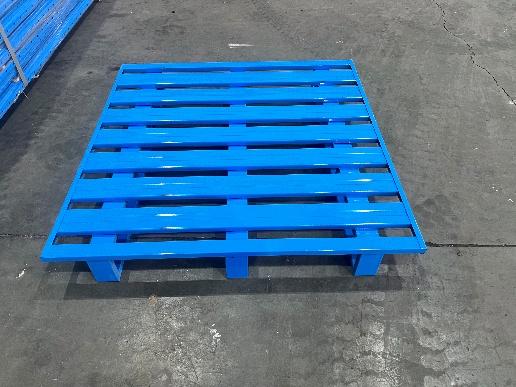
Every project that relies on steel has its own demands, and the real advantage of custom steel comes from being able to fine-tune the material itself. Instead of settling for off-the-shelf grades, we look at things like carbon content, alloying elements, and heat treatment to shape strength, hardness, and flexibility exactly where they’re needed. A higher nickel addition might be the difference between a part that fails in the cold and one that keeps performing. The goal isn’t just to meet a spec sheet—it’s to understand what the steel actually has to live through and build that resilience in from the start.
Design choices are just as important as the chemistry. A thick beam isn’t always the strongest solution; often it’s about how the cross‑section distributes stress, where the welds land, and how the piece sits within the larger structure. Smart geometry can reduce weight while increasing load capacity, and decisions around grain direction or how the steel is formed during fabrication can make a noticeable difference in long-term durability. When material and design are tuned together, you get a component that doesn’t just hold up—it holds up with a purpose-built efficiency that generic options can’t touch.
Tailoring Dimensions and Load Capacity to Your Exact Workflow
Every workspace has its own rhythm, and a one-size-fits-all approach rarely delivers the efficiency you need. By customizing the dimensions of your equipment, you can eliminate awkward reaches and wasted steps. Whether it’s a narrow aisle that demands a slimmer profile or a wide-open floor that calls for a broader base, matching the physical footprint to your environment keeps operations smooth and frustration-free.
Load capacity is just as personal as the layout. Some workflows involve stacking heavy items multiple times a day, while others move lighter loads but require frequent repositioning. Fine-tuning the weight rating ensures you’re not overpaying for unused strength or, worse, straining a system that’s underbuilt. It’s about finding that sweet spot where every lift feels effortless and every component lasts as long as it should.
The real advantage comes when you stop thinking in terms of standard specs and start blending both factors into a single tailored solution. A unit that’s exactly the right height for your tallest operator and can handle your busiest shift without a hiccup isn’t just a tool—it becomes an extension of your workflow. That level of integration doesn’t happen by accident; it’s the result of paying attention to the details that most catalogs overlook.
How OEM Partnerships Streamline Your Supply Chain
Teaming up with original equipment manufacturers cuts out unnecessary steps in your supply chain by giving you direct access to components and finished goods. Instead of juggling multiple suppliers and negotiating piecemeal deals, you consolidate your sourcing under a single, reliable partner who already understands the technical specs and quality benchmarks. This simplifies procurement, reduces lead times, and lets your team focus on core operations rather than chasing down parts.
OEM partnerships also bring a level of predictability that's hard to achieve otherwise. With shared forecasting and integrated production planning, you gain real-time visibility into inventory levels and manufacturing schedules. This alignment helps you avoid stockouts and overstock situations, turning your supply chain into a responsive, demand-driven system. The result is lower carrying costs and a smoother flow from raw materials to finished products.
Beyond efficiency, a strong OEM relationship often unlocks innovation tailored to your needs. Because the manufacturer is invested in your success, they’re more likely to collaborate on custom designs, sustainable materials, or packaging improvements. This kind of proactive problem-solving streamlines not just logistics but product development, giving you a competitive edge without the usual back-and-forth of arms-length transactions.
Beyond the Warehouse: Industries That Rely on Steel Pallet Solutions
Steel pallets are often associated with warehouse storage, but their utility stretches far beyond those walls. In heavy manufacturing, for instance, they routinely carry raw materials like metal coils and engine blocks, withstanding loads that would crack wooden alternatives in an instant. Their resistance to warping under extreme temperatures makes them a natural fit in foundries and automotive plants where heat and weight are constant challenges.
The food and pharmaceutical industries demand uncompromising hygiene, and steel delivers where plastic or wood falls short. These pallets can be steam-cleaned or subjected to harsh chemical washes without absorbing moisture or harboring bacteria. From meat processing facilities to sterile drug production lines, they help maintain the strict sanitation standards that regulators require and consumers expect.
Retail and logistics operations also tap steel pallets for long-haul durability and security. Unlike wooden pallets, they don’t splinter or harbor pests, making them ideal for cross-border shipments that must meet international phytosanitary regulations. For high-value goods or repetitive loop systems, the longevity of steel reduces replacement costs and downtime, proving that their value is measured not just in warehouses, but in every mile they travel.
Long-Term Value: When Upfront Investment Pays Off
Spending more today can feel counterintuitive when cheaper options are within easy reach. But the real cost of a quick fix often reveals itself months later in repairs, replacements, or lost opportunities. A thoughtfully higher initial outlay—on better materials, deeper expertise, or more rigorous testing—quietly shields you from those recurring headaches. It's the difference between repainting every year and applying a coating that still looks fresh a decade later.
Upfront investment also reshapes the relationship you have with what you buy or build. When you commit to quality from the start, the narrative shifts from constant troubleshooting to steady reliance. The tool that never lets you down, the partnership that deepens over time, the design that still makes sense as your needs evolve—these aren't just line items on a balance sheet. They become the quiet backbone of your daily operations, earning their place not through a single transaction but through years of uninterrupted service.
Perhaps the most overlooked payoff is the mental bandwidth it frees. Every minute spent managing a subpar solution is a minute stolen from growth, creativity, or simply peace of mind. Paying more upfront isn't just about durability; it's about choosing to invest in your own attention. When the foundation is solid, you stop patching cracks and start building upward—with a clarity that no bargain can provide.
FAQ
OEM stands for Original Equipment Manufacturer. In the context of steel pallets, it means the supplier produces pallets based on your own designs, specifications, or brand requirements, rather than offering only standard off-the-shelf models. This allows you to get pallets perfectly matched to your equipment, workflow, or product dimensions.
Steel pallets generally outlast wood and plastic by a wide margin. They resist impact, moisture, pests, and extreme temperatures without warping, splintering, or degrading. A well-built steel pallet can endure years of heavy use, often justifying the initial investment through lowered replacement costs and fewer load failures.
Yes, that’s the core of OEM service. You can specify exact length, width, height, beam placements, and even target dynamic or static load ratings. The supplier engineers the pallet to handle your heaviest products safely, ensuring compatibility with forklifts, racking systems, and automated lines.
Options go beyond size. Common add-ons include non-slip surface coatings, galvanized finishes for corrosion resistance, removable sides, drop gates, custom attachment points for strapping, or integrated RFID holders. You can also choose solid or mesh decks depending on whether you need debris to fall through or a fully contained surface.
They’re a staple in automotive manufacturing, metalworking, heavy machinery, chemical processing, and any sector where loads are exceptionally heavy or conditions are tough. Cold storage facilities also prefer them because steel stays rigid in freezing temperatures and doesn’t absorb moisture like wood.
Usually you’d start by sharing your requirements, drawings, or sample specs. The supplier’s engineering team reviews feasibility, suggests improvements if needed, and creates a prototype for your approval. After sign-off, full production uses precise cutting, welding, and finishing steps, with quality checks at key stages.
Reputable suppliers conduct load testing, dimensional inspections, and weld integrity checks throughout the run. Some also follow ISO or industry-specific standards. They may use certified raw materials and maintain traceability. Many offer third-party testing if your project requires documented compliance.
Conclusion
When operations demand more than what off-the-shelf solutions can handle, standard pallets quickly reveal their limitations. Splintering wood, bent frames, and inconsistent dimensions become daily headaches, slowing down processes and creating safety risks. That’s where a specialized OEM steel pallet supplier steps in, crafting units that aren’t just stronger, but deliberately engineered for the punishing rhythms of heavy-duty work. Using high-grade structural steel, thoughtful welding techniques, and finishes that resist corrosion, these pallets are designed to take a beating without twisting or wearing down. What really sets them apart, though, is the ability to customize every aspect—from overall length and width to beam spacing and static load capacity—so the pallet aligns perfectly with your existing rack systems, conveyors, and forklifts. It’s not about forcing a generic product into your workflow; it’s about building from scratch to match how you actually move and store materials.
Partnering directly with a manufacturer for OEM steel pallets changes the whole procurement equation. Instead of juggling multiple vendors for design, production, and quality checks, you get a single point of contact that understands your operation inside and out. This streamlines everything from initial consultation to delivery, cutting lead times and reducing the friction that typically comes with adapting off-the-shelf items. It’s an approach that resonates beyond traditional warehouses—automotive assembly lines, cold storage facilities, chemical processing plants, and any environment where hygiene, extreme temperatures, or stringent regulations come into play. While the upfront cost might raise eyebrows, the real story is in the long-term math: fewer replacements, less product damage, better ergonomics, and a smoother supply chain that ultimately saves far more than a cheaper alternative ever could. When you measure value in years of trouble-free service rather than the initial purchase price, custom steel pallets stop being an expense and start looking like a smart foundation for growth.
Contact Us
Contact Person: Johnny
Email: [email protected]
Tel/WhatsApp: +86 18151010686
Website: https://lydstorage.com