
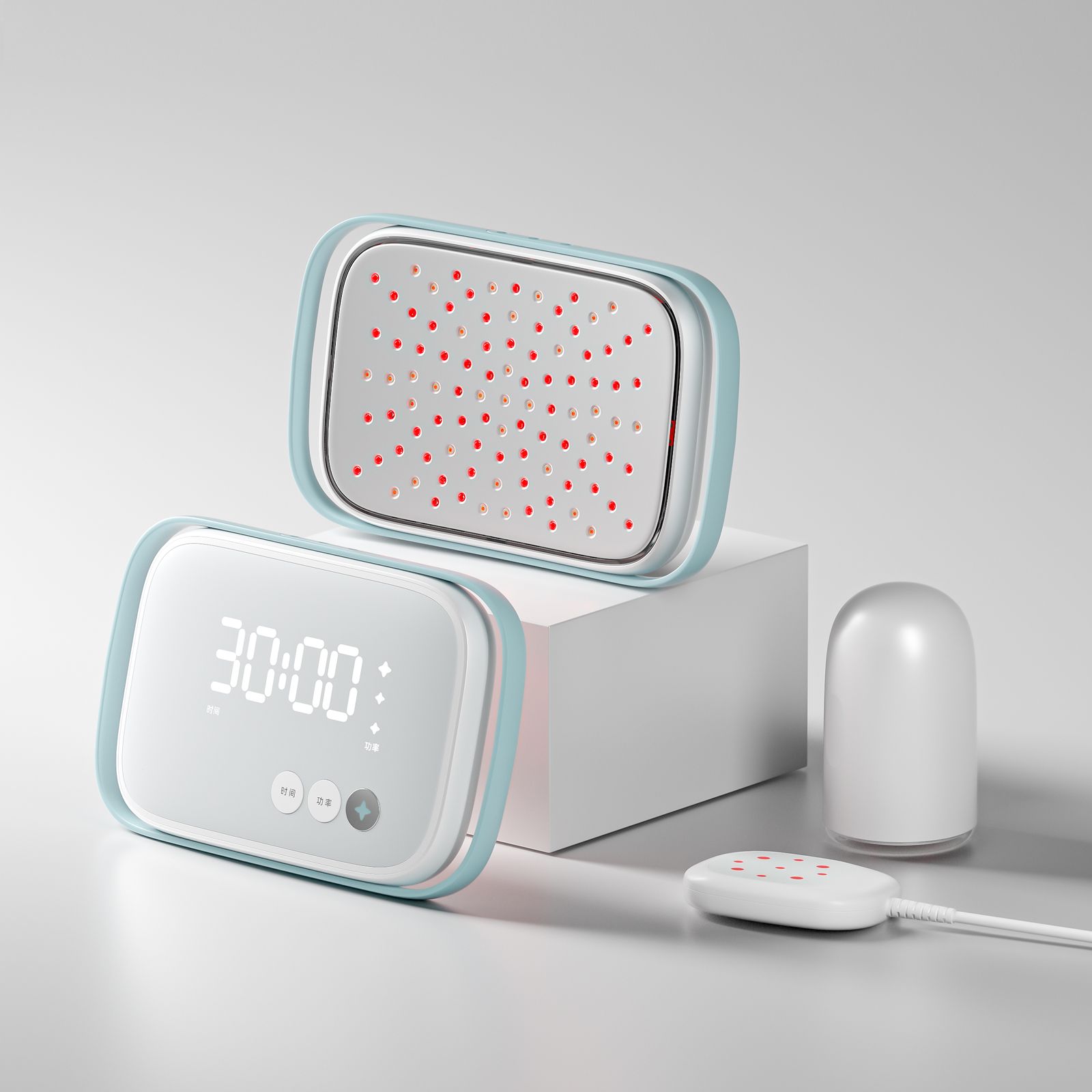
New Type Prostate Red Light Therapy Device Supports Everyday Comfort for Men
2026-11-28
Prostate discomfort has a way of creeping into daily life—long drives, desk work, even sleep. The newest red light therapy devices are designed to address that quietly and consistently. With the GUANG TAI option, the focus stays on everyday comfort: no complicated setup, no clinical appointments, just targeted support that can be used while unwinding at home. For men who are tired of ignoring the problem, this may finally feel like a practical next step.
Light Where It Usually Does Not Reach
Most rooms are mapped by their lamps, and whatever falls outside those pools of light simply disappears after sunset. The gap between a wardrobe and the wall, the strip of floor behind a bedroom door, the low shelf beside the sofa—these places stay dim not because they lack importance, but because fixed lighting rarely bends toward them.
A movable head, a slim profile, a base that can slip into narrow gaps changes that. Instead of asking a room to meet the light halfway, the light can be aimed down, sideways, or tilted to follow the actual shape of a space. It turns forgotten edges into usable surfaces: finding a dropped earring behind a nightstand no longer requires a phone torch.
The real shift is quieter. Once those shadowed strips become visible, a room starts to feel larger and more settled. The eye stops editing them out, and small routines—reading in a corner chair, checking a fuse box, opening a low cupboard—lose their blind spots. The light does not shout; it just reaches where other fixtures never tried.
A Design That Follows Male Anatomy
Most running shorts treat the male body as a flat outline, but this design starts with the actual contours it needs to support. The liner isn't a generic pouch stitched in as an afterthought; it follows the natural geometry of the groin, with a curved seam that cups rather than flattens. That means no awkward adjustment mid-stride, no fabric pulling against sensitive skin, just a fit that moves the way you already move.
The outer shell is cut slightly longer in the front panel and tapered at the sides, which lets the fabric drape cleanly whether you're standing, sitting, or sprinting. A softer elastic waistband sits lower at the front rise and higher at the back, matching the tilt of the pelvis instead of fighting it. Even the leg openings are angled to clear the quadriceps without bunching.
It's a subtle shift from typical sportswear patterns, but noticeable the first time you put them on. Rather than forcing the body to adapt to the garment, the garment has been drawn from the male silhouette itself.
Comfort That Does Not Need a Break-In Period
Most shoes expect you to suffer through stiff leather and sore heels before they feel like yours. These don’t. The first time you slide them on, the footbed already knows where your arch sits and the collar hugs without pinching. There’s no awkward stiffness in the toe box, no rubbing at the Achilles. It feels less like breaking in a new pair and more like finding a pair you forgot you owned.
That instant comfort comes from how the materials are chosen and treated. The upper is softened before it’s stitched, so the flex points move with your foot instead of against it. The lining has a slight give that prevents the usual hot spots. Even the lacing is positioned to avoid pressure across the top of the foot. You won’t need thick socks or bandages just to get through the first week.
What this really means is you don’t have to plan your day around your footwear. No “short walks only” phase, no keeping a backup pair in the car. You put them on at the door and go, whether that’s a full shift on hard floors or a long afternoon through uneven streets. The comfort is already there, from step one, and it doesn’t ask you to earn it.
Fits Into a Normal Day, Not a Treatment Calendar
There is no countdown, no chart taped to the mirror, no alarm quietly reminding you that it is time again. This fits into the spaces that already exist in your day: the few minutes while the coffee brews, the pause after you brush your teeth, the slow stretch before bed. It does not ask you to rearrange anything.
That is the part most routines get wrong. They arrive with their own calendar and their own demands, and eventually they start to feel like one more obligation. This one borrows the habits you already keep, so it rarely feels like a treatment at all. You are not tracking sessions or measuring progress in weeks. You are just going about your day while it does its work in the background.
After a while, it becomes less of a decision and more of a reflex. You reach for it the way you reach for your keys or your toothbrush. That is exactly when it stops being a separate task and starts being part of an ordinary day.
Why the Red Light Approach Is Gaining Trust
Red light therapy has moved well past the wellness gadget label for a simple reason: the people using it keep seeing repeatable results. Physiotherapists now use it after joint work, dermatologists pair it with microneedling, and trainers hand a panel to clients dealing with stiff shoulders. The shift is not driven by one viral claim but by quiet, consistent outcomes that match what the research on specific wavelengths has suggested for years.
Another factor is how easy the routine has become. Early devices were bulky, expensive, and mostly confined to clinics, which made the treatment feel exclusive and unverifiable. As smaller home panels entered the market, people started using them several times a week instead of once a month. That frequency matters because the benefits are cumulative. Users often notice changes they did not expect, such as less redness after sun exposure or faster recovery from a long run, and those small wins build confidence faster than a single dramatic before-and-after photo ever could.
There is also a frankness to the way red light is discussed now. Most practitioners are careful not to promise instant fixes, and the treatment itself is gentle enough that people are willing to test it without fear of downtime or burns. That lower barrier to entry encourages trial, and repeated trial is what turns curiosity into trust.
From First Use to an Everyday Habit
The first time you open something new, there's a flicker of curiosity — maybe even a little skepticism. It's not about love at first click; it's about one small moment that doesn't ask too much of you. A single saved minute, a task that felt lighter, a step you didn't have to think twice about. That's where the shift begins, quietly and without ceremony.
Then comes the second day, and the third. You're not tracking a streak; you're just reaching for the thing that solved a small problem yesterday. It becomes the default, not because someone told you to, but because the alternative now feels like extra effort. Over time, the habit stops being a decision and starts being part of your rhythm — the way you check the weather before leaving, or reach for your keys.
Eventually, you notice it's not something you use anymore. It's just how things get done. That's the quiet signature of a real everyday habit: it disappears into the background and makes your day a little easier without asking for attention.
FAQ
You mostly notice a soft warmth. The pad rests against the area without pressing hard, and once it's on, it's easy to forget it's there.
The shape. Instead of a flat panel you have to sit in front of, the light is concentrated where it's useful for prostate support—so you can stay seated and go about your evening.
Daily use is fine for a lot of people, but start slow. Three or four times a week is a common starting point, and you can adjust from there.
Not really. It's meant to be used while reading, working at a desk, or watching something, so you don't need a separate block of time.
No, it uses low-level red light rather than heat, so the skin shouldn't feel hot or irritated. If anything, there's just a mild warmth.
Men who sit for long stretches, feel pelvic stress, or just want a low-effort way to support comfort in that area often get the most out of it. It doesn't replace a doctor's advice.
Some notice a difference in a couple of weeks, but it can take longer. Consistency seems to matter more than using it for long sessions now and then.
None. Just position it, switch it on, and keep it in place for the session length. That's all the prep involved.
Conclusion
Most prostate-focused devices treat comfort as an afterthought, but this one starts with a simple observation: light can reach places where manual pressure and heat often cannot. The shape is built around the male body rather than forced into a generic outline, so it stays in contact without constant repositioning and does not ask the body to adjust to the tool. Because the materials and curve follow natural anatomy, there is no awkward break-in phase or the feeling that you have to get used to something unnatural. Instead, the first session tends to feel surprisingly ordinary, which is exactly the point.
That ordinary feeling matters because the device is meant to slide into an existing routine, not become a separate medical appointment. It does not require scheduling, special preparation, or a recovery window, so it can sit beside a shower, on a nightstand, or in a gym bag. The growing trust around red light therapy comes less from hype and more from the logic of low-heat, noninvasive light that supports tissue without demanding downtime. Over time, what begins as a curious first use often turns into a quiet daily habit, kept not because it feels clinical but because it feels easy to keep. The benefit does not come from forcing a routine but from removing the reasons to skip it.
Contact Us
Contact Person: Manager Mei
Email: [email protected]
Tel/WhatsApp: +8618627866609
Website: https://zzgt.en.alibaba.com/