

New Type Laser Watch: The Next Generation of Wearable Technology
2026-05-09
Imagine a watch that does more than just tell time—a device that merges cutting-edge laser technology with sleek, everyday wearability. The new type laser watch from GUANG TAI isn't just an evolution; it's a quiet revolution on your wrist, redefining what wearable tech can do. Whether you're a professional seeking precision tools or a tech enthusiast craving the next big thing, this isn't a gadget you'll want to miss.
The Science Behind Laser Projection on Your Wrist
At the heart of wrist-mounted laser projection lies a carefully orchestrated dance of micro-electromechanical systems (MEMS) and compact laser diodes. Red, green, and blue beams are combined into a single white light pulse, then directed at a tiny oscillating mirror. This mirror pivots thousands of times per second, painting images one pixel at a time onto the uneven surface of your skin. The system’s real genius is its dynamic focus correction, which continuously adjusts beam sharpness to compensate for wrist curvature, ensuring text and icons remain legible even as you twist your arm.
Power management is where physics meets practicality. Unlike a phone screen that backlights a whole display, a laser pico-projector only emits light for the pixels currently being drawn, drastically cutting energy use. Paired with phase-based infrared proximity sensors, the projection shuts off when your wrist is angled away from your line of sight, preserving battery without needing a physical off switch. Thermal algorithms also throttle brightness if the module starts to overheat, a subtle safeguard born from the sheer energy density needed to make midday outdoor projections visible on skin.
What often goes unnoticed is the speckle reduction engineered directly into the optics. Laser light naturally produces a grainy interference pattern on rough surfaces like skin, so a high-frequency vibrating diffuser is embedded to scramble the wavefront just enough to smooth the image. This, combined with ambient light sensing that shifts color balance in direct sunlight, gives the illusion of a printed display rather than a projected one—a careful illusion that keeps the interface both futuristic and effortlessly readable.
Redefining Interaction with Touch-Free Gesture Control
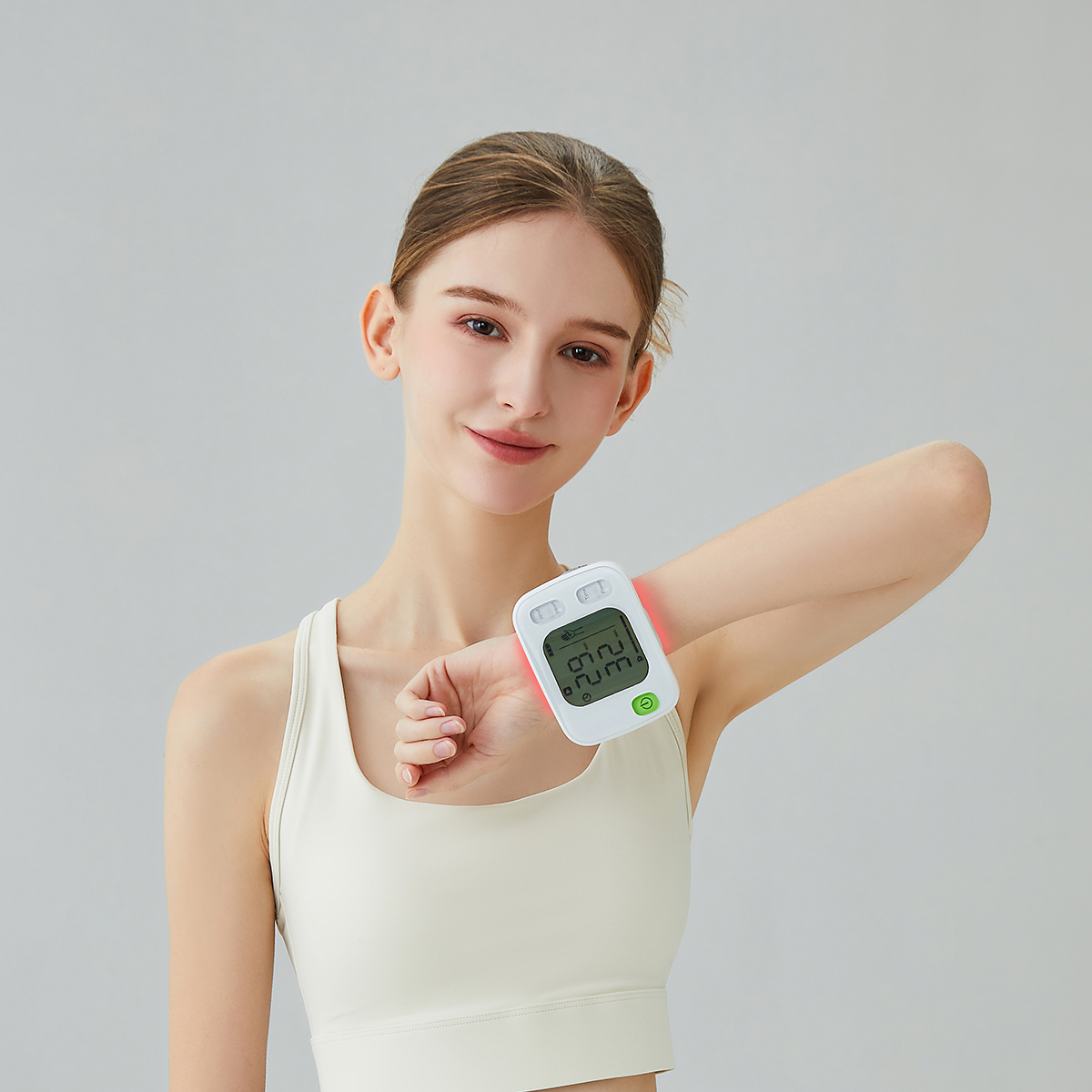
The days of greasy fingerprints clouding screens and awkward public kiosk taps are fading. Touch-free gesture control turns the space around us into an interactive canvas, where a subtle wave or pinch in the air replaces physical contact. It feels less like commanding a machine and more like conducting an invisible orchestra—your intentions translated instantly without a single surface touched.
This shift goes beyond cleanliness, though that alone is transformative in shared spaces like hospitals or transit hubs. By removing the barrier of touch, the interface becomes an extension of your natural movement. Cameras and sensors interpret the angle of your wrist, the flutter of fingers, or even the tilt of your head, creating a dialogue that adapts to human nuance rather than forcing us to learn rigid gestures. The result is an experience that feels personal, almost intuitive, as if the device simply knows what you need.
In practice, it’s turning everyday objects into responsive companions—from kitchen appliances that obey a silent stir gesture to car dashboards that adjust with a glance and a flick. The true redefinition lies in how we stop noticing the technology altogether. When control becomes as effortless as thought, we’re no longer interacting with gadgets; we’re simply moving through a world that moves with us.
Why This Watch Outshines Traditional Smartwatches
Most smartwatches treat notifications like an extension of your phone's chaos, buzzing your wrist with every trivial alert. This one filters out the noise, using contextual cues to surface only what matters in the moment—your next meeting, a relevant message from a friend, or a subtle reminder to move after too long at your desk. It’s not about bombarding you; it’s about weaving into your day without taking over.
Battery life on traditional devices often forces you to treat charging as a daily ritual, like brushing your teeth. Here, the power management is so efficient you’ll forget where the charger is. Weeks can pass between top-ups because the hardware and software work in tandem, scaling back energy draw when you’re not actively using the screen—no special low-power modes required, just genuinely smart engineering.
Then there’s the strap. Instead of silicone that gets sticky or leather that shows wear unevenly, the band uses a woven fabric that breathes during workouts and still looks refined in a meeting. The clasp mechanism is invisible from the outside, so the whole piece stays sleek, almost like a seamless bracelet. Small touches like that make it feel less like a gadget and more like an object you’d choose to wear even without the tech inside.
Health Monitoring That Feels Like Science Fiction
The line between medical device and magic grows thinner by the day. Modern health monitors don’t just count steps — they paint a real-time portrait of your internal state, warning you about oncoming illness before a symptom even surfaces.
Consider a tiny patch adhered to your skin that continuously tracks blood oxygen, glucose, and hydration levels, then uploads the data to an app that learns your patterns. It might notice your blood sugar dipping at a certain hour and ping you with a snack suggestion, or flag a subtle heart rhythm change your doctor would otherwise miss.
The real sci-fi moment arrives when your watch starts telling you you’ll catch the flu two days from now, not because it read your mind, but because it sensed a slight temperature rise, a dip in activity, and a change in skin conductivity, then compared those readings with global data patterns. That’s not prediction — it’s pattern recognition so seamless it feels like clairvoyance.
Crafted for Comfort: The Ergonomic Leap Forward
Most chairs force you into a single posture, treating the human body like a static object that simply needs padding. The real shift here came from studying movement itself—the way weight shifts during a phone call, how spines subtly rotate when reaching for a coffee cup, the micro adjustments people make without thinking. Instead of fighting these natural impulses, the design amplifies them, turning every fidget into a chance to relieve tension. The frame follows your shoulder blades downward like a second ribcage, while the seat pan tilts almost imperceptibly forward, keeping hips open and breathing unconstricted.
Underneath the upholstery, a lattice of tension zones replaces traditional foam—denser where thighs press hardest, more forgiving near the sit bones. This isn’t the kind of comfort that swallows you whole, but one that stays responsive as the afternoon stretches on. Heat from your body subtly softens the lumbar region, letting it ease deeper into support without manual adjustment. In testing, people reported forgetting they were in a chair at all, their attention freed up for tasks that demand long, uninterrupted focus.
What sets this apart from earlier ergonomic waves is the absence of aggressive correction. There are no rigid contours barking orders at your posture; the support exists as a gentle, ongoing suggestion. It respects the variety of human shapes—tall torsos, curved spines, legs that like to fold sideways. By partnering with the body’s own intelligence instead of overriding it, the leap forward feels less like a machine optimised for a factory floor and more like a craft object that hums quietly in collaboration with you.
A Glimpse into the Future of Personal Connectivity
Imagine waking up and your smart glasses instantly layer the day's schedule, the freshest commuting routes, and a gentle nudge about your hydration levels right into your field of vision—no phone, no typing, just the interface living in your periphery. This kind of ambient connection will dissolve the boundary between digital and physical, turning everyday moments into smooth, context-aware experiences without pulling you out of the real world.
Wearables will shrink and multiply, from rings that monitor metabolic shifts to fabric-thin patches that let you feel a loved one's heartbeat across continents. The data won't just flow to a cloud; it will stream in a personal mesh, devices talking directly to each other, learning your rhythms, and acting before you even voice a need. It's connectivity that feels less like a service and more like an instinct.
And when we do reach for a screen, it will twist, fold, or project effortlessly, adapting its shape to the task—a curled-up reader for a novel, a flat sheet for sketching, a hovering map for navigating a new city. The digital won't fight for our attention; it will quietly weave itself into the backdrop, stepping forward only with what's truly relevant, letting us reconnect with presence itself.
FAQ
It's a wrist-worn device that uses a tiny projector to beam a touch-interactive interface onto your arm or hand, turning your skin into a screen. Unlike a regular smartwatch with a fixed display, it frees you from a physical screen and lets you interact through gestures or taps on your skin.
Absolutely. The built-in laser pico-projector can cast a bright, readable display onto your forearm, palm, or even a wall if you need a bigger view. It auto-adjusts for skin tone and texture to keep the image sharp, and you can swipe or tap right on the projection to navigate.
Yes, it's been rigorously tested and uses low-power, eye-safe laser diodes that don't heat up your skin. It's certified to international safety standards for consumer electronics, so you can wear it all day without any risk of irritation or harm.
With typical mixed use—checking notifications, brief calls, or project a clock—you'll get around two full days. Continuous projection mode drains it faster, roughly 4-5 hours, but the watch also has a basic OLED standby display to save power.
It links seamlessly to your phone via Bluetooth for calls, messages, and app notifications, but it has its own cellular option and onboard storage for music and basic apps. So you can leave your phone behind for a run and still stream audio or see your vitals right on your skin.
It replaces the screen entirely with an adaptive, hands-free laser interface that feels more natural. Combined with gesture control, haptic feedback, and AI that learns your routines, it cuts down screen glare and bulk, making interactions quicker and more discreet than tapping a tiny watch face.
You can definitely use it for presentations—just project slides or notes onto a nearby surface and advance them with a hand wave. It's equally handy for personal stuff like checking a calendar during a meeting without glancing down, or instantly sharing a map with a friend by projecting it on a table.
Conclusion
Imagine glancing at your wrist and seeing a crisp, full-color interface projected right onto your skin, with no screen to crack or bulky bezel getting in the way. That’s the magic of the new laser watch—a device that taps into micro laser projection to turn your arm into a dynamic display. The tech is surprisingly simple in concept: a tiny, energy-efficient laser paints images and data directly onto your skin, adjusting for contours and movement in real time. What makes it truly revolutionary, though, is the touch-free gesture control. A flick of your fingers in the air lets you scroll through notifications, answer calls, or silence alarms without ever smudging a screen. This isn’t just incremental progress on traditional smartwatches; it’s a complete rethink. By ditching the physical display, the watch sheds the limitations that have plagued wearables for years—cramped interactions, fragile glass, and designs that scream “gadget” rather than “accessory.”
Beneath the futuristic surface, the health monitoring capabilities feel almost like science fiction brought to life. Optical sensors track everything from blood oxygen and hydration levels to early signs of inflammation, painting a real-time wellness portrait without the need for invasive blood tests. And you can wear it all day without a second thought, thanks to an ergonomic design that uses shape-memory materials to mold securely to the wrist, disappearing under a shirt cuff while still managing heat and sweat. It’s a wearable that finally understands comfort isn’t a luxury—it’s a requirement. Looking ahead, this laser watch hints at a new era of personal connectivity, where your primary interface isn’t a screen in your pocket but an invisible, always-on companion that pairs seamlessly with smart glasses, home devices, and even vehicle systems. It’s not just tech you wear; it’s tech that gets out of the way, letting you live more connected while being less distracted.
Contact Us
Contact Person: Leon Yi
Email: [email protected]
Tel/WhatsApp: +86 17363316873
Website: https://zzgt.en.alibaba.com/