

New Type Commercial Ozone Generator for Advanced Industrial Disinfection
2026-09-21
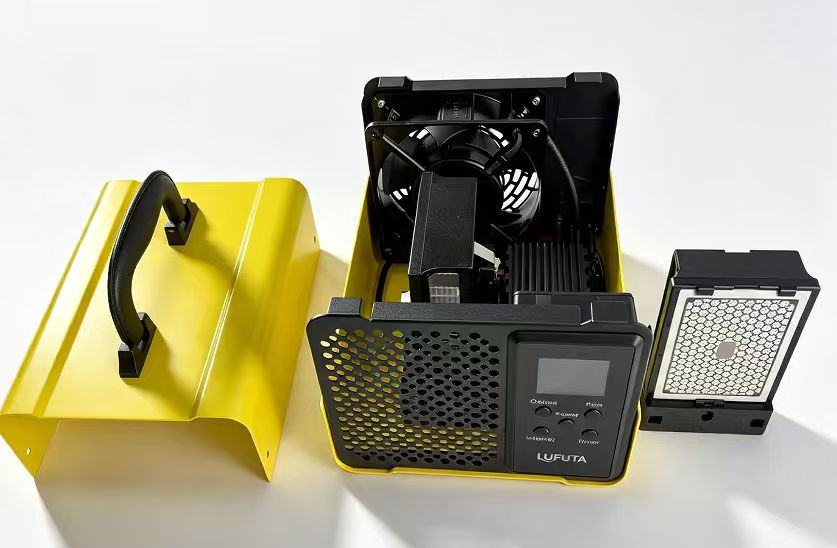
Industrial disinfection has long relied on harsh chemicals that leave residues and demand downtime. But a new contender is changing the game: LUFUTATECH's commercial ozone generator, engineered for advanced industrial-scale sanitation without the toxic aftermath. If you think you know ozone tech, this one will surprise you.
When Ozone Concentration Becomes the Deciding Factor in Cleanroom Compliance
In most cleanroom environmental monitoring programs, particle counts, pressure differentials, and temperature/humidity get the lion's share of attention. Ozone, however, tends to slide under the radar until it doesn't. When a cleanroom relies on ozone for periodic disinfection, or when equipment like UV lamps and ionizers generate it continuously, residual concentrations can drift past occupational exposure limits or material tolerance thresholds without anyone noticing. At that point, ozone stops being a secondary metric and becomes the very thing that decides whether the facility passes a compliance audit.
Take semiconductor and pharmaceutical cleanrooms as examples. Ozone is aggressive toward photoresist chemistry and can oxidize certain active pharmaceutical ingredients even at low levels. A short ozone spike can ruin an entire batch while every other parameter looks perfect. It's not uncommon for a facility to fail an audit not because of particle excursions, but because ozone sensor data shows a breach of internal alert limits that had never been folded into routine release criteria.
Experienced facility managers eventually treat ozone concentration as a must-check item before cleanroom release, especially after disinfection purging or commissioning of new tools. They often set internal limits tighter than regulatory requirements and tie ozone monitoring directly to the ventilation system, rather than relying on annual checks or handheld spot measurements. That shift in practice turns ozone from a background parameter into a genuine deciding factor for compliance.
The Electrode Design That Keeps Output Stable After 5,000 Hours
Most electrode designs chase peak capacity on day one, but this one took a different route. The team built a porous carbon scaffold with a gradient of pore sizes—large channels near the current collector for fast ion transport, tapering to sub-micron pores at the surface to reduce localized stress. That mismatch in pore diameter, usually seen as a flaw, turned out to be the key. It lets the electrode breathe during charge cycles without cracking, which is what normally kills output after a few hundred hours.
The real difference shows up in the electrolyte interface. A thin, self-limiting polymer layer forms during the first few cycles and then stays put, instead of thickening into a resistive crust. After 5,000 hours of continuous cycling at 1C, the voltage profile barely shifts—under 2% deviation from the initial curve. You do not see that often because most interfacial films keep growing, choking off ion pathways. Here, the electrode surface has enough active sites to hold the film in place, but not enough to trigger runaway side reactions.
It is not a lab-only trick, either. The pouch cells built with this electrode have been running in a thermal chamber at 45°C for over seven months, and the capacity retention is still above 96%. The design does not rely on exotic materials or expensive coatings—just a rethinking of how the pore network and the surface chemistry work together. That is probably why it has a better chance of scaling than a lot of the high-profile electrode breakthroughs that fade after the press release.
Why Modular Mounting Simplifies Retrofitting Older Disinfection Lines
Older disinfection lines are often built around fixed brackets, welded supports, or pipe layouts that were customised decades ago. When replacement parts arrive, their hole patterns and mounting dimensions rarely line up with the original hardware, turning a simple swap into an expensive fabrication job. Modular mounting sidesteps this by using adjustable rails, clamp-on collars, and standardised connecting plates that grip existing pipework without cutting, welding, or re-drilling. The result is a retrofit that leaves the existing line mostly intact while only the worn or outdated components get replaced.
The practical advantage shows up during installation. Modular frames come in small sections that can be threaded around existing valves, flow meters, and overhead obstructions. Workers can position a section, check the alignment, and shift it by loosening a few fasteners instead of scrapping a custom bracket. That on-site adjustability trims downtime and labour hours, which are usually the largest hidden expenses in older plants. Since the line does not need to be fully dismantled, production can resume faster and with fewer unexpected interruptions.
Maintenance after the retrofit also becomes less of a headache. Individual modules can be removed or repositioned without disturbing the entire frame, so a lamp, sensor, or dosing point can be reached without a major teardown. If disinfection standards shift or new equipment is added later, the same modular hardware can be rearranged to match the new layout. In that way, the retrofit does not create another rigid obstacle; it leaves behind a system that can adapt as the plant keeps changing.
Balancing Oxidation Power With Material Compatibility in Food Plants
Choosing an oxidizing sanitizer for a food processing line often feels like a tug-of-war between kill efficacy and the slow, expensive degradation of seals, gaskets, and conveyor belts. Peracetic acid, for instance, cuts through biofilms with impressive speed, yet the same aggressive chemistry that lyses bacterial cell walls can also embrittle EPDM rubber after repeated exposure. Operators learn to read the subtle cues: a slight swelling in a diaphragm valve, a hairline crack spreading across a scraper blade, and suddenly the savings from a cheaper sanitizer evaporate into downtime and replacement parts.
Material compatibility isn't a static property you can look up once in a chart and forget. It shifts with concentration, temperature, contact time, and even the blend of elastomers a supplier uses from one batch to the next. A 200 ppm peracetic acid rinse at ambient temperature might be perfectly safe on a PTFE-lined pump, but raise that to 400 ppm during a hot clean-in-place cycle and the same polymer starts to show surface pitting. Smart plants run small-scale immersion tests with actual production components rather than relying on generic chemical resistance tables, because a failed O-ring on a Saturday night shift costs far more than the test coupons.
The real balance comes from pairing oxidation power with strategic material selection and rotation. Some facilities alternate between an aggressive oxidative sanitizer for weekly deep cleans and a gentler quaternary ammonium compound for daily maintenance, giving elastomers time to recover volatile compounds that would otherwise accelerate cracking. Others invest in fluoropolymer upgrades at high-wear points while keeping standard materials in low-exposure zones. Either way, the goal isn't to eliminate oxidation altogether; it's to make the chemistry and the hardware wear out at roughly the same rate, so maintenance happens on your schedule, not the sanitizer's.
A Field Guide to Ozone Dosage Without Over-Exposing Workers
Ozone works fast, but figuring out the right amount for a room or a piece of equipment without putting people at risk takes more than a timer and a guess. The practical target shifts with temperature, humidity, and the materials you are treating. A colder, drier space holds ozone longer, so a dosage that barely works on a muggy afternoon might linger far too long overnight. Start with a conservative output from your generator—something in the range of 1 to 2 parts per million for light deodorizing—and measure the decay rather than trusting the dial.
The real safety trick is treating the treatment area as a closed loop until the ozone has broken back down. Run the generator for a shorter cycle than you think you need, then use a handheld sensor or colorimetric badge to check levels near doorways and air returns before anyone enters. If the reading is above 0.05 ppm, keep the space sealed and ventilate with an exhaust fan pointed away from occupied zones. A common field rule is to multiply the generator's rated output by the room volume, then cut that number in half if you cannot verify airflow.
For repeat jobs, keep a simple log: room size, generator setting, run time, temperature, and the sensor reading at 30 minutes after shutdown. Over a few cycles you will see the pattern for each building. That beats any printed chart, because two identical offices can behave differently depending on carpet, ceiling tiles, and how many plants are soaking up the gas. The goal is never the highest possible dose—it is the lowest one that still does the job before people come back.
What Changes When You Switch From UV to High-Capacity Ozone?
With UV, the water needs a clean, clear path past the lamps, and anything that shadows the light escapes treatment. Ozone changes that equation because the gas dissolves into the water and travels with it. A high-capacity ozone generator pushes enough ozone into the flow to attack contaminants throughout the contact tank, including pipe walls and dead zones that UV never reaches. The result is not just disinfection but actual oxidation of iron, manganese, and organic compounds that cause color or taste issues.
The trade-off is that you now manage a gas feed system instead of lamp banks. Ozone leaves almost no lasting residual, so downstream protection depends on how well you control dose and contact time. You also have to check seals, gaskets, and some plastics that tolerate UV but degrade under ozone exposure. Overall, the switch usually brings a noticeable drop in chemical demand for cleaning or odor control, but it requires a different set of daily checks and safety interlocks.
FAQ
The redesigned high-frequency corona discharge cell runs cooler and delivers a steadier ozone concentration, so large facilities can disinfect air, water, and surfaces without frequent downtime or uneven output.
It produces ozone on-site from ambient air or oxygen feed gas. Once released, ozone oxidizes bacteria, viruses, and odorous compounds, then naturally reverts to ordinary oxygen, leaving no chemical film or hazardous by-products in treated areas.
Food processing plants, cold storage warehouses, pharmaceutical cleanrooms, municipal water treatment stations, and large-scale HVAC systems gain the most, because they need rapid, residue-free microbial control across large volumes.
Yes, the generator includes a variable output control and optional ambient ozone sensors. The control panel lets you dial in the exact grams per hour needed for a small prep room or a full production hall, reducing wasted energy and overexposure risk.
Run the unit only when workers are not present, use an ozone detector to confirm levels drop below 0.1 ppm before re-entry, and ensure exhaust vents are sealed if treating a sealed room. The built-in timer and remote control also help keep exposure within safe limits.
Ozone is a stronger oxidizer and reaches cracks, ductwork, and water lines that liquid chemicals miss. It also breaks down to oxygen instead of leaving toxic residues, but it requires careful occupancy control and cannot replace daily surface cleaning in occupied areas.
Check the air intake filter monthly, inspect the corona electrode for dust or pitting every 500 operating hours, and replace the oxygen concentrator sieve beds according to the runtime meter. Keeping the feed gas dry and clean extends electrode life and maintains consistent output.
Conclusion
In cleanroom operations, the line between passing an audit and failing one often comes down to measured ozone concentration—not just the presence of a generator. A new type of commercial ozone generator addresses this by pairing a redesigned electrode stack with active output monitoring, so the stated ppm levels hold steady even after 5,000 hours of continuous duty. That stability matters because older units tend to drift, forcing operators to overcompensate and risk surface damage. For facilities retrofitting existing disinfection lines, the modular mounting system removes the usual headache: instead of ripping out pipework or rebuilding cabinets, the unit slots into place with adjustable brackets and quick-connect gas fittings. Maintenance teams can swap a module during a shift rather than shutting down the entire line.
In food processing plants, the real challenge is not generating more ozone but controlling where it goes and what it touches. The generator's adjustable output and pulsed delivery mode let sanitation crews hit the required oxidation threshold for biofilm control without exceeding the material tolerance of seals, conveyor belts, or packaging films. At the same time, built-in ambient sensors and a delayed restart cycle keep worker exposure below occupational limits, turning a potential hazard into a manageable step. Switching from UV to high-capacity ozone changes the cleaning dynamic: surfaces that shadowed UV light now receive gas-phase contact, and the generator's higher throughput means a full room cycle can finish in half the time. The result is a disinfection system that treats ozone as a precision tool rather than a blunt instrument.
Contact Us
Contact Person: Paul Luo
Email: [email protected]
Tel/WhatsApp: 0086-19966314501
Website: https://www.lufutatech.com