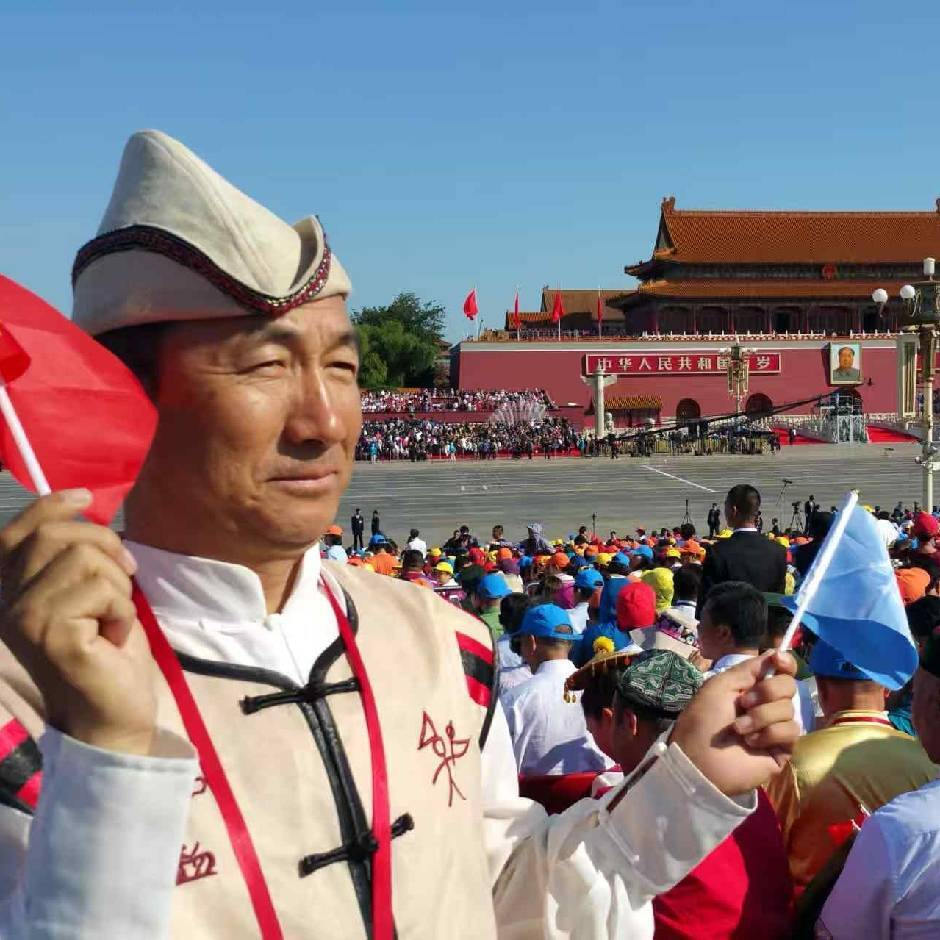

Lijiang's Dongba Culture: Unveiling China's Ancient Naxi Wisdom
2026-08-08
Step into the mystical realm of Lijiang, where the ancient Dongba scripts whisper secrets of the Naxi people—a living culture that has endured for centuries. At the heart of this enchanting world lies Jade Water Village, a rare gem where Dongba traditions are not just preserved but vibrantly alive. Here, shamanic rituals, pictographic manuscripts, and soul-stirring music open a window into a wisdom that predates modern borders. Curious to see how a fading ancient language still speaks to the soul? Let’s wander through the cobblestone paths and uncover the timeless spirit of Naxi.
Ink and Spirit: The Journey into Dongba Sacred Calligraphy
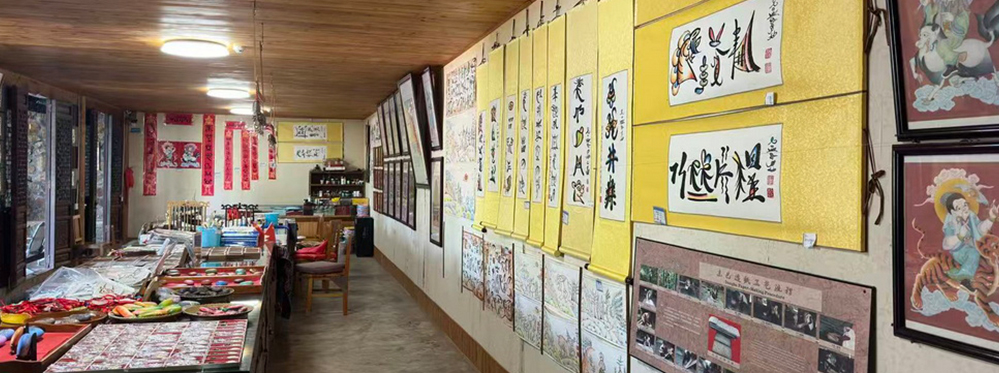
To witness Dongba calligraphy is to step into a world where ink flows not merely as writing but as a bridge to the divine. Practiced by the Naxi people of southwest China, this sacred script is more than a means of communication—it is a living ritual, each character a pictographic prayer. The brush dances on handmade paper, conjuring birds, trees, and ancestral figures that seem to breathe with an ancient spirit. Unlike the uniformity of modern typography, every stroke carries the calligrapher's inner state, making the act of writing a form of meditation and a dialogue with the unseen.
The journey into Dongba calligraphy often begins not with learning characters, but with quieting the mind. Masters speak of “listening to the ink”—a phrase that hints at the deep interconnection between material and spirit. The ink itself, derived from pine soot and infused with herbal resins, is believed to hold protective energy. As the brush touches paper, the calligrapher enters a liminal space where time dissolves, and the mundane world recedes. This is not art for art’s sake; it is a path of cultivating one’s qi, aligning with the rhythms of nature, and preserving the wisdom of a culture that sees no boundary between the written word and the soul’s expression.
In an age of fleeting digital text, Dongba sacred calligraphy offers a counterpoint rooted in slowness and intention. Each piece is a compact universe—a story, a healing charm, or a record of cosmic balance. The characters themselves resist easy categorization; they are ideographs that have defied erosion by time, surviving despite the pressures of modernization. For those who study them, the journey is transformative: it requires not only technical skill but a readiness to absorb a worldview where every leaf and mountain carries meaning. In the hands of a true practitioner, the ink becomes a spiritual map, guiding both creator and observer back to something essential and timeless.
Guardians of the Jade Dragon: Naxi Rituals on the Snow Mountain
High in the mountains of Yunnan, the Naxi people have long seen the Jade Dragon Snow Mountain as a living deity. Their rituals here are not performances for tourists but private conversations with the peaks. Early morning ceremonies often begin with a dongba priest chanting in the ancient pictographic script, his voice carried by the cold wind. Offerings of barley and pine branches are laid on stone altars, simple gestures meant to honor the mountain’s spirit and ask for safe passage through the high passes.
The mountain itself shapes the rhythm of these rites. Unlike temple-bound traditions, Naxi rituals happen in the open—beside glacial streams, under sheer cliffs, or in alpine meadows where the air is thin. Participants learn to listen for the mountain’s moods: a sudden cloud wrapping a peak might be taken as a sign to pause the ceremony, while a break in the mist is seen as an invitation. This attentiveness turns each ritual into a dialogue, not a recitation, blending belief with a deep knowledge of the local weather and terrain.
What keeps these practices alive isn’t formal teaching, but the quiet insistence of the elders who still climb the slopes with their grandchildren. They tell stories of the mountain’s guardian spirit, Sanduo, and point out sacred rocks shaped by myth. Young Naxi take part not out of obligation but because the mountain feels like family. In this way, the rituals remain a living thread—adapting slowly, yet rooted in the idea that the mountain protects those who show respect.
Echoes from the Bon: Pre-Buddhist Roots of Dongba Beliefs
Long before Buddhism reached the eastern Himalayas, the Naxi people of southwest China nurtured a vibrant spiritual tradition deeply connected to nature and ancestral spirits. This sacred worldview, preserved and passed down by the Dongba priests, bears unmistakable echoes of Bon, the pre-Buddhist religion of Tibet. From the shared reverence for sky, mountain, and water deities to the intricate rituals of appeasement and divination, the Dongba manuscripts reveal a cosmology where humans exist in a delicate balance with an animate universe. The very structure of Dongba ceremonies, with their elaborate offerings, spirit traps, and soul-calling chants, mirrors Bon liturgical patterns, hinting at a time when the two belief systems flowed from a common spiritual reservoir.
One of the most striking parallels lies in the figure of the ritual specialist himself. Both the Dongba practitioner and the Bon priest operate as mediators between worlds, capable of journeying into spirit realms to retrieve lost souls or negotiate with forces that cause illness and misfortune. Their tools are remarkably similar: hand drums, flat bells, and sacred texts written in scripts that evolved independently yet share a phonic and pictographic kinship. The Dongba script, with its vivid pictographs depicting serpents, birds, and mythic heroes, often encodes Bon-like origin stories and purification rites. In fact, certain Dongba chants still retain clear Tibetan loanwords that point to an era when Bonpo sages spread their wisdom along the ancient Tea Horse Road, leaving layers of influence on the indigenous faith of the Naxi.
Yet Dongba religion is far from a mere carbon copy of Bon. It absorbed and transformed these pre-Buddhist elements, blending them with native Naxi animism and clan-based ancestor worship. The result is a uniquely local expression where Bon's cosmic dualism of light and dark is woven into elaborate creation myths featuring the Naxi ancestor Chong-li-ji. Ritual dramas like the "Sacrifice to the Wind" still performed today carry the unmistakable cadence of an older, pre-Buddhist world—one where gods, demons, and humans are not rigidly separate but bound in constant negotiation. This living tradition, though threatened by modernity, stands as a testament to the enduring power of those early spiritual currents that once swept across the roof of the world, long before monasteries dotted the landscape.
A Bridge Between Worlds: The Role of the Dongba Priest
In the shadow of the Jade Dragon Snow Mountain, where the air thins and the world feels closer to the divine, the Dongba priest stands as a living conduit between the seen and the unseen. He is not merely a religious figure but a keeper of an ancient script, a healer who reads the rustle of leaves and the flight of birds, and a storyteller who weaves the songs of creation into the daily lives of the Naxi people. His role defies simple labels—scholar, shaman, ritual master—because he embodies all of them, moving fluidly between the mundane and the sacred.
When a child falls ill or a harvest withers, the village turns to the Dongba, who does not offer quick fixes but journeys into the spirit realm. With intricate chants and hand-drawn pictographs on mulberry paper, he negotiates with ancestors and nature deities, restoring balance without flash or spectacle. His power lies in deep literacy, not in dogma: every symbol he inscribes holds layers of cosmology, medicine, and moral guidance. This oral-visual tradition, passed down through master-apprentice bonds, remains stubbornly resistant to modernization, its power simmering in the quiet, persistent memory of a culture that has survived at the crossroads of empires.
Today, as concrete replaces cobblestones in Lijiang’s old town, the Dongba priest walks a fragile line between preservation and performance. Tourism both threatens and sustains his craft; some ceremonies risk becoming hollow displays, yet the genuine need for his services endures. For many Naxi, he is still the one who opens the gates of the afterlife during funerals, who blesses new homes, who deciphers the world’s hidden grammar. He bridges not only worlds but also eras, carrying a flame that flickers yet refuses to be extinguished, illuminating something essential about the human desire to find meaning beyond the visible horizon.
Naxi Life Codes: Daily Practices Shaped by Dongba Teachings
Dongba teachings, the spiritual backbone of the Naxi people, weave a quiet order into the rhythms of daily life. Far from abstract philosophy, these codes manifest in the way a farmer greets the first light—pausing to whisper gratitude to the mountain gods before stepping into the fields. The Dongba scriptures, written in the only living pictographic script, are not merely relics; they hum in the collective memory, guiding everything from the placement of a hearth stone to the songs sung at a child’s birth. In a Naxi home, you might find a small stone altar by the door, worn smooth by touches of remembrance, where the day’s first cup of water is offered, a gesture older than memory itself.
The pact between humans and nature sits at the heart of these lived codes. The veneration of Shu, the serpent-like nature spirits, translates into tangible rituals—springtime ceremonies by the stream, where families ask forgiveness for any unintentional harm done to the water or the trees. There is no rigid dogma, only a felt sense of reciprocity: if you take firewood, you leave a handful of grain; if you divert a stream, you build a small bridge for the insects. Even in bustling markets, elders still murmur warnings against wasting paper with Dongba characters on it, treating each stroke as a vessel of ancestral breath. These habits, passed down in the kitchen and the courtyard, form an invisible map of respect that younger generations navigate almost instinctively.
What is striking is how these teachings adapt without fracturing. In contemporary Naxi villages, smartphone screens glow next to wooden Dongba amulets, and the same teen who scoffs at old taboos will still observe a moment of silence before an ancient pine thought to house a spirit. The life codes are not enforced by institutions but kept alive through stories, festivals, and the weight of communal gaze. They shape notions of right action—not through sharp commandments but through the soft pressure of shared identity, a current that pulls the Naxi back to an ancient understanding that to live well is to keep the circle unbroken.
Threads of Eternity: The Continuity of Ancient Wisdom in Contemporary Times
The ink of old scrolls still seeps into our digital screens. When a teenager in São Paulo quotes Marcus Aurelius to cope with anxiety, or a Norwegian architect mimics the ventilation shafts of Persian windcatchers, they are not simply reviving relics. They are tapping into a current that has flowed beneath the surface all along, resurfacing wherever human need outgrows novelty. Ancient wisdom persists not as a static archive but as a living grammar—a set of patterns for navigating suffering, community, and the natural world that no algorithm has managed to replace.
Take, for instance, the quiet resurgence of Stoic practice. Once confined to academic footnotes, its emphasis on distinguishing what we can control from what we cannot now anchors therapy modalities, boardroom strategies, and even the routines of professional athletes. Meanwhile, Ayurvedic principles thread through modern wellness not as exotic garnish but as core insights into circadian biology that researchers are only beginning to validate. And the I Ching’s hexagrams, far from being fortune-telling trinkets, are used in some design studios as a framework for systemic thinking—each symbol a meditation on dynamic balance. These are not retreats into the past; they are reinventions that wear their origins lightly.
What holds these threads together is not nostalgia but a counterbalance to the brittleness of pure instrumental reason. As our tools grow more powerful, the ancient reminders to sit with ambiguity, to embrace impermanence, and to find coherence in contradiction become less of a luxury and more of a survival skill. The continuity is not a straight line but a braid, twisting through centuries, frayed at times yet never severed. And perhaps that is the real thread of eternity: not a single truth dragged through time, but an ongoing conversation, always adapting to the next ear that listens.
FAQ
Dongba culture is the traditional culture of the Naxi people, centered around the Dongba religion, a primitive form of shamanism. It includes the unique pictographic Dongba script, sacred texts, rituals, music, dance, and art. Lijiang is the heartland of the Naxi people, making it the living museum where this ancient wisdom is still practiced and celebrated.
The Dongba script is one of the few pictographic scripts still in use today. Unlike phonetic scripts, its characters are pictures representing objects or ideas, resembling a bridge between art and language. Some symbols are direct drawings, while others are more abstract, making it a unique window into the cognitive world of ancient civilizations.
Dongba priests, or 'dongba,' are the custodians of Naxi wisdom. They are not just religious figures but also scholars, healers, and artists. They preside over ceremonies, chant scriptures, and pass down knowledge, ensuring the continuity of oral and written traditions that have been maintained for over a thousand years.
Yes, visitors can experience Dongba rituals during festivals like the Sanduo Festival, dedicated to the Naxi protective deity. In Lijiang's old town or nearby villages, you might see ceremonies such as 'sacrifice to heaven' or 'wind ceremony,' where dongba priests chant in ancient tones, often accompanied by dance and handmade ritual objects.
Dongba art is heavily symbolic, often depicting deities, mythological creatures, and scenes from the Naxi creation epic. Traditional pieces are made on coarse paper called 'dongba paper,' using natural pigments from minerals and plants. The art is not merely decorative but serves a spiritual purpose, used in rituals and scripture illustration.
It's a delicate balance. While tourism has brought global attention, there's a risk of commercialization diluting authenticity. Many local initiatives, like the Dongba Cultural Research Institute, train younger generations in script, dance, and rituals. Some communities offer immersive experiences where travelers can learn directly from dongba masters in a respectful and educational setting.
Translating Dongba script is challenging because it relies heavily on context and oral interpretation by dongba priests. While many symbols have been deciphered, some nuances are lost without the accompanying ritual chants. It's an ongoing scholarly effort, with only a fraction of the thousands of existing scriptures fully understood.
One core idea is the harmony between humans and nature, embodied in the worship of natural spirits and the belief in a chain of being where all elements are interconnected. This eco-spiritual worldview, predating modern environmentalism, teaches respect for the land, water, and animals, which is still reflected in Naxi daily life.
Conclusion
Nestled beneath the snow-draped peaks of Jade Dragon Snow Mountain, the Naxi people of Lijiang have long safeguarded a spiritual universe that remains largely unknown beyond southwest China. Their Dongba culture, named after the learned priests who act as intermediaries between mortals and the spirit realm, thrives through a unique blend of sacred calligraphy, ritual performance, and deep-rooted animism. The intricate Dongba script, considered the world’s only living pictographic writing system, is not simply a means of communication but a visual prayer—each character a brushstroke of spiritual intention. Rituals enacted on the mountain slopes honor natural deities and ancestors, binding the community to a rhythm older than memory.
These traditions trace back to the pre-Buddhist Bon beliefs, yet they have evolved into a distinct ethical framework that quietly shapes Naxi daily life—from agricultural cycles to familial bonds. At its heart stands the Dongba priest, a custodian of oral epics, healing chants, and morality tales, who transforms ordinary moments into threads of a continuous sacred narrative. In a rapidly modernizing world, the culture refuses to fade; instead, it is being rediscovered by younger generations and thoughtfully woven into contemporary art, education, and eco-tourism. Here, ancient wisdom is not a relic but a living conversation, echoing across centuries and inviting the world to listen.
Contact Us
Contact Person: Changhong He
Email: [email protected]
Tel/WhatsApp: 086-0888-5190152
Website: https://vip.e-baixing.com/ysh