

Large Diameter Fiber Fusion Splicer Manufacturer: Key Factors to Consider Before You Buy
2026-08-22
Choosing a large diameter fiber fusion splicer isn’t just about specs on a datasheet—it’s about avoiding costly downtime and inconsistent splices that can quietly erode your project margins. Before you commit, you need to look past the glossy brochures and ask harder questions about heating uniformity, alignment repeatability, and real-world service support. That’s where a proven manufacturer like DVP changes the equation, but even then, not all large diameter splicers are built the same. In this guide, we’ll walk through the factors that separate a reliable workhorse from a bench-top liability.
Core Alignment Stability on Oversized Fibers
Maintaining precise core alignment on oversized fibers places unusual demands on both the clamping mechanics and the feedback loop. Cladding diameters beyond 400 µm introduce larger lever arms for any residual tilt or off-axis seating, so even a 0.2° clamp misalignment can shift the core position by several microns. The alignment routine has to separate genuine core offset from the apparent shift caused by surface irregularities or coating residue, which is why many splicers temporarily increase sampling density near the splice point.
Thermal drift becomes harder to correct once the arc fires. Oversized glass stores and distributes heat differently than standard 125 µm fiber, so the core can wander during the softening phase. In practice, stable alignment is achieved by pre-biasing the motors against the expected expansion direction and using a short second alignment pass after the pre-fusion cleaning arc. This reduces the chance of the core slipping out of the aligned path before the final push.
Another variable is the v-groove profile. For large claddings, shallow or worn grooves allow micro-rotation around the fiber axis, producing a misleading alignment signal. Swapping to deeper, machined grooves with a narrower contact patch and verifying the rotational index mark on the fiber dramatically improves repeatability, especially when splicing oversized fibers with non-concentric cores.
Fiber Holders and Heat Zones Built for Thicker Glass
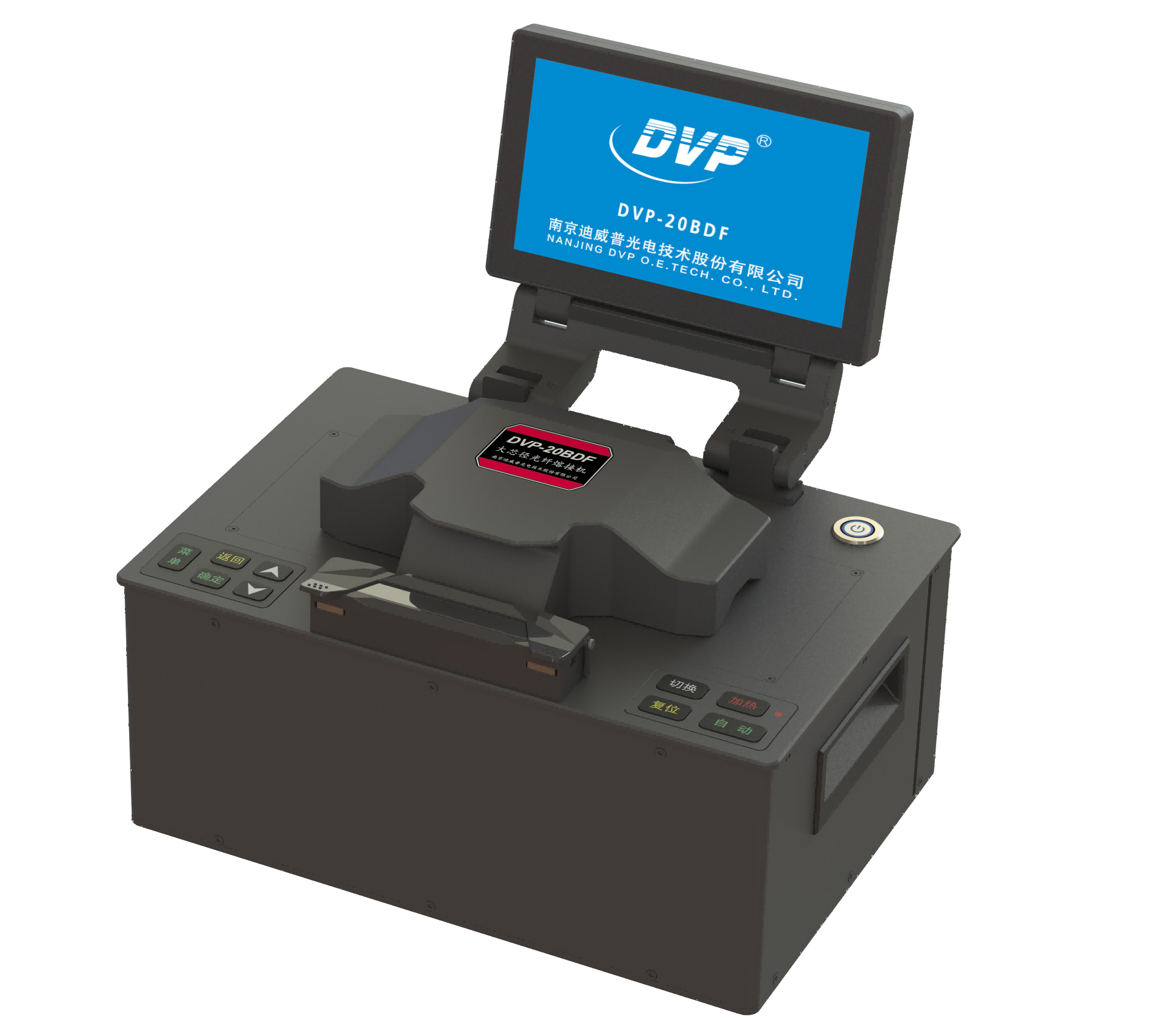
Thicker glass blanks demand more than a wider opening. The fiber holders here use a stepped clamping design with a gentle, full-contact grip that prevents the bundle from slipping or crushing when the material gets heavy. Instead of relying on a single set screw, the jaws distribute tension across a larger surface, so even sheets that run past 6 mm stay aligned without flaring at the edges.
Heat distribution is handled in zones rather than one broad blast. Because thick glass absorbs and holds heat differently than thin sheets, the element layout separates preheat, soak, and working areas into distinct bands. You can run the outer zones slightly cooler during a long soak, then bring the center up to working temperature without overcooking the perimeter. That kind of control matters when you are pulling solid rod or shaping a heavy base.
The housing itself is braced to handle the extra mass. Deeper channels, reinforced side walls, and a wider throat let the thicker stock sit naturally without tilting the torch axis. Fiber guides are spaced to reduce hot spots at the entry point, and the ceramic inserts are replaceable so the high-wear surfaces don't become a permanent weak point.
Electrode Service Life in Daily Production
Most electrode failures on the shop floor aren't sudden—they creep in through overlooked habits. A graphite electrode running non-stop in an electric arc furnace might look solid, but oxidation starts the moment it leaves the protective coating. Operators who push for higher current density often shave weeks off the tip life without realizing it. The trick is to watch the sidewall erosion pattern; if it's uneven, you're likely dealing with misaligned clamps or a poorly centered scrap charge, not just normal wear.
Daily production conditions rarely match the datasheet spec. Dust from slag, moisture in the cooling system, and even the way the electrode is stored overnight can cut service life by a third. One practical move is to schedule a quick visual check at the start of each shift—look for hairline cracks near the nipple joint and any pitting on the surface. Catching these early means you can rotate the electrode or adjust the arc length instead of waiting for a full break mid-heat, which always costs more than the replacement part itself.
Finally, keep a simple log of electrode consumption per tap, not just per week. Patterns emerge fast: a certain furnace operator, a specific scrap mix, or a shift when the power factor drifts. Once you tie electrode life to daily decisions, extending it becomes less about buying premium grades and more about tightening the basics—clean contact surfaces, balanced three-phase operation, and a pause before every start-up to confirm the electrode is properly centered in the roof port.
Software Controls for Odd Fiber Geometries
Most fiber modeling tools assume rotational symmetry, which breaks down quickly when you move to rectangular cores, multi-core layouts, or stress-induced birefringence. Software controls for odd geometries have to let you define an arbitrary cross-section, often by importing a vector outline or drawing directly in a dedicated editor. From there the solver needs to respect every sharp corner and material boundary without smoothing them into an approximation.
A well-designed control panel goes beyond static meshing. It should let you adjust core offsets, cladding shapes, and stress rod positions while the mode profiles update in near real time. For example, tweaking the spacing in a multi-core fiber can shift the coupling length dramatically, so a slider that re-solves the eigenmodes on the fly becomes essential. The same applies to odd cladding geometries like D-shaped or hexagonal fibers, where even small changes in the outer boundary influence bend loss.
Beyond geometry entry, the software has to expose the right numerical knobs. Finite element mesh density near high-index corners, perfectly matched layer thickness, and the choice between scalar and full vector solvers all matter more when the fiber isn't circular. Some tools bury these settings under generic solver menus, but for odd geometries you want them front and center, grouped by physical effect rather than algorithm type. This makes it feasible to optimize a non-standard fiber without running a batch script for every iteration.
Factory Repair Depth and Realistic Turnaround
Most factory repair centers follow a triage protocol that separates quick component swaps from deeper board-level work. A cosmetic LCD replacement often moves through in two to three business days, but a failed power rail or intermittent GPU fault can add four to seven days once microsoldering, thermal cycling, and repeated stress tests are factored in.
The bottleneck is rarely the repair itself. It is the queue of units ahead of yours, the wait for genuine parts from a regional warehouse, and the final QC pass that rejects anything with borderline measurements. If a service center promises a flat 48-hour turnaround for every job, that usually means they are skipping rework verification or using non-original assemblies.
Where Total Cost Outweighs the Purchase Price
The sticker price rarely tells the whole story. A machine that costs less upfront may demand more in maintenance, consume more energy, and break down at the worst possible moments. Those interruptions aren't just line items—they steal time from the people who have to troubleshoot, wait for parts, and explain delays to customers.
Then there are the quieter costs: the hours spent training staff on a clunky interface, the extra inventory kept as a buffer against unpredictable failure, and the slow erosion of trust when deadlines slip. By the time you add it all up, the 'cheap' option can end up costing far more than the premium alternative that would have simply done the job without drama.
FAQ
Many buyers focus only on the price tag and ignore whether the splicer can handle the specific cladding diameters they work with. Another mistake is not asking for live splicing demos with their own fibers. A manufacturer might claim broad compatibility, but the real test is seeing the machine produce consistent splices on your exact fiber type, including any unusual coatings or asymmetries. Also, check how the machine stores and reports splice data—if that's clunky, it will slow down your production line.
For large diameter fibers, core alignment is usually more reliable than cladding alignment because the core can be slightly off-center in a thick cladding. However, some manufacturers offer active alignment that corrects for both core and cladding offset in real time. The best approach is to request a comparison demo with a deliberately offset fiber. If the splicer can still produce a low-loss splice without manual intervention, that's a sign the alignment system is robust. Avoid machines that rely solely on fixed V-grooves for fibers above 400 µm, as they often struggle with diameter variations.
Look at their case studies and ask for references from customers who splice fibers similar to yours—such as photonic crystal fibers, polarization-maintaining fibers, or fibers with metal coatings. A manufacturer with real expertise will ask you detailed questions about your fiber's coating material, diameter tolerance, and end-face prep. They should also be able to recommend the right cleaver and stripping tools. If their answers are generic or they can't name a single customer in your niche, that's a red flag.
Electrode life varies widely depending on the fiber material and splice energy settings. Ask the manufacturer for realistic numbers under your specific workload, not just ideal lab conditions. Also check how easy it is to access and replace electrodes—some machines require a full service call, while others allow a quick swap in minutes. A good design will include an electrode cleaning reminder and perhaps automatic electrode conditioning. Maintenance shouldn't require proprietary tools that lock you into the manufacturer's service team for every minor issue.
On-site training makes a significant difference for large diameter fibers because the splicing process often involves non-standard prep steps and unusual handling. A manual cannot show you how to adjust pressure when the fiber coating is stubborn or how to troubleshoot a dark spot on the camera image. A reputable manufacturer will offer at least a half-day of hands-on training with your own fibers. If they hesitate or charge an exorbitant fee for basic onboarding, consider another supplier. The best training includes a follow-up call after a few weeks of production use.
Ask for a written service level agreement that includes response times for technical questions and spare part dispatch. Then contact two or three current customers and ask how quickly issues were resolved in practice. Pay attention to whether the manufacturer stocks common parts locally or ships everything from overseas. Also, check if software updates are included for the first few years or if they require an annual subscription. A transparent policy on end-of-life support is a strong indicator of a dependable partner.
The software is often overlooked, but it controls critical parameters like arc power calibration, fiber alignment offset, and data logging. You want a splicer that allows you to save custom recipes for each fiber type and switch between them without deep menu diving. Look for features like automatic arc calibration after electrode changes and a clear on-screen splice loss estimate. If the interface feels dated or requires a laptop for simple adjustments, that will add friction for your technicians. A clean, intuitive touchscreen with a logical menu structure is often a sign of thoughtful engineering.
Beyond electrodes, you'll need replacement V-grooves, fiber holders, and possibly stripping blades. Ask for a typical annual consumables cost for your expected splice volume. Find out whether generic alternatives are available or if you're locked into the manufacturer's brand. Also ask about the lead time for a critical component like a camera or mirror assembly—if the answer is weeks, that could halt your production. A good manufacturer will provide a spare parts kit recommendation upfront and may even include a starter kit with the initial purchase.
Conclusion
Buying a large diameter fusion splicer isn't just about finding a machine that can physically clamp a 3 mm or 5 mm fiber. The real test is whether the manufacturer has engineered the core alignment system to stay stable when oversized fibers twist or sag under their own weight. Cheap units drift after a few splices, and you'll chase alignment all shift. Look for holders that grip the cladding without crushing it and heat zones long enough for thicker glass to reflow evenly. Electrode life matters more than the spec sheet suggests—daily production eats cheap electrodes fast, and a splicer that burns through a pair every few hundred splices will quietly inflate your operating cost.
Software is where odd fiber geometries separate serious machines from general-purpose ones. A good manufacturer builds in compensation for ovality, off-center cores, and non-circular claddings, so the splicer doesn't assume every fiber is perfectly round. Ask about factory repair depth, not just warranty length. Some brands only swap boards; others realign optics, replace motors, and recalibrate the entire arc system. Realistic turnaround time matters—if the unit sits in a depot for six weeks, your production stops with it. Finally, don't buy on sticker price. A splicer that needs twice as many electrodes, extra rework, and a second backup machine ends up costing far more than one with higher upfront cost but lower total spend per splice.
Contact Us
Contact Person: Mr XU
Email: [email protected]
Tel/WhatsApp: 86-25-85582828
Website: https://www.dvp.cn/en/