

How China Diethanolisopropanolamine Supports Modern Cement Production
2026-10-19
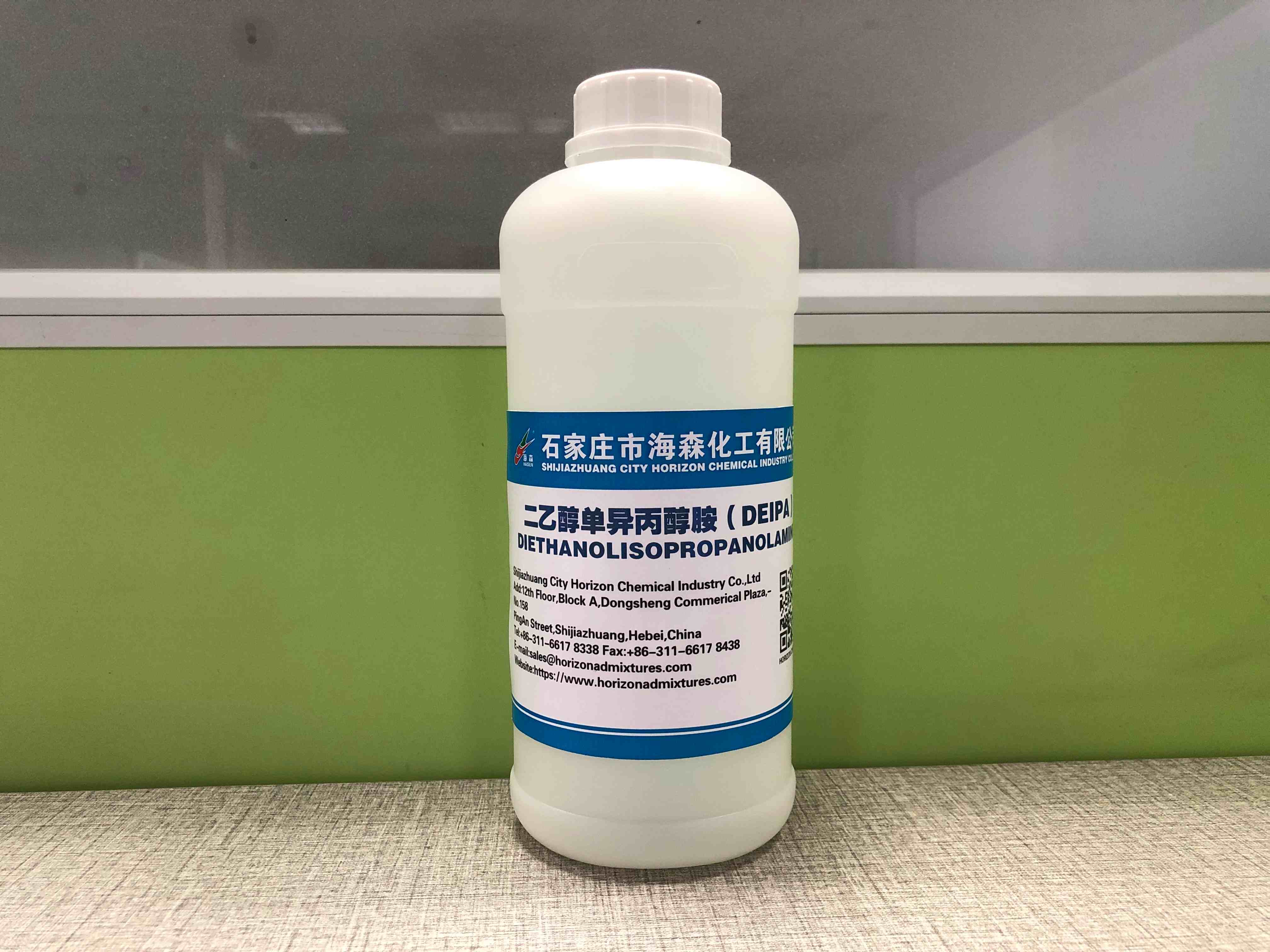
Modern cement production is under constant pressure to deliver higher strength, lower energy consumption, and tighter quality control. One quiet contributor behind these gains is diethanolisopropanolamine (DEIPA) - and China has become a pivotal source of this specialty grinding aid. As a trusted supplier, HAISEN is helping producers unlock faster clinker grinding and better early-age performance without complicating the process. Here’s how this often-overlooked molecule is reshaping the economics of cement plants worldwide.
China's Quiet Bet on DEIPA for Leaner, Stronger Cement
DEIPA is not a household chemical, but inside Chinese cement grinding aids it has moved from a supporting role to a lead performer. Compared with the traditional triethanolamine and triisopropanolamine, DEIPA disperses feed more effectively during milling, reduces ball coating, and its molecular structure continues to promote strength gain well into the later stages of hydration. Cement plants in Shandong, Henan and Guangxi are quietly raising DEIPA dosages, partially replacing or even fully substituting triethanolamine. The shift rarely appears in public technical papers and instead travels through grinding aid suppliers adjusting their formulations on the production floor.
The leaner part refers to a falling clinker factor. China's peak-shaving production schedules and carbon peaking policies force cement makers to produce more cement with less clinker. Adding DEIPA allows higher proportions of slag, fly ash and limestone powder while keeping 28-day compressive strength stable or even higher. In laboratory comparisons, adding 0.02 to 0.05 percent DEIPA can lift late-age strength of ordinary Portland cement by 3 to 5 MPa, while clinker consumption per ton of cement drops by 10 to 15 kilograms. For a national industry producing over 2 billion tons a year, that translates into tens of millions of tons of avoided clinker and carbon emissions.
The supply chain is also expanding quietly. Several fine chemical producers in Shandong and Jiangsu have doubled DEIPA capacity without much brand promotion, selling mainly to grinding aid companies and large cement groups. The price has fallen from over 20,000 yuan per ton a decade ago to around 10,000 yuan today, making it affordable for small and mid-sized plants. Still, the industry remains divided over long-term performance data, especially early strength fluctuations and compatibility with polycarboxylate superplasticizers. As a result, this bet looks more like a gradual process improvement than a dramatic technical revolution.
The Strength-Cost Tradeoff That Chinese Producers Are Finally Solving
For years, the phrase "Chinese manufacturing" conjured images of cheap but flimsy products. Buyers accepted that lower prices meant sacrificing durability, especially in sectors like automotive parts, industrial machinery, and consumer electronics. The underlying assumption was simple: high-strength materials cost more to produce, so a budget-friendly item could never match the toughness of its pricier Western counterpart. That logic held until a quiet revolution began in Chinese factories, where engineers started rethinking not just the materials, but the entire production chain.
The breakthrough came from pairing advanced metallurgy with precision process control. Instead of simply using cheaper alloys, producers began adjusting cooling rates, heat treatment cycles, and micro-alloying elements to squeeze more tensile strength from standard steel and aluminum grades. At the same time, automation reduced human error and material waste, allowing tighter tolerances without expensive rework. The result is a new class of components that meet or exceed international strength benchmarks while staying within the price range that made Chinese goods attractive in the first place.
What makes this shift durable is that it does not rely on subsidies or labor-cost advantages alone. It is a knowledge-based improvement: the same raw input can now yield a 20 to 30 percent gain in fatigue resistance or impact toughness. Buyers are starting to notice. In industries like construction fasteners, bicycle frames, and power tool housings, Chinese suppliers are winning contracts that once went to German or Japanese firms—not because they are cheaper, but because they have finally closed the gap between strength and cost.
One Molecule, Many Mills: Diethanolisopropanolamine Finds Its Niche in China
Diethanolisopropanolamine rarely makes headlines, yet its quiet spread across Chinese industrial parks tells a more interesting story than most blockbuster chemicals. The molecule’s twin hydroxyl groups and tertiary amine structure give it a chameleon-like ability to slip into formulations without demanding attention—a trait that hundreds of mills, from coatings to cement, have learned to exploit. Instead of being locked into a single large-scale application, this compound has carved out dozens of small, specialized roles, each shaped by the particular needs of a local factory floor.
In the Yangtze River Delta, paint producers use it to stabilize cobalt-free driers, while a few hundred kilometers inland, cement grinding plants dose it at low percentages to prevent particle agglomeration and boost mill throughput. Further north, gas treatment units rely on its selective absorption of hydrogen sulfide over carbon dioxide, a property that has made it a quiet workhorse in small-scale biogas and refinery off-gas cleanup. Metalworking fluid formulators in Guangdong blend it as a corrosion inhibitor and pH buffer, often without even listing the chemical by its full name on technical data sheets. Each of these niches is too modest to attract global attention on its own, but collectively they sustain a fragmented yet resilient demand base.
What makes the Chinese case unusual is the sheer variety of production scales involved. A single molecule moves from large integrated chemical complexes to township-level mixing stations, sometimes changing packaging and purity specs along the way. Environmental rules tightening around volatile amines have pushed formulators toward this lower-odor, higher-boiling alternative, and its favorable biodegradation profile aligns with stricter wastewater discharge limits in eastern provinces. No single breakthrough explains its foothold; rather, it is the accumulation of small adjustments across dozens of independent mills that has turned diethanolisopropanolamine into a quietly indispensable niche chemical.
Why Chinese Cement Teams Are Rethinking Their Grinding Aid Chemistry
For more than a decade, grinding aid formulations at Chinese cement plants barely changed—triethanolamine and diethylene glycol did most of the heavy lifting. But in the last couple of years, many technical teams have noticed the same recipes losing their edge on newer grinding circuits. Part of the reason is the clinker itself: with more lines switching to alternative fuels and industrial waste as raw feed, the C3A content and glassy phase structure fluctuate, making the clinker harder to grind and reducing the adsorption efficiency of conventional alkanolamines on certain mineral surfaces.
The pressure from the cost side is even more immediate. Diethylene glycol, a byproduct of large-scale chemical production, has become tighter in supply and wildly volatile in price. Batch-to-batch impurity levels also vary enough to affect cement compatibility with polycarboxylate superplasticizers. Meanwhile, environmental regulators are gradually lowering the permitted limits for chloride ions, alkali content, and volatile organic compounds in grinding aids, forcing plants to drop cheap but poorly characterized raw materials.
As a result, some teams are shifting their focus from simply raising mill output to controlling particle size distribution and early hydration. For example, they might blend small amounts of modified polycarboxylate or lignin derivatives with the existing alkanolamine base, or bring in locally available glycerin or molasses as secondary components, tuning molecular weight and functional groups to match the changing clinker. This kind of customized approach is no longer just a recipe swap—it treats the grinding aid as an integral part of cement performance design.
How a Minor Additive Is Reshaping Finish Grinding in Chinese Plants
For years, finish grinding circuits in Chinese cement plants followed a familiar pattern: push the mill harder, extend retention time, or accept a coarser product when demand spiked. The idea that a minuscule dose of a chemical additive could shift that balance was met with skepticism on the plant floor. Yet a growing number of operators are now seeing the additive not as a costly extra, but as a way to stretch the capability of their existing ball mills and vertical roller mills without major capital investment.
The mechanism is subtle but measurable. The additive disperses fine particles and coats freshly fractured surfaces, preventing them from re-agglomerating and cushioning the grinding media. This allows the mill to convert more of its energy into actual size reduction rather than generating heat and dust. In closed-circuit systems, the change shows up quickly: circulating loads drop, separator efficiency improves, and the same motor draws a slightly lower current while maintaining or even raising the Blaine surface area.
What convinces plant managers, however, is the daily production report. A few hundred grams per ton of cement can reduce specific power consumption by several kilowatt-hours, shift the particle size distribution toward a narrower range, and allow a small increase in supplementary cementitious materials without sacrificing early strength. The key is precise dosing and consistent mixing; too much additive can cause excessive fluidization and upset the mill's internal dynamics. Once tuned, many Chinese plants treat it as a standard operating parameter rather than a trial.
The Overlooked Link Between China's Clinker Factor and Amine Chemistry
China's cement industry has long chased a lower clinker factor as a straightforward path to trimming carbon emissions. But what often gets lost in the noise is how this substitution ripples through the chemical behavior of cement additives, particularly amine-based grinding aids and quality improvers. When clinker content drops and supplementary materials like fly ash or slag take up more of the blend, the surface chemistry of the resulting powder shifts in ways that standard dosage charts rarely capture. Amines that once performed predictably at a clinker factor of 0.85 can suddenly underdeliver at 0.70—not because the additive itself changed, but because the reactive landscape it operates in has fundamentally altered.
The interplay is subtle. Amine compounds work largely by adsorbing onto particle surfaces, reducing agglomeration during grinding and later influencing early hydration. But a lower clinker factor means fewer calcium silicate phases available for those amines to latch onto, while the increased proportion of pozzolanic or inert materials introduces competing adsorption sites with different charge densities and moisture affinities. A mill operator might blame a drop in early strength on the additive supplier, while the real culprit is a mismatch between the amine's molecular design and the new mineralogical mix. This isn't a failure of chemistry; it's a failure to treat the clinker factor as a variable that changes the chemical equilibrium, not just the recipe proportions.
Paying attention to this overlooked link opens a door to smarter formulation. Instead of pushing amine dosage up in a desperate attempt to recover lost performance, producers could switch to amine blends tailored for high-supplementary-cementitious-material systems—molecules that prefer alumina-rich surfaces or that tolerate higher sulfate variability from industrial byproducts. Some Chinese plants have already stumbled onto this by accident, finding that certain alkanolamine combinations work better at clinker factors below 0.65 than the traditional triethanolamine-based products. The next step is turning that accident into a deliberate design principle, where clinker factor and amine chemistry are adjusted together rather than treated as separate dials on the control panel.
FAQ
Diethanolisopropanolamine, often shortened to DEIPA, is an alkanolamine compound that serves as a grinding aid and strength enhancer in cement milling. It works by adsorbing onto the surface of cement particles, reducing agglomeration and improving the efficiency of the grinding process. This allows mills to produce finer cement with lower energy consumption while also boosting early and late compressive strength.
By coating the freshly fractured surfaces of clinker and other components, DEIPA prevents particles from re-adhering to each other and to the mill lining. This lowers the resistance inside the mill, so the same output can be achieved with less electrical power. In many plants, switching to DEIPA from conventional grinding aids reduces specific energy consumption by five to ten percent, which translates into a direct reduction in operating costs.
China has large-scale production capacity for the raw materials used to synthesize DEIPA, particularly propylene oxide and isopropanolamine derivatives. The country's integrated chemical parks and mature logistics allow manufacturers to produce DEIPA at competitive prices while maintaining consistent purity. Many Chinese suppliers also offer customized blends for different clinker compositions, which makes them attractive to cement producers worldwide.
While triethanolamine has been used for decades as a cement grinding aid, DEIPA generally provides stronger early-age strength gains at comparable dosage rates. It also tends to be more effective with high-blaine cements and modern vertical roller mills. Additionally, DEIPA is often less sticky and easier to handle in bulk storage systems, which reduces clogging and pumping problems at the plant.
Yes. Because DEIPA improves grinding efficiency, less electricity is consumed per ton of cement, and since electricity generation often relies on fossil fuels, this cuts indirect CO2 emissions. Furthermore, by enhancing cement strength, DEIPA permits higher substitution of clinker with supplementary cementitious materials like fly ash or slag. Clinker production is the most carbon-intensive step, so reducing the clinker factor directly lowers the overall carbon footprint of the final cement.
The effective dosage usually falls between 0.02 percent and 0.05 percent by weight of cement, though exact amounts depend on mill type, clinker hardness, targeted fineness, and the presence of other additives. It is common to start at 0.03 percent and adjust based on mill performance and early strength results. Overdosing can sometimes lead to undesirable setting behavior, so careful calibration is important.
At normal dosages, DEIPA has only a minor influence on setting time, typically extending it slightly without causing major delays. This can be beneficial in hot weather or for long-distance transport of ready-mix concrete. However, excessive use may retard setting more noticeably and alter rheology, so it is essential to conduct trial mixes with the specific cement and admixture combination before full-scale adoption.
Key parameters include active content, water content, color, pH, and the concentration of impurities such as free amines or chloride. Reputable suppliers provide a certificate of analysis and often offer samples for mill trials. It is also wise to verify the product's stability under local storage conditions and to confirm that the supplier can maintain batch-to-batch consistency over long-term contracts.
Conclusion
For years, Chinese cement plants have faced a stubborn equation: lower clinker content cuts costs and carbon, but it also weakens early and late strength. DEIPA emerged quietly as a practical answer. Unlike conventional grinding aids that mostly improve mill throughput, diethanolisopropanolamine works on the chemistry of hydration—it accelerates the reaction of alite and belite, letting producers replace more clinker with limestone or fly ash without sacrificing the 28-day figures that matter for structural concrete. This explains why the molecule is now a regular feature in finish grinding circuits across Hebei, Shandong, and Guangdong. It is not a marketing story; quality engineers noticed that a small dose could shave grinding time while keeping Blaine fineness stable. Over dozens of mills, the same pattern repeats: less energy per ton, fewer clinker purchases, and compressive strength that meets the grade. That is the real 'quiet bet' — a low-profile additive with an outsized influence on the economics of Chinese cement.
The shift goes beyond a single plant. As provincial quotas tighten and coal prices swing, Chinese producers have started rethinking the entire grinding aid chemistry. Traditional triethanolamine blends are being replaced or supplemented by DEIPA because the cost per ton of strength gained is simply better. The overlooked link between China's clinker factor and amine chemistry runs through the finish mill: a mill optimized for DEIPA uses less clinker, runs cooler, and produces a cement that hydrates more completely. Field trials show that even a 0.01% dosage change can lift 3-day strength by a few megapascals—enough to allow a further 2–3% reduction in clinker without breaching the standard. 'One molecule, many mills' is not an exaggeration; the same DEIPA sample performs predictably across vertical roller mills and ball mills, making it easier for technical teams to standardize. What began as a niche solution for lean mixes is now reshaping finish grinding, turning a minor additive into a quiet lever for both cost control and carbon compliance.
Contact Us
Contact Person: Sam Lee
Email: [email protected]
Tel/WhatsApp: 86-311-6617 8338
Website: https://www.horizonadmixtures.com/