

High Quality Puff Snack Food Production Line: Elevating Snack Manufacturing Efficiency
2026-05-11
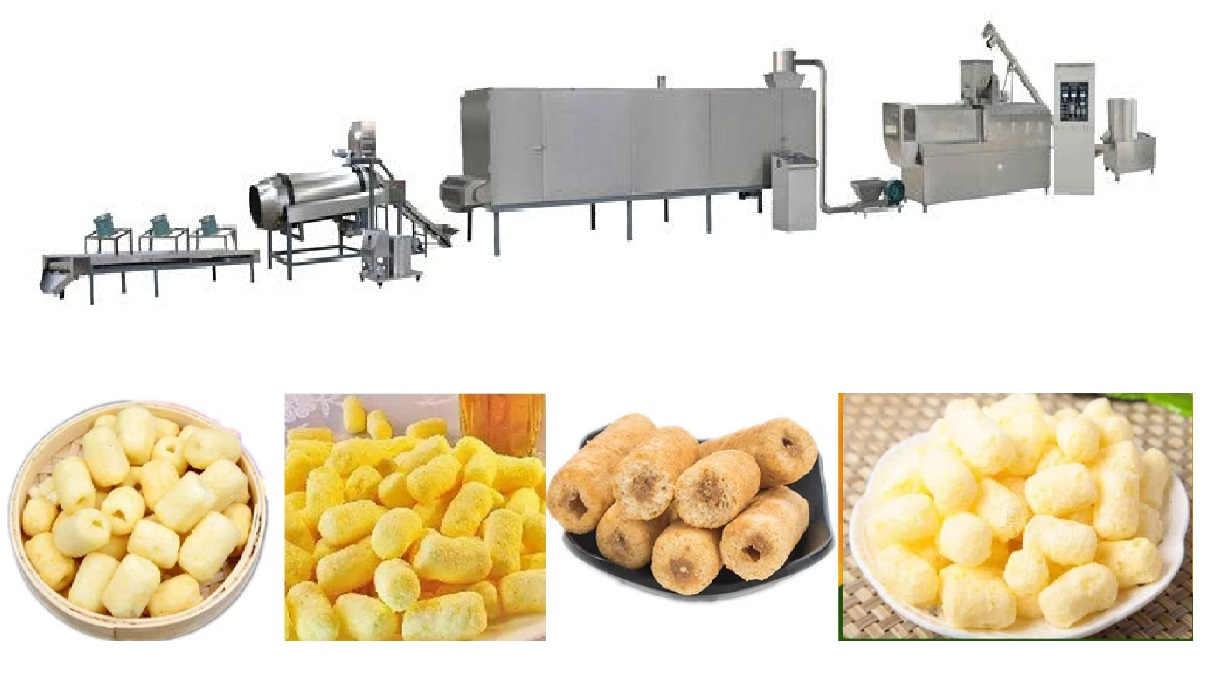
Snack production demands precision, but too often, machinery lags behind ambition. What if there was a solution that seamlessly blends high capacity with the delicate art of puff snack creation? That’s where MINGDE comes in. Their high-quality puff snack food production line isn’t just another piece of equipment – it’s a productivity powerhouse engineered for the modern manufacturer. From consistent extrusion to perfect seasoning, every detail is optimized. Ready to see how it can transform your efficiency? Let’s dive in.
Core Innovations Driving Puff Snack Production
Advances in extrusion technology have reshaped how puff snacks are made, moving beyond simple high-temperature, high-pressure systems. Modern setups use precise thermal control and multi-zone cooking to tailor expansion rates, creating lighter, crispier textures while retaining more flavor. Variable screw designs let manufacturers tweak shear and mixing in real time, which means one line can shift from dense lentil crisps to airy corn puffs without major downtime. This flexibility slashes waste and opens the door to using unconventional ingredients like ancient grains or bean flours without sacrificing that signature melt-away mouthfeel.
Equipment modularity has become a quiet revolution, letting producers reconfigure dryers, coaters, and flavor applicators as trends swing. Automated feedback loops now monitor moisture, density, and oil absorption on the fly, adjusting parameters to maintain uniformity batch after batch. This shift doesn’t just boost consistency—it unlocks new shapes and hybrid textures by coordinating extrusion with post-processing steps like vacuum frying or targeted air impingement. The result? Snacks that stay crunchy longer and carry delicate flavors that traditional methods would burn off.
Energy efficiency and raw material optimization underpin the latest wave of innovation. Closed-loop water and heat recovery systems cut utility costs while allowing lower-temperature puffed snacks that preserve heat-sensitive nutrients. At the same time, advanced preconditioning and minimal-waste extruder paths are making it possible to run high-fiber, high-protein recipes that used to clog machines or turn out like cardboard. These silent breakthroughs are nudging the whole category toward cleaner labels and better margins, without the consumer ever noticing the engineering behind their snack.
Streamlined Workflows for Consistent Output
A well-thought-out process removes guesswork, turning scattered efforts into a reliable rhythm. By mapping each step from idea to final delivery, teams reduce friction and cut down on rework. Clear handoffs and defined review stages keep everyone aligned, so the output remains steady no matter who’s at the wheel. This kind of structure doesn’t stifle creativity—it channels it, giving people the freedom to focus on the work that matters instead of reinventing the method every time.
Smart automation takes care of the repetitive stuff that drains energy and invites mistakes. When routine checks, formatting, and asset generation run in the background, the team can put their attention where it counts. The result is a more even pace across projects, with fewer last-minute scrambles and a quality level that holds up from one piece to the next. Over time, these automated guardrails build a foundation that handles growth without collapsing under its own weight.
Feedback loops embedded directly into the workflow turn consistency from a static target into an evolving strength. Regular retrospectives and lightweight performance metrics highlight what’s working and what’s drifting off course. Small tweaks compound, keeping the process responsive without destabilizing the output. When everyone can see how their part fits into the bigger picture, ownership grows and the end result becomes less about firefighting and more about delivering with calm confidence.
Material Handling and Preparation Advances
Material handling has come a long way from the days of manual carts and basic forklifts. Modern facilities now lean heavily on automated guided vehicles and cobots that work alongside crews without safety cages. These machines map their own routes, dodge obstacles in real time, and keep production flowing even during shift changes. The payoff isn’t just speed—it’s a steep drop in product damage and fewer strain injuries among workers.
On the preparation side, advances are just as practical. Inline blending systems now swap recipes in seconds instead of hours, thanks to quick-connect fittings and self-draining pipework that cut cross-contamination risks. Even laundry cycles for reusable containers have tightened up, using less water and energy while still meeting cleanroom specs. Small tweaks like these add up, turning chaotic prep areas into predictable, audit-ready zones.
Sustainability is weaving into these upgrades quietly but firmly. Lightweight composite pallets are replacing hardwood, lasting longer and shedding splinters that ruined sensitive goods. Packaging lines tap real-time thickness sensors to trim film use by double digits without compromising load stability. It’s a shift where every material decision now pulls double duty—better output and a lighter footprint.
Energy-Saving Design in Modern Extrusion Systems
Modern extrusion lines increasingly rely on intelligent drive systems that adapt power consumption to actual load demands. By integrating variable-speed motors and regenerative braking, equipment can recover energy during deceleration phases, feeding it back into the grid or storing it for subsequent cycles. This dynamic adjustment eliminates the constant-speed inefficiencies of older machinery, often slashing overall electricity usage by 20% or more without compromising throughput.
Barrel heating and cooling represent another significant energy drain, yet newer designs tackle this through insulated barrel shrouds and zoned temperature controllers. Instead of running heaters at full capacity continuously, these systems use predictive algorithms that factor in screw speed and material viscosity, applying heat only when and where needed. Some setups even repurpose waste heat from the cooling circuits to pre-heat incoming raw material, creating a closed-loop thermal balance.
Beyond hardware, process optimization plays a quiet but critical role. Low-temperature processing grades and optimized screw geometries allow materials to plasticize with less mechanical work, reducing the overall energy input. Coupled with real-time monitoring that flags deviations before they become energy-wasting problems, these soft measures ensure that sustainability is engineered into daily operation rather than treated as an afterthought.
Quality Control at Every Stage of Processing
We don't treat quality control as a final checkpoint — it's woven into every step from raw material intake to finished product. Incoming ingredients are tested before they even enter the facility, ensuring only what meets our standards moves forward. During blending and milling, inline sensors track moisture, particle size, and consistency, flagging deviations before they ripple downstream. This real-time monitoring allows line operators to adjust on the fly rather than relying on post-production batch testing.
When products move to forming or filling, automated vision systems inspect each unit for weight, seal integrity, and labeling accuracy. Any item that falls outside preset tolerances is removed without slowing the line. Human inspectors rotate through stations to catch subtle issues machines might miss — like an off smell or slight texture variation. These overlapping checks create multiple defense layers without redundant paperwork or bottlenecks.
Even after packaging, we pull samples for accelerated shelf-life tests and taste panels. Data from each stage feeds back into the process, so if a trend emerges — say, a slight shift in salt distribution — the team can trace it back to a specific mixer or ingredient lot. This closed-loop approach turns every batch into a learning opportunity, not just a pass-fail event. Quality here isn't a department; it's how every processor thinks about their work.
Scaling Production Without Sacrificing Texture
Growing a product line from pilot batches to full-scale manufacturing often stumbles on one stubborn obstacle: texture. What felt perfectly crispy, chewy, or velvety in small batches can turn disappointingly uniform or gritty when machinery takes over. The trick isn’t merely replicating the recipe—it’s translating the subtle, hands-on adjustments artisans make into precise, scalable processes. This means rethinking mixing speeds, heat distribution, and even the order of ingredient additions so the final mouthfeel survives the journey from bench to conveyor belt.
Many manufacturers now lean on hybrid approaches that blend traditional techniques with modern controls. Instead of scrapping the gentle kneading or slow fermentation that defined the original, they embed real-time sensors to track dough elasticity or monitor crystallization during cooling. This way, the line runs faster without bulldozing those delicate structural details. The result is a product that can be produced in the thousands yet still cracks, melts, or crunches exactly as it should—proving that scale and texture aren’t natural enemies, just reluctant partners that need the right choreography.
FAQ
The key difference lies in precision engineering and durable components that ensure consistent product texture, reduced waste, and minimal downtime. Advanced models also integrate smart sensors for real-time adjustment of temperature and pressure, which standard lines often lack.
It streamlines the entire process—from mixing and extrusion to drying and seasoning—through automation and seamless transfer between stages. Quick changeover features and easy-clean designs drastically cut downtime, letting you run multiple product varieties in a single shift without sacrificing output.
Absolutely. Top-tier lines are built with adjustable screw configurations and versatile die plates, allowing you to switch between recipes and shapes with minimal retooling. Whether it’s a light, airy curl or a denser multigrain puff, the system can be fine-tuned for the desired expansion and crunch.
Automation eliminates human error from critical steps. Real-time monitoring of moisture content, frying or baking temperatures, and conveyor speeds keeps every batch within tight specifications. This not only boosts quality but also ensures food safety compliance with minimal manual intervention.
Modern lines are designed with energy recovery systems and efficient motors that cut power use significantly compared to older equipment. For example, waste heat from baking or frying can be recirculated to pre-warm incoming materials, lowering overall energy costs without compromising output.
Routine maintenance is surprisingly straightforward thanks to modular, open-frame construction that grants easy access to all components. Most daily tasks, like cleaning belt conveyors or checking lubrication points, can be done by onsite staff. Manufacturers typically provide detailed schedules and remote diagnostics support to prevent unexpected breakdowns.
Conclusion
Modern puff snack manufacturing has undergone a quiet revolution, moving beyond basic extrusion into a realm where precision engineering and smart workflows converge. At the heart of this shift are core innovations that rethink every step—from raw material intake to the final crunch. Ingredient handling systems now incorporate gentle conveying and pre-conditioning units that preserve starch integrity while ensuring uniform hydration, a subtle but critical factor in achieving consistent expansion. The extrusion process itself has been re-engineered with advanced screw geometries and temperature zones that offer granular control over shear and cooking, allowing producers to dial in textures without trial-and-error guesswork. These machines don't just mix and shape; they orchestrate a delicate balance of moisture, heat, and mechanical energy, turning base ingredients into puffed perfection with minimal waste.
What truly elevates efficiency, however, is the integration of energy-conscious design and real-time quality oversight. Modern lines recover heat from the extrusion barrel and drying stages, feeding it back into the process or facility heating, slashing overall energy draw without compromising output speed. Simultaneously, inline sensors track moisture, density, and color at multiple checkpoints, automatically adjusting parameters to keep every piece within spec. This closed-loop feedback eliminates the need for constant manual sampling, freeing operators to focus on optimization rather than correction. When scaling up, the same principles hold: modular dryer expansions and variable-speed cutters allow throughput increases while maintaining the exact same cell structure and mouthfeel that consumers expect. The result is a production line that feels less like a blunt instrument and more like a finely tuned instrument—capable of delivering high-quality snacks at volumes that make economic sense, without the usual trade-offs in texture or taste.
Contact Us
Contact Person: LILY SUN
Email: [email protected]
Tel/WhatsApp: 0086-13969103791
Website: https://www.snackfoodmachinery.com/