

Gasoline Generator Manufacturing Inside the Process from Design to Delivery
2026-08-19
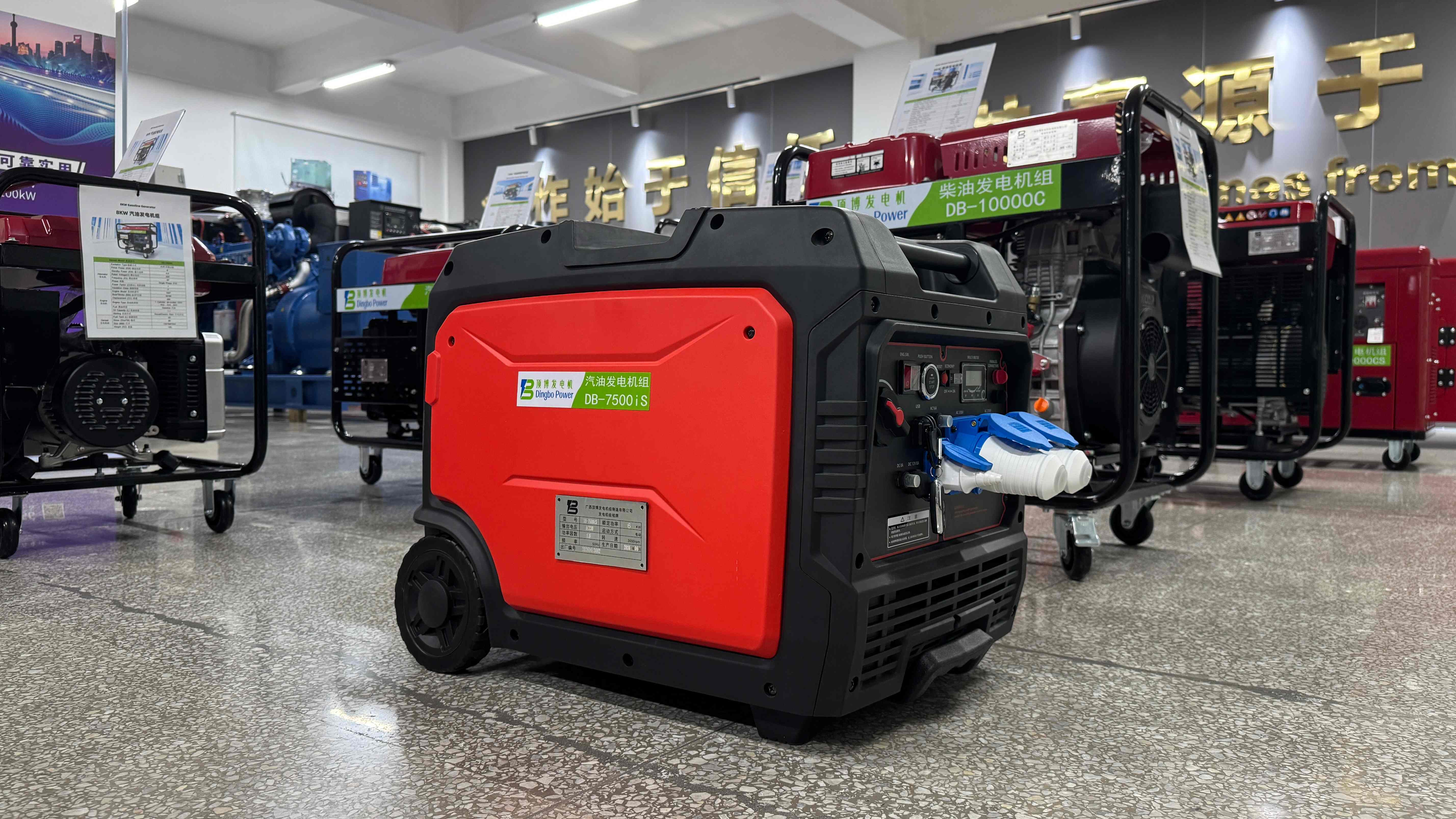
Gasoline generators don’t just appear on a pallet. Behind every unit that starts on the first pull lies a chain of decisions—some obvious, many invisible. At DINGBO POWER, we map that entire path: from the first design sketch on an engineer’s screen to the final torque check before delivery. No fluff, no marketing fog—just the real steps that determine whether a generator earns its place in your garage or gets returned. Ready to see what actually happens inside the factory?
What Actually Happens Before a Gasoline Generator Is Built
Long before the first bolt is torqued, a gasoline generator exists only as a contested set of numbers. Engineers lock horns over acceptable voltage dip under a 50% load step, whether the fuel tank needs to survive a two-meter drop, and how many hours the engine should run before its first oil change. These conversations are less about romance than about warranty claims and field returns, but they quietly define the machine’s character.
Then the real friction starts. Purchasing teams chase alternator copper prices while a compliance officer checks whether the latest CARB evaporative emission rules will kill the current carburetor design. Prototype castings come back with porosity in the crankcase boss, the recoil starter snaps during cold-room testing, and someone discovers the fuel cap leaks when tilted 15 degrees. Each fix reshuffles the bill of materials before the generator ever gets a model number.
The Parts That Cost More for a Reason
A brake caliper machined from forged aluminum costs several times more than a cast iron one, and the reason has nothing to do with branding. The forged part sheds heat faster, resists flex under hard braking, and saves unsprung weight—all of which translate into shorter stopping distances and less fade on a long descent. The raw material is pricier, but the real cost comes from the multi-axis CNC work and the fact that a single void in the metal means the whole piece gets scrapped.
The same principle shows up in industrial pumps and gearboxes, where bearing quality is often the dividing line between a machine that runs quietly for 20,000 hours and one that needs rebuilding every season. Higher-grade bearings use vacuum-degassed steel and follow much tighter tolerance bands, which drives up the price by 30 to 50 percent. Yet swapping in a cheaper set usually means paying for the replacement twice—first in cash, then in downtime when the shaft starts to wobble.
Assembly Isn't Just Tightening Bolts
Most people picture a wrench when they hear the word assembly, but that image misses most of the job. A threaded fastener only works as intended when the joint design, surface finish, and lubrication are all considered long before the first turn. Even a perfectly torqued bolt can fail if the mating surfaces are out of flat or if the thread pitch doesn't match the load path.
The real work happens in the decisions around clamping force, embedment, and thermal expansion. Two assemblers can install the same fastener to the same torque and still get wildly different preloads because of friction variables that no torque spec can fully capture. That's why careful shops rely on angle monitoring, fastener testing, and strict control of washer orientation rather than trusting a click wrench alone.
There's also a strong element of sequencing and tactile judgment. A rigid housing tightens differently than a gasketed cover, and the order in which bolts are pulled down can warp a part by a few thousandths of an inch without leaving a visible mark. Assembly, at its best, is closer to tuning than to brute force.
Why We Run Every Unit at Maximum Load for Hours
We don't do this because it looks good on a spec sheet. Running every unit at maximum load for hours is the only way to catch the flaws that normal testing misses. Short bursts of high stress might not reveal a weak solder joint or a marginal capacitor, but hour after hour at full throttle will.
Think of it like breaking in a new engine. The first ten minutes tell you it starts. The first hour tells you it doesn't overheat immediately. But it's the third or fourth hour that exposes the real story—thermal creep, voltage drift, or a fan bearing that's about to give up. By pushing each unit hard for an extended period, we weed out the ones that would fail in the field after a few weeks of real use.
This approach adds time and cost to every single unit we ship, and we're fine with that. Because when a customer runs our equipment at full load for a full shift, day after day, we don't want them to wonder if it will hold up. We already know it will.
When a Standard Generator Won't Fit the Job
A standard open-frame generator often fails in tight or noise-sensitive settings. Try running a masonry saw inside a half-finished basement with a 90-decibel unit, and you'll quickly understand why some crews refuse to drag one indoors. The bulk also becomes a problem when the only access is a narrow side gate or a rooftop hatch. Physical size and exhaust fumes can rule out a conventional model long before wattage ever becomes a concern.
Sensitive loads create another mismatch. Variable-speed motors, LED dimmers, and medical devices need cleaner voltage than a basic alternator delivers. When a submersible pump kicks on, a standard generator may sag enough to trip a breaker or scramble a control board. In these cases an inverter unit or a model with automatic voltage regulation makes more sense, even if its peak output looks lower on paper. Battery power stations can also cover short, quiet jobs where an engine isn't allowed indoors.
Fuel logistics and starting behavior under load are just as important. A jobsite far from a gas station or governed by strict fire codes may push you toward propane or dual-fuel options. Cold mornings at high altitude can leave a standard carbureted engine sputtering while your crew waits. Before renting or buying, list the actual start-up wattage of each tool, the carry distance, and any local noise or emission limits. That quick check often reveals exactly why a standard generator won't fit the job.
How We Crate a Generator So It Survives the Freight Yard
Before any wood gets cut, we walk around the generator and note every point that could shift, vibrate, or take a knock. The crate isn't just a box — it's built to match the machine's footprint. We use 3/4-inch plywood for the base and double up on the corners where a forklift will eventually dig in. Skid runners go underneath, spaced so a standard pallet jack can slide in without tilting the whole load. If the generator has a protruding exhaust stack or a fragile control panel, those get their own internal bracing rather than relying on foam alone.
Once the base is solid, the generator gets lowered in with a hoist, never dragged. We bolt through the frame's mounting holes into steel angle brackets anchored to the crate floor — that's what holds it in place, not just friction. Around the sides, closed-cell foam pads are cut to fill the gaps, but only after the unit is centered and level. For anything with a fuel tank or oil reservoir, we drain it or add stabilizer, then wrap the openings with vapor barrier. The roof goes on last, screwed down every eight inches, and we shake the crate hard by hand before it leaves the shop. If anything rattles, it gets opened up and fixed.
The final layer is marking and loading. Stencils show the crate's exact weight, the upright orientation, and which end the fork blades should enter. We don't rely on generic 'fragile' stickers — the crate itself has to tell a freight handler where to lift. When it's stacked in the yard, the top panel is reinforced so another crate can sit on it without crushing the generator's air intake. After a few units came back with crushed corners, we started adding steel edge protectors under the banding. It costs a little more, but it beats rebuilding a generator that got dropped off a dock plate.
FAQ
Engineers start by defining the power output target and intended use, then sketch the frame layout, fuel tank placement, and cooling airflow paths. They run thermal and vibration simulations before any metal is cut.
Prototypes go through load bank testing at various wattages, cold-start trials in low temperatures, and endurance runs that last hundreds of hours. Any weak points get redesigned and retested.
The engine block is typically cast aluminum or iron, while the alternator housing uses aluminum for heat dissipation. Copper windings are standard, and the frame is often powder-coated steel for rust resistance.
Workers check torque specs on critical bolts, test electrical continuity, and run each unit briefly with a load before it leaves the line. Units that fail any check are pulled aside for diagnosis.
Carburetor or fuel injection settings are calibrated on a dynamometer to match the generator's rated output. Manufacturers tune the air-fuel ratio and ignition timing to reduce fuel burn without sacrificing peak watts.
The finished unit gets drained of test fuel, fitted with a battery if included, packed with foam and a steel crate, and then loaded with a manual, warranty card, and sometimes a small oil bottle.
Yes. Portable units are built lighter with open frames and recoil starts, while standby generators get weatherproof enclosures, automatic transfer switch compatibility, and more rigorous sound-dampening tests.
They install catalytic converters or secondary air injection where required, and each engine family is certified before assembly begins. Production units may be randomly pulled for emissions spot checks.
Conclusion
Long before a gasoline generator reaches the assembly line, engineers spend weeks on failure-mode analysis and component matching. They test fuel maps, alternator cooling, and frame harmonics on prototypes because fixing a cast crankcase after tooling is far more expensive than catching it in CAD. Some parts, like copper-heavy stators or premium bearings, cost more for a reason: they tolerate heat and vibration that cheaper parts simply cannot. The assembly process itself is not about bolting things together. A single misrouted wire harness or an over-torqued rotor nut can turn a solid design into a field failure, so each step gets checked with calibrated tools and torque audits.
After assembly, every generator goes through a load bank test at maximum output for hours. That sustained run reveals voltage regulator drift, hot spots in the exhaust, or fuel starvation under real draw. If a standard model doesn't match a customer's site, we rework the frame, switch to a different alternator, or add remote start wiring without pretending it is a custom shop. Packaging is the last engineering problem: crates get foam-in-place supports, steel banding, and waterproof liners because freight yards are not gentle. A generator that leaves the factory perfect but arrives with a cracked base is still a failure.
Contact Us
Contact Person: Rita
Email: [email protected]
Tel/WhatsApp: +8613481024441
Website: https://www.dbdieselgenerator.com/