

Explosion-Proof Electric Heaters from China: A Comprehensive Guide
2026-07-21
Industrial heating demands safety and precision—especially in volatile environments where the slightest spark can trigger disaster. As global industries turn to Chinese engineering for reliable solutions, one name stands out: Shenzhou Chemical Industry. Their explosion-proof electric heaters are redefining hazard-ready performance, but how do you navigate the options, standards, and innovations that set them apart? This guide unpacks everything you need to know, from core technology to compliance, ensuring you make a choice that’s both safe and strategic.
Understanding the Unique Demands of Hazardous Environments
Working in hazardous environments isn't just about following a checklist—it's about internalizing a mindset where every decision carries weight. These settings, from chemical plants to deep-sea rigs, don't forgive casual assumptions. The air itself can turn hostile without warning, equipment fails in ways that textbooks never predict, and the line between a routine shift and an emergency is often thinner than it appears. Operators learn to read subtle cues: a faint hiss, an unusual vibration, a heat signature that doesn't match the baseline. This sensory vigilance becomes second nature, but it's built on a foundation of rigorous, scenario-based training that goes beyond compliance into the realm of instinct.
The physical demands get all the attention—extreme temperatures, toxic exposures, crushing pressures—but the cognitive load is just as punishing. Decision fatigue sets in when you're constantly assessing risk without the luxury of full information. A split-second choice to override a safety lockout might prevent a cascade failure, or it might trigger one. That's why experienced hands in these fields don't just follow protocols; they develop a mental library of patterns, surprises, and near-misses that inform their intuition. It's a kind of expertise that can't be downloaded from a manual, only earned through time spent inside the hazard.
Then there's the overlooked social dimension: the way teams communicate when a single misunderstanding could be catastrophic. Hand signals take the place of shouts in noisy environments. Trust becomes a safety instrument as critical as any gas detector. When you're working with people who might save your life, or whose mistake could end it, the normal workplace dynamics get stripped away. What's left is a raw interdependence that forges bonds unlike anything in office culture—and demands a level of clarity and accountability that few outsiders ever witness.
Core Engineering Behind Reliable Explosion-Proof Heating
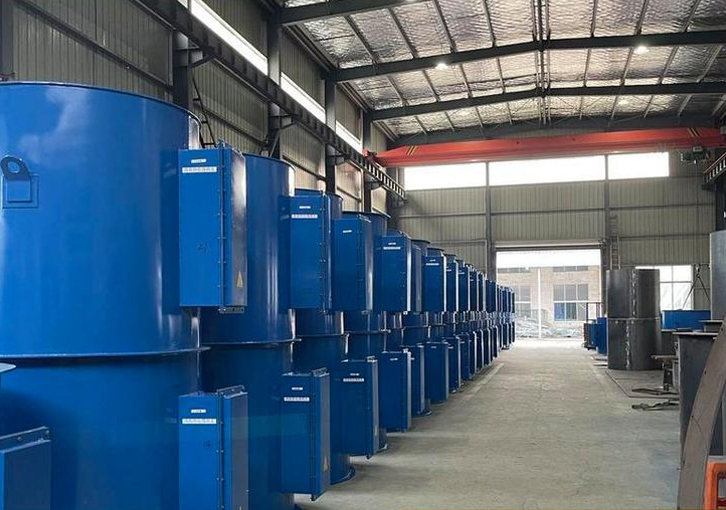
Reliable explosion-proof heating relies on a meticulous fusion of material science and structural engineering. The heating elements are often encased in hermetically sealed, thick-walled housings crafted from corrosion-resistant alloys like stainless steel or aluminum. These materials are selected not just for their durability but also for their ability to dissipate heat evenly, preventing hot spots that could trigger ignition. Every seam, joint, and connection point undergoes rigorous testing to ensure no flammable gas or dust can penetrate the enclosure, even under temperature fluctuations or mechanical stress.
Beyond containment, temperature control is the silent guardian of safety. Advanced systems integrate embedded sensors and microprocessor-based limiters that constantly monitor both the surface and internal temperatures. If readings approach predetermined thresholds—well below the auto-ignition point of surrounding substances—the system either modulates the heating output or initiates an immediate shutdown. This dual-redundancy approach ensures that even if a primary controller fails, a secondary mechanical thermostat will cut power. The caliber of the electrical isolation, combined with flameproof cable glands and explosion-proof conduit seals, creates critical barriers against electrical arcs finding a path to the outside atmosphere.
Finally, the integrity of these heaters is validated through a battery of certification tests that simulate extreme real-world hazards. Prototypes endure thermal aging, vibration trials, and immersion tests before they ever see a production line. The internal geometry is carefully designed to minimize the volume where gas could accumulate, and any potential spark-generating component is either potted in thermally conductive epoxy or surrounded by a flame-quenching mesh. This painstaking attention to detail, from the alloy composition to the final grounding connection, is what transforms a simple heating device into a trusted solution operating safely in petrochemical plants, paint booths, and grain silos.
Materials and Manufacturing Excellence in Chinese Facilities
Walking through the production floors of leading Chinese facilities, you quickly notice the blend of rigorous material selection and precision engineering that underpins their output. Grades of steel, advanced polymers, and composite alloys are sourced not just for cost efficiency but for their durability under extreme conditions, with suppliers often held to documented quality frameworks that rival those used in Stuttgart or Osaka. Every batch of raw material undergoes multi-stage inspection—from spectrometry checks to stress testing—before it’s cleared for production, reducing variances to nearly imperceptible levels.
On the manufacturing side, the story is one of continuous refinement rather than one-off automation investment. Production cells are designed with flexible tooling that can pivot between product lines in under an hour, all while maintaining tolerances within a few microns. Workers follow layered verification steps at each station, and real-time sensor data streams into centralized dashboards where anomalies trigger immediate corrective actions. It’s this quiet fusion of skilled oversight and adaptive machinery that allows these plants to produce components with surface finishes and assembly accuracy that consistently meet the demands of aerospace, medical device, and high-end automotive clients.
What often goes unnoticed is the culture of incremental improvement that ties materials to processes. Cross-functional teams review lot-level performance data and adjust inputs—slightly modifying alloy tempering or injection molding parameters—without fanfare. Such tweaks, born from daily stand-up meetings and transparent shop floor communication, have yielded proprietary techniques for heat treatment and bonding that are now guarded as competitive advantages. The result isn’t just cheaper production; it’s manufacturing that can replicate its best results at scale, earning long-term trust from brands that once hesitated to shift critical volumes to China.
Tailoring Solutions for Diverse Industrial Applications
Every industry runs on its own rhythm, with challenges that demand more than a generic fix. From food processing plants where hygiene is non-negotiable to heavy machinery operations battling extreme temperatures, the right solution hinges on nuanced understanding rather than off-the-shelf answers. It’s about recognizing that a conveyor belt in a bakery faces a different world than one in a foundry—and designing accordingly.
This approach starts with listening: engineers spending time on the factory floor, watching how materials move, where bottlenecks form, and what fixes have failed before. That insight shapes everything from corrosion-resistant alloys for marine environments to FDA-approved lubricants for pharmaceutical lines. The result isn’t just a product that fits the spec sheet, but one that meshes with the daily reality of operators and maintenance crews.
Adaptability is woven into the process. Modular designs let a textile manufacturer reconfigure a line without a full overhaul, while data-driven tweaks help a packaging center shift between product sizes in minutes. By treating each sector as its own ecosystem, solutions emerge that don’t just patch problems—they unlock efficiency that was always there, waiting for the right key.
Navigating Certifications and Global Compliance Standards
Understanding the landscape of certifications and global compliance standards is a pivotal step for any business aiming to expand across borders. Each region imposes its own set of rules, from safety and environmental protocols to data protection and ethical sourcing requirements. Rather than treating these as obstacles, forward-thinking companies view them as blueprints for building trust and ensuring long-term viability in new markets.
A strategic approach involves early engagement with regulatory bodies and lean on local experts who can demystify complex requirements. It’s not just about checking boxes; it’s about embedding compliance into product design and operational workflows from the ground up. This proactive stance reduces costly redesigns and delays, while also signaling to partners and customers that quality and integrity are non-negotiable.
Technology plays a growing role in simplifying the navigation process. Digital platforms now track regulation changes in real time and map a product’s compliance status across multiple jurisdictions. By harnessing these tools, businesses can stay agile, respond swiftly to updates, and turn compliance from a reactive burden into a dynamic, competitive advantage.
Maintenance Practices That Extend Operational Life
Regular upkeep isn't just about fixing what's broken—it's about understanding the subtle signs of wear before they escalate. Skipping routine inspections might save a few hours today, but the hidden cost accumulates in stressed components and gradual efficiency loss. A well-documented maintenance log often reveals patterns that help anticipate failures, turning reactive repairs into proactive improvements.
Lubrication schedules, alignment checks, and calibration routines form the backbone of longevity, yet their impact is easily underestimated. When teams treat these tasks as quick boxes to tick, they miss the chance to spot deviations early. Something as simple as monitoring vibration trends or thermal signatures can expose developing faults that textbooks don't describe—the kind of real-world irregularities that experience teaches you to recognize.
Beyond the checklist, operational life gets extended when maintenance becomes a mindset rather than a mandate. Technicians who are encouraged to share observations, question assumptions, and suggest subtle adjustments often uncover inefficiencies that formal audits overlook. This blend of structured procedure and human insight creates a resilient system where small, consistent efforts compound into major reliability gains over time.
FAQ
An explosion-proof electric heater is specifically designed to operate safely in environments where flammable gases, vapors, or dust are present. Unlike standard heaters, its enclosure and components are built to contain any internal sparks or high temperatures that could ignite the surrounding atmosphere. This is achieved through robust construction, sealed conduits, and compliance with strict safety standards, making it essential for oil and gas, chemical processing, and mining industries.
China has become a major hub for industrial heating equipment due to its mature manufacturing infrastructure, cost efficiency, and broad range of suppliers. Many Chinese manufacturers have adopted international certifications like ATEX and IECEx, ensuring their products meet global safety requirements. Additionally, the competitive landscape allows buyers to find customized solutions at more affordable prices compared to Western alternatives, without necessarily compromising on quality.
Key certifications include ATEX for the European market, IECEx for international recognition, and GB or CNEX for domestic Chinese compliance. Depending on your region, you might also need UL or CSA for North America. Always request copies of valid certificates and verify them through official databases. A reputable supplier will provide documentation and may offer third-party testing reports to confirm the heater meets explosion-proof classifications like Ex d, Ex e, or Ex n.
Start by researching the manufacturer's history, client feedback, and case studies. Request a factory audit or hire a third-party inspection service to assess production processes and quality control. Check for material certifications, welding procedures, and pressure testing reports. Also, consider ordering a sample unit for in-house evaluation before placing a bulk order. Reliable suppliers will be transparent about their manufacturing standards and often work with well-known international brands.
Yes, customization is a significant advantage when working with Chinese manufacturers. They can tailor heaters to specific watt densities, voltages, dimensions, and mounting styles. Options include different sheath materials like stainless steel or Incoloy, custom terminal enclosures, and specialized temperature controls. Whether you need a heater for a small analyzer cabinet or a large storage tank, suppliers can usually design a solution that fits your exact explosion-proof requirements.
These heaters are widely used in hazardous locations such as oil refineries, offshore platforms, chemical plants, paint booths, and grain handling facilities. Common applications include freeze protection for pipes and vessels, viscosity control of fuels and chemicals, comfort heating in classified areas, and reheating of gases. Their ability to provide precise temperature control in explosive atmospheres makes them indispensable for process industries operating in challenging environments.
Chinese heaters often cost 30-50% less than equivalent Western models, largely due to lower labor and material costs. However, it's crucial to factor in shipping, import duties, and potential lead times. Regarding after-sales, many established Chinese exporters now offer responsive technical support and warranty services via distributors or direct communication. Some even maintain stock in overseas warehouses for faster delivery, making them a viable long-term option for cost-conscious buyers.
Conclusion
Chinese manufacturers have honed the craft of producing explosion-proof electric heaters that meet the intricate demands of hazardous environments, where a single spark could trigger catastrophe. These heaters are engineered from the ground up to suppress ignition sources through flameproof enclosures, precise temperature controls, and robust insulation, ensuring reliable performance in zones laden with flammable gases, vapors, or dust. Drawing on decades of metallurgical and fabrication expertise, facilities employ advanced materials like high-grade stainless steel and specialized alloys, coupled with rigorous quality checks that rival global standards. The result is equipment that not only conforms to ATEX, IECEx, and other international certifications but also reflects a deep understanding of regional safety nuances, making them a trusted choice for oil refineries, chemical plants, and mining operations worldwide.
Beyond the core safety architecture, these heaters are designed with adaptability in mind, offering customizable watt densities, mounting configurations, and control interfaces tailored to specific industrial processes. Manufacturers invest in continuous R&D to enhance corrosion resistance and thermal efficiency, while providing clear maintenance guidelines that prolong service life—such as periodic inspection of junction boxes and thermal fluid integrity. By integrating smart monitoring capabilities and adhering to eco-conscious manufacturing practices, Chinese suppliers deliver a blend of durability and innovation. This holistic approach, from material selection to after-sales support, positions explosion-proof electric heaters from China as a strategic asset for any operation prioritizing both safety and operational continuity.
Contact Us
Contact Person: Mr. Wang
Email: [email protected]
Tel/WhatsApp: 8613705299955
Website: https://vip.e-baixing.com/szhgyw