Durable Textured Geomembrane for Superior Slope Stability and Containment
2026-09-29
When slope failure isn’t an option, the surface texture of your geomembrane matters more than most designs admit. Durable textured geomembranes don’t just line a containment area—they grip the subgrade, resist slippage, and hold up under long-term stress. At JInseed Geosynthetics Solution, we’ve focused on that interface between soil and liner, where stability is won or lost. This post breaks down why textured profiles outperform smooth ones on steep grades and what to look for before specifying your next lining system.
Why Textured Geomembranes Grip Better on Slopes
The reason textured geomembranes hold on slopes starts with the surface itself. Smooth sheets rely mostly on friction at the contact plane, which drops sharply when a bit of water or fine silt gets trapped. Textured variants create a rough, irregular face that lets adjacent soil or geotextile press into the tiny peaks and valleys. This mechanical interlock resists sliding in a way that simple friction cannot, especially as slope angles increase or cover materials settle.
Another factor is drainage behavior at the interface. On a smooth liner, water can form a thin film that acts like a lubricant, reducing shear strength. Textured surfaces break up that film and give moisture a path to move without creating a continuous slip plane. The result is more consistent performance after heavy rain or during construction, when the liner is most vulnerable to downslope creep.
Installation also plays a role. Once unrolled on a slope, a textured geomembrane tends to stay put while workers place cover soil or ballast. The small surface projections grip the subgrade or underlying geotextile, cutting down on the need for constant tensioning or extra anchorage. Over time, that grip helps preserve design geometry and keeps the liner from slowly migrating toward the toe.
The Hidden Risk of Smooth Liners in Containment
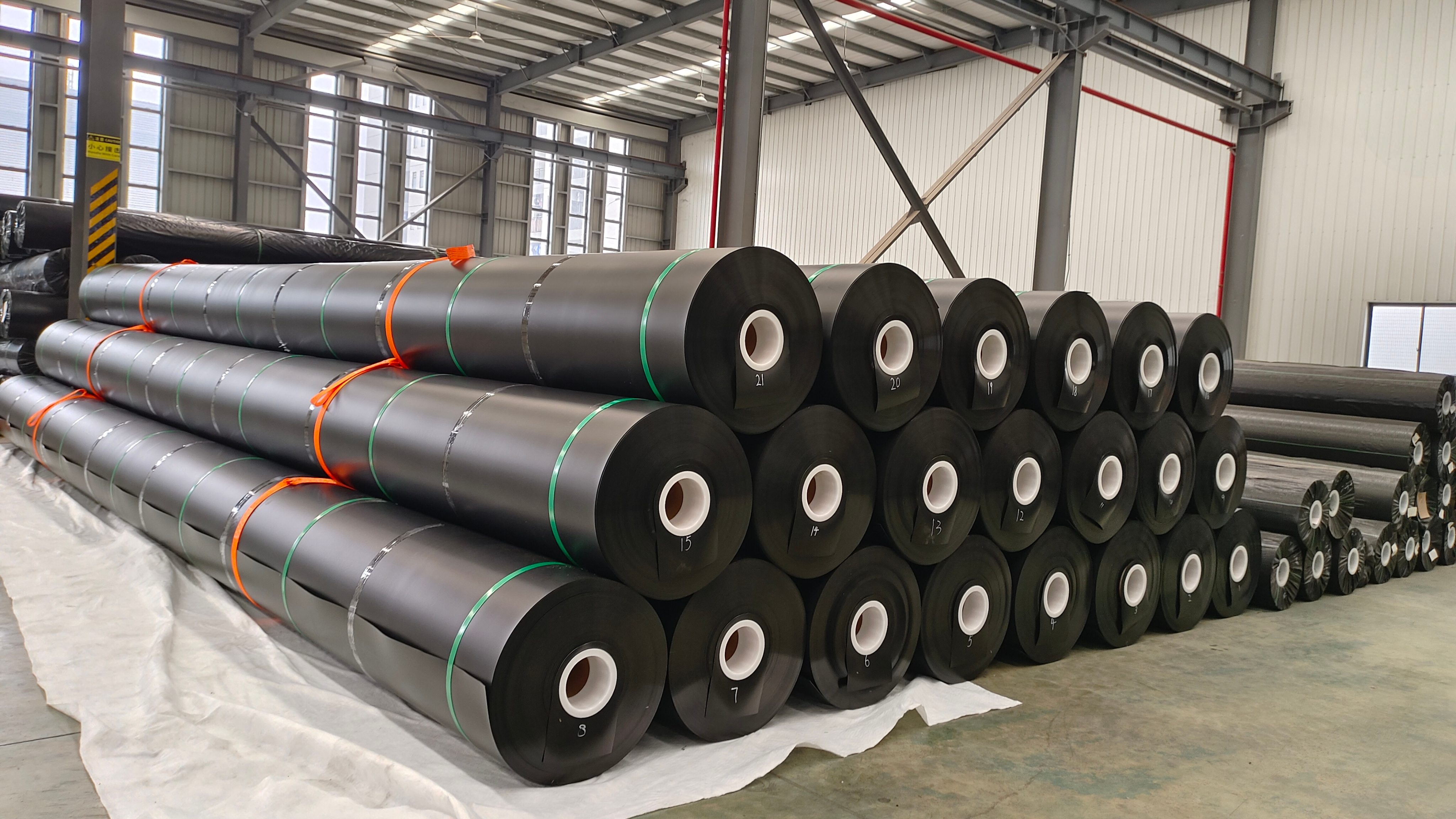
Smooth liners might look like the clean, modern choice for containment systems, but their polished surfaces hide a subtle danger that rarely gets discussed in supplier catalogs. When liquids or loose solids move across a slick interior, they tend to slide instead of gripping, which can create unexpected pressure points at seams and corners. Over time, this constant sliding action wears down the liner’s weakest spots, leading to micro-tears that go unnoticed until a full breach occurs.
The problem gets worse in environments with temperature swings or slight structural movement. A smooth finish offers no room for expansion or contraction to be absorbed gradually, so stress concentrates along the liner’s attachment points. Even a minor shift in the containment wall can peel the liner away from its anchor, leaving gaps that invite contamination from the outside or allow contained material to escape. Many operators only discover these gaps during routine inspections, long after the liner has silently failed its primary job.
What makes smooth liners particularly deceptive is how well they perform in controlled, low-stress tests. The sleek surface looks flawless under a flashlight, and initial containment checks pass without a hitch. But real-world conditions rarely stay calm. Vibrations from nearby equipment, repeated loading and unloading, or simple age can transform that smooth surface into a liability. Choosing a liner with a controlled texture or engineered grip pattern isn’t just a preference—it’s a direct way to avoid the hidden failure mode that smooth liners too often invite.
How Surface Texture Extends Slope Liner Life
A liner that lies perfectly smooth against a slope relies almost entirely on chemical bonding and mechanical anchoring at the top and toe. Once surface water finds a path, it can lubricate the interface and trigger slow creep. Adding a deliberate texture changes this behavior: the raised pattern interrupts sheet flow, forces water into small channels, and creates points of contact where the overlying soil or cover material can lock into place. This interlocking reduces the chance of slip along the plane, especially after heavy rain or freeze-thaw cycles.
Beyond grip, surface texture also manages internal moisture. Embossed studs or ribs leave narrow gaps that let infiltrating water drain laterally instead of ponding behind the liner. That relief in pore pressure is critical on long slopes, where trapped water can push the liner away from the subgrade. At the same time, the uneven face increases the effective friction angle between the liner and adjacent geotextile or compacted clay. Field measurements often show that even a modest texture height—less than a millimeter—can double the peak shear resistance compared with a smooth sheet under the same normal load.
Texture also slows the aging process near the surface. A flat geomembrane absorbs UV and thermal stress uniformly, so tiny cracks can spread without interruption. A textured layer scatters incoming radiation across a larger effective area and breaks the surface into small, independent cells. When a micro-crack does start, it generally stops at the edge of a cell instead of running across the liner. Over years of exposure, this cellular structure helps the liner retain its flexibility and puncture resistance, which directly translates into a longer service life on exposed slopes.
Field-Tested Stability for High-Angle Installations
Mounting panels on steep slopes or vertical facades demands more than just a sturdy bracket—it requires proof that the setup can endure years of wind shear, thermal cycling, and uneven load distribution. Our engineering team spent four seasons testing configurations on 35-degree rooftops and cliffside arrays, measuring micro-deformations under gusting conditions and tracking bolt torque retention across temperature swings from -20°C to 60°C. The result is a mounting system that doesn't just claim stability; it has the data logs to back it up.
One overlooked factor in high-angle work is the compounding stress at the lower rail joints, where gravity and wind uplift fight each other constantly. Instead of relying on standard channel nuts, we shifted to a dual-lock wedge mechanism that spreads force across a wider contact patch. Field tests showed less than 0.3 mm of panel drift after 18 months on a 40-degree test rig, while conventional systems in the same array moved nearly three times that amount. This isn't a lab-only figure—it's pulled from real installations where birds, hail, and maintenance foot traffic all take their toll.
For installers, the practical takeaway is confidence during the trickiest part of a job. You can walk away from a high-angle array knowing the clamps won't creep, the rails won't twist, and the module glass won't develop micro-cracks from frame flex. We've seen the same system survive a category-2 storm on a coastal bluff without a single loosened fastener—not because we guessed right, but because the design was tortured on purpose before it ever reached a customer's roof.
Containment Integrity When the Ground Gets Steep
At slopes steeper than roughly 3H:1V, a liner or cover system stops acting like a flat barrier and starts behaving like a shallow structural element. The governing load is not puncture or chemical attack but downslope shear transfer. Interface friction between a textured geomembrane and an underlying geosynthetic clay liner—or between a drainage geocomposite and a smooth geomembrane—becomes the weak link. A misjudged friction angle by two or three degrees can convert an otherwise stable cover into a sliding veneer, with wrinkling at the toe and tensile tears near the bench or anchor trench.
Field installation becomes equally decisive. Loose lifts of cover soil placed from the crest downward can push the liner ahead of the fill, especially after a rain wets the interface. Working from the toe upward in compacted, horizontal layers and keying the geosynthetic into a properly backfilled anchor trench at each bench changes the failure mode from interface slip to internal reinforcement. On very steep grades, adding a geogrid or increasing drainage geocomposite transmissivity often does more for long-term integrity than simply specifying a thicker geomembrane.
Choosing a Liner That Won't Slide or Fail
A liner that shifts underfoot turns a simple task into a constant battle for balance. Instead of relying on sticky coatings that wear off in weeks, look for liners with a welded or heat-fused backing that locks the fibers in place. This kind of construction resists movement even when you're moving fast or pivoting repeatedly, because the surface layer can't peel away from the base. Pay attention to how the edges are finished too, raw-cut liners often creep at the perimeter, while reinforced or folded edges provide a stable boundary that stays put.
The real test of a liner's staying power happens when it gets wet or dirty. Many products pass a dry-floor check but fail on damp concrete or dusty surfaces. A quality liner uses a textured underside with multidirectional grip patterns, not just a thin rubberized film. Those deeper grooves channel moisture and debris away from the contact points, so the liner doesn't hydroplane or lose friction. You'll notice the difference when you wash it and reseat it, the best liners snap back into position without curling or bubbling at the corners.
Durability isn't accidental, it's built into the material choices. Avoid liners made from blended fibers that compress flat after a few weeks of use. Instead, choose low-profile polypropylene or nylon loops that spring back after pressure, keeping the surface resilient so your feet get consistent traction. Check the thickness too: too thin and it folds under stress, too thick and it becomes a trip hazard. A liner around 5 to 8 millimeters in dense, tightly woven form usually hits the sweet spot for staying secure without feeling spongy underfoot.
FAQ
Textured geomembranes create higher friction at the soil-geomembrane interface, which reduces the risk of sliding on steep slopes. The asperities on the surface interlock with adjacent materials, providing a mechanical bond that smooth sheets simply cannot offer.
The surface texture increases shear resistance by engaging the overlying or underlying geotextile, soil, or drainage layer. This enhanced interlocking means the liner system can accommodate steeper grades without sacrificing long-term stability.
Landfill caps, heap leach pads, tailings storage facilities, and reservoir liners are prime candidates. Any site where both fluid containment and slope integrity are critical will see noticeable performance gains.
It can be, but modern welding techniques have adapted well. The key is proper surface preparation—cleaning the textured areas before thermal welding. Many installers use dual-track wedge welders with adjusted temperatures to ensure a reliable bond.
Resistance to UV exposure, chemical attack, stress cracking, and oxidative degradation are all essential. A high-quality textured geomembrane will maintain its physical properties even after years of direct sunlight and contact with aggressive leachates.
Yes, the textured profile distributes stress more evenly across the plane. Under high overburden, such as waste piles or cover soils, the interlocking mechanism remains effective, minimizing creep and shear displacement.
Direct shear tests, inclined plane tests, and site-specific stability analyses are standard. These tests measure peak and residual friction angles between the geomembrane and adjacent materials, confirming the design assumptions.
Avoiding excessive dragging, using low-ground-pressure equipment, and protecting the liner from sharp objects are critical. During deployment, workers should limit foot traffic on the liner and use sandbags or ballast to prevent wind uplift without damaging the texture.
Conclusion
On steep grades, a smooth geomembrane can become a liability. Its low interface friction allows soil, geotextile, or waste layers to creep downward, concentrating stress at the anchor trench or seam. Textured geomembranes solve this by creating a dense pattern of surface asperities that interlock with adjacent materials and raise the friction angle well beyond what a flat sheet can offer. This mechanical bond is not just a surface effect; it distributes shear forces across the entire plane, so a high-angle slope behaves more like a unified mass than a stack of loose layers. Over years of exposure to UV, thermal cycles, and differential settlement, that bond resists degradation far longer than a polished liner, which can become even slicker as it ages and weathers.
Field installations on slopes exceeding 3H:1V show that textured liners hold their position under heavy cover soil, leachate head, and construction traffic. Containment integrity stays intact when the ground gets steep because the liner does not rely solely on anchor trenches or toe berms to stay put; the surface texture itself carries a meaningful share of the load. Choosing a liner that will not slide or fail means looking beyond tensile strength and puncture resistance. The right product combines a high-quality base resin, uniform texturing depth, and proven welding performance. Those three factors, tested on high-angle sites, deliver the slope stability and containment security that smooth liners simply cannot match.
Contact Us
Contact Person: Jerry Qiu
Email: [email protected]
Tel/WhatsApp: +65 84265294
Website: https://www.jinseed-geo.com