

Custom Heavy-Duty Conventional Lathe Solutions for Precision Machining Needs
2026-05-15
When standard lathes fall short of your heavy-duty precision requirements, a tailored solution becomes essential. At WINNRUI CNC, we specialize in custom conventional lathes engineered to tackle the toughest machining challenges with pinpoint accuracy. Discover how our bespoke designs can elevate your production—without the complexity often associated with customized machinery.
Tailored Heavy-Duty Turning That Matches Your Exact Specs
Every turning job comes with its own set of demands, and off-the-shelf solutions rarely cut it when precision and durability are non-negotiable. That’s why we start with your specs—nothing more, nothing less. From diameter and length to material grade and surface finish, each parameter feeds directly into a turning process built around your requirements. The result is a component that doesn't just fit the drawing; it fits the real-world stresses it'll face day after day.
Heavy-duty turning isn't about raw power alone—it's about control. Our setups combine rigid workholding with toolpaths optimized for your specific geometry, eliminating chatter and deflection even on long shafts or thin-walled parts. Whether you need a one-off prototype or a steady production run, the same rigorous attention to detail applies. We’ve tackled everything from hardened steel rollers to oversized alloy spindles, and each job teaches us something new about getting the most out of the machine without compromising the part.
What sets this apart is the feedback loop between your team and ours. Before the first chip is cut, we’ll often suggest subtle tweaks—maybe a modified relief angle or a slightly different insert grade—that can extend tool life or improve cycle time without altering the final part. It’s the kind of dialogue that only happens when you’re dealing with people who understand both the blueprints and the shop floor. And because we document every setup, repeating the same quality months or years later is a given, not a gamble.
Where Old-School Toughness Meets Today’s Tightest Tolerances
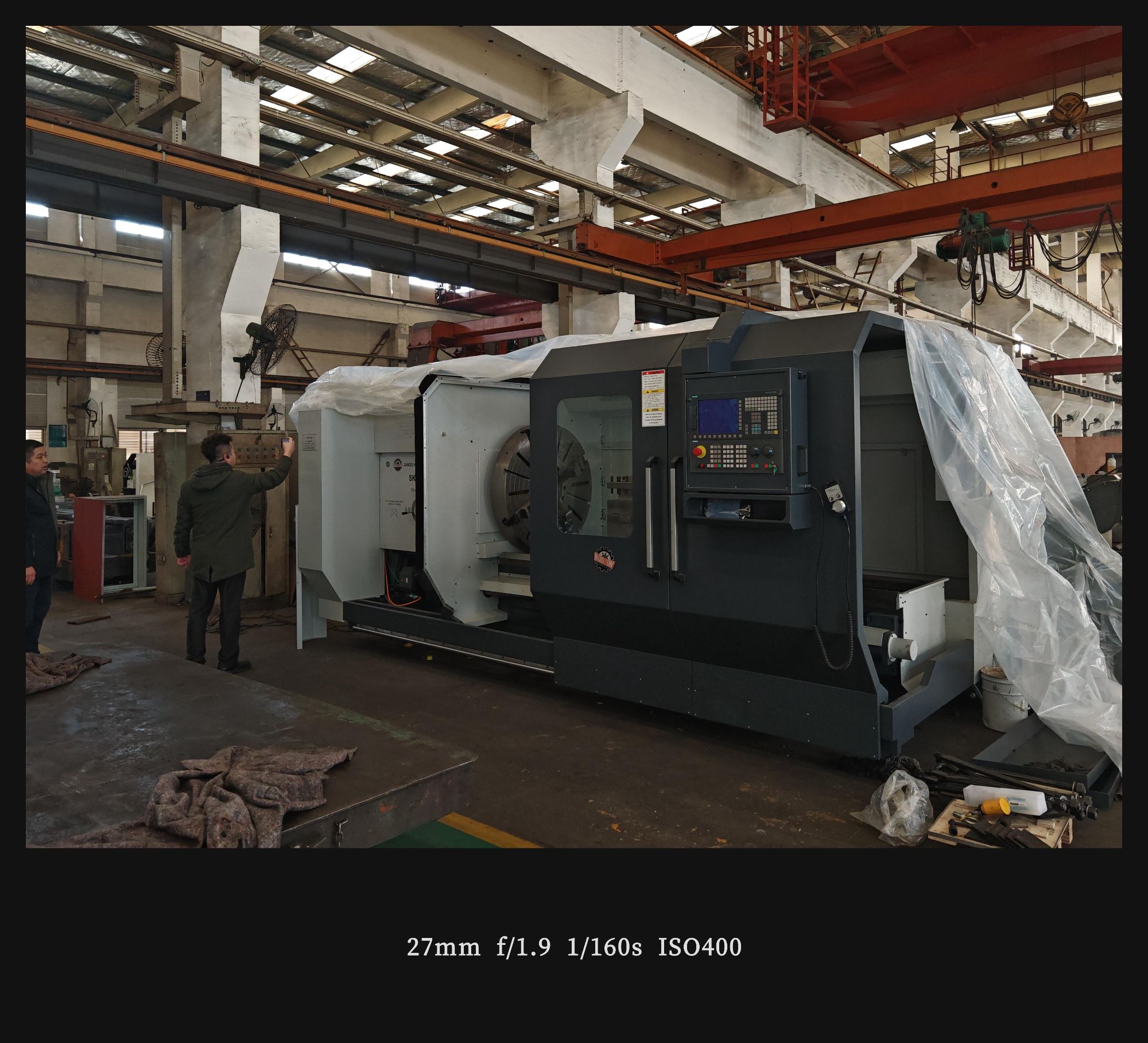
There’s something stubbornly reassuring about tools that refuse to quit. We’ve kept that blue-collar backbone intact—the overbuilt frames, the welds that look like they were laid down by someone who’s been doing it for thirty years, the kind of heft that tells you it’ll still be running when the paint’s long faded. But here’s the twist: while we’re hanging onto that old-school grit, we’re machining every mating surface to within half a thou. No rattles, no slop—just the quiet confidence of parts that fit together like they were grown that way.
The guys on the floor still tap a hole by feel before the CNC takes over, a habit born from decades of knowing when steel’s about to sing. It’s that blend of instinct and laser-measured precision that lets us hold tolerances most shops won’t even quote. Every bearing seat gets checked twice—once with a micrometer that’s older than the apprentice, and again with a CMM that catches deviations you’d need a microscope to see. Sounds like overkill, but when your equipment has to shrug off dust, heat, and a weekend operator who’s not exactly gentle, that extra zero after the decimal point stops being academic.
The result is gear that feels familiar in your hands but performs like it was born in a cleanroom. You get the raw durability that used to be standard, back when stuff was built to outlast its owner, combined with a level of accuracy that only became possible in the last decade. It’s a strange marriage—grease-stained coveralls in a climate-controlled inspection lab—but it works. And the first time you seat a dowel pin with nothing more than thumb pressure and hear that soft hiss of perfectly trapped air, you’ll understand why we bother.
Built to Outlast: The Backbone of Your Machining Floor
Heavy steel frames and precision-ground contact surfaces aren't just specifications—they're the quiet foundation that determines whether your morning shift starts with a dial-in or a breakdown. Every casting rib and reinforced column is engineered to absorb years of vibration and thermal drift without letting chatter creep into your finish passes. When a machine base has the mass to handle aggressive cuts yet the geometry to hold tenths across long production runs, you stop worrying about the floor underneath and start trusting what's bolted to it.
Rigidity isn't simply about thickness; it's about intelligent design that channels forces into the ground while keeping spindles and linear guides perfectly aligned. Hand-scraped mating surfaces, symmetrically arranged bolt patterns, and stress-relieved castings ensure that the machine stays straight from day one through thousands of thermal cycles. This isn't just about surviving the work—it's about providing a stable reference so your tools, fixtures, and probing routines deliver consistent results without constant compensation.
A machining center's backbone also determines how quickly you can recover from the unexpected. When a heavy workpiece is dropped onto the table or a tool unexpectedly grabs, the base either cracks or shrugs it off. The ones that last are often overbuilt in ways that feel excessive on paper—until you need them. That extra mass dampens transient shocks, protects linear bearings, and preserves the geometry that makes five-axis calibration hold year after year. It's the reason some machines get retired while others just keep earning.
From Blueprint to Finished Part: Custom Lathe Workflows Simplified
Turning a design into a tangible part doesn’t have to be a maze of complex steps. Modern lathe setups let you go straight from a digital blueprint to precise cuts without the usual trial and error. By directly feeding CAD files into the machine, you skip the back-and-forth of manual programming. The system interprets the geometry and automatically generates an efficient toolpath, handling profiles, threads, and grooves in one smooth operation.
What used to take hours of tweaking now feels almost intuitive. Custom workflows let you define material types and surface finishes early on, so the lathe adjusts speeds, feeds, and insert selection on the fly. This cuts down on chatter and tool wear while keeping tolerances tight. The real difference is in the consistency—once you’ve dialed in a workflow for a part family, repeating it across batches becomes a simple matter of loading stock and hitting start.
The shift from raw stock to finished piece is seamless because the process thinks like a machinist. It anticipates common pitfalls, like chip evacuation in deep bores or thermal drift during long runs, and adapts without constant supervision. That means less time babysitting the machine and more time spent on the next design. For shops handling everything from one-off prototypes to mid-volume production, this approach turns custom lathe work into a predictable, repeatable craft.
Precision That Doesn’t Quit, Even Under Maximum Load
When the pressure mounts and every operation counts, this system holds its line without a flicker. We’ve engineered it to maintain tight tolerances even as data throughput peaks, so you never have to second-guess the accuracy of your output. It’s the kind of reliability that keeps mission-critical workflows humming smoothly, no matter how hard you push.
Under full load, most solutions start to drift—small errors accumulate, and suddenly you’re fighting a cascade of inconsistencies. Not here. Our architecture actively compensates for stress, rebalancing resources on the fly to preserve that surgical precision. The result is a platform that behaves exactly the same at 10% capacity as it does at 99%, every single time.
The Lathe That Adapts: Modular Designs for Evolving Needs
Modern workshops rarely stand still. As material demands shift and project scopes grow, fixed-function machinery quickly becomes a bottleneck. That’s why this lathe embraces a modular core philosophy—you can swap headstocks, extend beds, or add milling attachments without recalibrating the entire system. The quick-change interface uses precision-ground dovetails and repeatable clamping points, so a transition from turning to live tooling takes minutes, not hours.
Beyond basic reconfiguration, the modular design lets you scale capacity as needed. Short bed for small parts? Weld on a bed extension and you’re ready for long shafts. Need a larger spindle bore? Switch to an optional heavy-duty headstock with a 2.5-inch through-hole. Each module is self-contained and pre-aligned, so you maintain factory tolerances without specialized tools.
This adaptability isn't just about growth—it’s about precision in every setup. Because flanges, arbors, and slides are machined as matched sets, the lathe holds concentricity across module swaps. Whether you’re prototyping one-off components or batch-producing custom runs, the machine evolves with your workflow, not against it.
FAQ
Custom heavy-duty lathes are engineered with reinforced structures, high-rigidity spindles, and adjustable gibs to maintain tight tolerances even under heavy cutting loads. Tailored tooling and workholding solutions minimize deflection, making them ideal for achieving fine surface finishes and accurate dimensions on large workpieces.
While CNC lathes offer automation, conventional heavy-duty lathes give operators direct tactile control over feeds and speeds, which is invaluable for one-off parts or repair work. The manual setup allows for quick adjustments during cuts and often handles oversized, irregular shapes that would be difficult to program efficiently.
Absolutely. Manufacturers can modify bed lengths, swing capacities, spindle bores, and even integrate specialized attachments like taper turning or grinding fixtures. Customizations often address unique challenges in sectors such as oil and gas, mining, or large-scale marine engineering.
With proper setup and quality tooling, these lathes can hold tolerances within 0.0005 inches (0.0127 mm) on diameter. Achieving this consistently relies on machine rigidity, precision-ground beds, and skilled operation. For extreme precision, temperature control and in-process measurement become critical.
Regular maintenance is key: keeping ways lubricated, checking spindle bearings for wear, and periodically realigning the tailstock. Many heavy-duty conventional lathes incorporate hardened and ground bedways, automatic lubrication systems, and pressure-fed headstocks to reduce wear and thermal growth over decades of use.
They should evaluate the maximum workpiece size, required spindle speeds, torque curves, and the specific type of precision features needed (like micrometer dials or DRO integration). Also consider the availability of after-sales support and the flexibility of the base design to accommodate future tooling upgrades.
Conclusion
In heavy industry, off-the-shelf lathes rarely deliver the exact mix of power, precision, and footprint that a challenging job demands. That's why we've rethought the conventional lathe from the ground up—offering custom heavy-duty solutions that start with your specifications and end with a machine that slots seamlessly into your workflow. Whether you're turning massive shafts, intricate flanges, or exotic alloys, our engineering team translates your requirements into a robust, easy-to-operate lathe that combines old-school cast-iron rigidity with modern spindle and control upgrades. The result is a machine that holds tolerances others can't, even when peeling off heavy cuts under continuous load. We don't just build lathes; we build the confidence that comes from knowing your machine will hit the numbers shift after shift.
Durability is equally central to our design philosophy. These machines are built to outlast—with hand-scraped ways, oversized bearings, and gearboxes that shrug off punishing cycles. Yet toughness doesn't mean inflexibility. Every custom lathe we deliver is inherently modular: bed extensions, turret additions, and automation retrofits can be integrated as your needs evolve, protecting your investment for years to come. From the moment a blueprint hits your desk to the final inspection, the entire workflow becomes more streamlined because the lathe mirrors exactly how you work. It's not about selling you a machine; it's about giving your shop a precision backbone that adapts and endures, without ever sacrificing the heavy-metal reliability that conventional turning demands.
Contact Us
Contact Person: Tim
Email: [email protected]
Tel/WhatsApp: +86 15522553731
Website: https://www.winnrui-cnc.com/