

China Tact Switch Manufacturer: Behind the Production of High-Performance Tactile Switches
2026-06-09
In the realm of electronic components, tactile switches are the unsung heroes of user interface—providing that satisfying click we’ve come to rely on in countless devices. But what goes on behind the scenes to ensure these tiny components deliver consistent, high-performance feedback? As a leading China tactile switch manufacturer, KEJIAN ELECTRONICS opens its doors to reveal the precision engineering and rigorous testing that set their switches apart. Join us as we explore the production journey that transforms raw materials into reliable tactile sensations.
The Anatomy of a Tactile Switch: Precision Engineering Explained
Peel back the shell of a tactile switch and you’ll find a carefully choreographed assembly of tiny parts, each shaped by precision tooling. At the top, the stem — often made from POM or a similar low-friction plastic — slides within a housing that guides its vertical travel. Beneath it, a stamped metal leaf or click bar sits poised against the stem’s angled ramp. This leaf isn’t just a contact bridge; its geometry dictates the exact force curve and the sharpness of the bump you feel through the keycap. The housing itself clamps the leaf in place with micron-level tolerances, ensuring consistent actuation across millions of presses.
When you press down, the stem pushes against the leaf, forcing it to buckle past a critical point in a sudden snap — that’s the tactile event. As the leaf snaps, it strikes a fixed contact pad, closing the circuit. The leaf’s material, thickness, and heat treatment all influence the sound profile too: a crisp click or a muted thock. Engineers spend countless cycles tuning the ramp angle and leaf preload to eliminate mushiness while preventing a double-bump sensation that can confuse your fingertip. The spring underneath returns the stem, but its rate is balanced so the leaf’s snap remains dominant, not masked by a heavy spring.
Durability hinges on the contact surfaces. Gold plating over nickel is common for the leaf and stationary contacts, resisting oxidation and pitting even in humid environments. The stem’s sliding surfaces are lubed sparingly with a stable grease to maintain that buttery feel without attracting dust. Every mold cavity is polished to a mirror finish to minimize friction, and automated optical inspection catches flash or burrs that could alter the switch’s signature feel. It’s this obsessive refinement of fractions of a millimeter and milliseconds of timing that separates a forgettable switch from one that commands a loyal following among enthusiasts.
Inside the Materials Lab: What Makes a Switch Durable
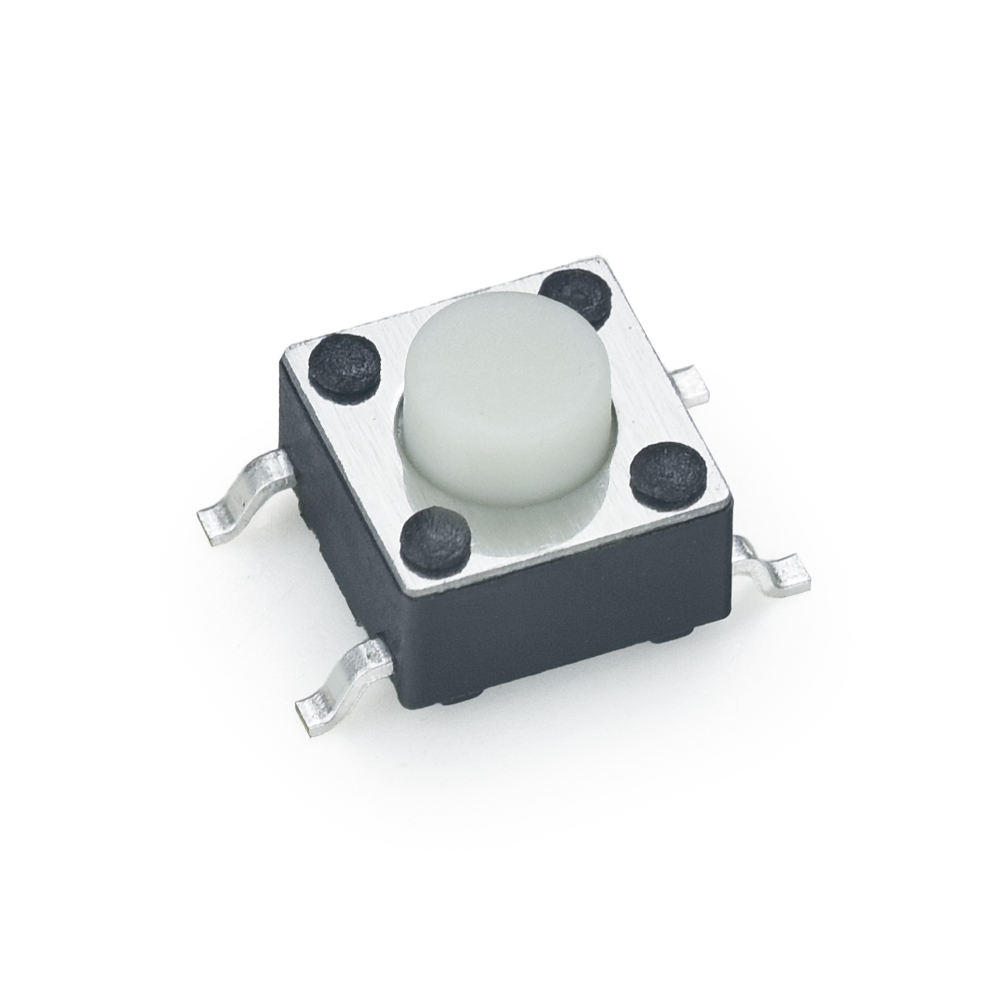
Switch durability hinges on a fight against invisible enemies inside the contact zone. Every press triggers an arc of electricity that erodes the metal surfaces, so engineers select silver alloys not just for conductivity but for resistance to material transfer and welding. A palladium or gold plating might be applied to ward off oxidation, but the real challenge is balancing hardness with resilience—too soft and the contacts deform, too hard and they might fracture under repeated stress.
Beyond electrical wear, the housing and spring mechanism face their own mechanical trials. Polybutylene terephthalate (PBT) and similar thermoplastics are favored for their dimensional stability and resistance to the heat generated by high cycling. The spring, often a beryllium copper alloy, must maintain its force profile across millions of actuations without sagging. Every component undergoes accelerated life testing in thermal and humidity chambers, trying to mimic decades of use in months, because the lab’s objective is simple: find the breaking point before it finds the user.
Customizing the Feedback: How Manufacturers Tailor Touch
Manufacturers shape haptic identity by tuning the physical hardware itself. A slight change in actuator mass or spring tension can shift a buzz into a crisp click, altering how a button feels under the thumb. Teams iterate dozens of prototypes, seeking the exact waveform that will telegraph a warning or confirm an action without visual distraction. The result is a signature touch that users come to recognize instantly, whether on a game controller or a dashboard dial.
Beyond the mechanics, software layers let designers map tactile effects to specific moments. A subtle pulse might reinforce a midair gesture, while a sharp double-tap acknowledges a long-press command. These envelopes of vibration are tuned per interaction, creating a dialogue between finger and device that feels intentional rather than generic. It’s this programming that turns raw rumble into something almost conversational.
Cultural and ergonomic factors also guide the final polish. A notification tap that suits a lightweight smart ring may feel jarring on a rugged industrial scanner, so feedback envelopes are customized not just for the device’s role but also for expected grip and environment. By blending physical design, software artistry, and user behavior, manufacturers craft a tactile language that is both intuitive and distinctive.
Quality Control: The Tests Behind Every Switch
Before any switch reaches your hands, it endures a rigorous battery of assessments designed to expose even the faintest flaw. We start with basic dimensional checks and visual inspections under magnification, hunting for microscopic burrs, misalignments, or plating inconsistencies. Then come the electrical fundamentals: contact resistance is measured at precise milliohm levels across multiple current ratings, while dielectric withstand tests blast insulation with voltages far exceeding normal use to guarantee no hidden leakage paths exist.
Mechanical lifespan is equally critical. A dedicated test rig cycles switches hundreds of thousands of times—sometimes millions—while force gauges track every gram of actuation pressure to ensure consistency from first press to last. Specialized jigs simulate worst-case mounting stresses, and abrupt temperature swings from -40°C to +85°C reveal any solder joint or housing weakness. We even monitor contact bounce at nanosecond resolution, rejecting units that oscillate beyond a whisper-thin tolerance.
Finally, every batch faces sample destructive testing: cross-section analysis of welds, environmental salt spray chambers that eat away at weak finishes, and uncontrolled power-fault simulations that push switches past their rated breaking capacity. Only when the statistical process control data proves six-sigma certainty do we release them. It’s the kind of obsessive scrutiny that turns a simple switch into a component you’ll never have to think about—and that’s exactly the point.
R&D Revelations: Driving the Next Generation of Tactile Tech
Behind the scenes of modern haptic innovation, research teams are merging neuroscience with materials engineering to create touch sensations that feel less like buzzes and more like textures you’d swear were real. By studying how skin receptors differentiate between silk and sandpaper, developers are programming actuators that can simulate hundreds of surface grades on glass screens.
A recent breakthrough involves shape-memory polymers that shift from smooth to coarse in milliseconds, letting users physically feel buttons rise from flat surfaces without mechanical hinges. These films, which consume next to no power, are being woven into automotive dashboards and medical training tools, offering tactile feedback that adapts to context—rigid for urgent alerts, pliable for routine taps.
Perhaps most startling is the use of focused ultrasound to create tactile effects in mid-air. Early prototypes allow users to "touch" virtual controls hovering above a desk, with pressure points so precise they can trace the contour of a non-existent dial. This leap isn't just about novelty; it's about building interfaces that remain invisible until needed, shifting how we interact with everything from smart homes to surgical robots.
From Production Line to Global Markets: The Supply Chain Story
Every phone, sweater, or car begins its life on a busy factory floor, where raw materials meet skilled hands and humming machines. Here, the production line transforms base components into something ready for the world—each bolt tightened, each stitch sewn, each circuit tested. It’s a rhythm refined over decades, balancing precision with speed to create a steady pulse of goods that will soon scatter across continents.
From the factory, the story shifts to a sprawling logistical web. Containers are loaded onto trucks, trains, or ships, navigating customs regulations, weather delays, and shifting trade routes. Warehouses become temporary homes, where inventory is sorted and rerouted with a quiet urgency. This middle chapter is filled with unseen coordination—freight forwarders, port workers, and tracking systems all pulling together to keep the flow uninterrupted.
Finally, the products reach their destination: a small shop in Tokyo, a sprawling mall in Berlin, or a doorstep in Buenos Aires. The last mile is where the supply chain meets real life, and it’s often the trickiest step, demanding flexibility and local knowledge. Behind every seamless delivery is a human chain of decisions, late-night shifts, and problem-solving that turns a global network into a personal exchange.
FAQ
A tact switch is a small, momentary push-button switch that provides a noticeable 'click' feel when pressed, giving the user clear tactile feedback. You'll find them in all sorts of everyday electronics—remote controls, keyboards, medical devices, industrial control panels, and even automotive interiors.
It's a mix of factors: a well-established electronics supply chain, access to cost-effective raw materials, and a large skilled workforce. Over the years, Chinese factories have invested heavily in automation and quality control, which lets them produce high-performance switches at scale without sacrificing consistency.
High-performance tact switches typically offer a longer operational life—often rated for millions of cycles—along with precise actuation forces, better sealing against dust and moisture (IP67 rated, for example), and more consistent tactile response across the entire production batch. The materials and contact design also reduce bounce and improve electrical reliability.
Sure. It starts with precision stamping of the metal terminals and contacts, followed by molding the plastic base and actuator. Then the contacts are assembled into the housing, often with a layer of lubricant to protect against oxidation. A tactile dome or metal spring is placed to generate the click feel, and the whole assembly is sealed or ultrasonically welded. Every batch goes through rigorous testing—actuation force measurement, endurance cycling, and environmental stress tests.
Reliability comes from both design and testing. They use premium materials like gold-plated stainless steel domes for corrosion resistance. Automated optical inspection catches defects early, and ongoing life-cycle testing simulates years of use. Many factories also implement real-time statistical process control, so any drift in actuation force or contact resistance is caught immediately.
Scale is a big part of it—high-volume production spreads out the fixed costs of automation and tooling. They also source raw materials locally in bulk and continuously refine their processes to reduce waste. Efficient factory layouts and just-in-time inventory management keep overhead low, but they don't cut corners on testing or key components like the dome or contacts.
Almost every aspect can be tailored: actuation force from very light to heavy, different button heights and shapes, through-hole or surface-mount terminals, LED illumination, and various cap colors. You can also choose dust-proof or waterproof versions, specify a desired lifecycle rating, and even get custom legends printed on the actuator.
First, look at their certifications—ISO 9001 is a baseline, and IATF 16949 if you're in automotive. Ask for specific test data, not just general claims. A factory that offers design support and samples quickly is usually more reliable. Also, check their production capacity and lead times, and ideally visit in person or do a live video tour to see their quality control system in action.
Conclusion
Ever wondered what separates a forgettable button press from one that feels satisfyingly crisp? Inside China's advanced manufacturing hubs, tactile switch production is a meticulous craft blending material science, precision tooling, and relentless testing. The heart of every switch lies in its carefully engineered internals—contact domes, plungers, and housings designed to deliver a consistent, snappy response. Materials are selected not just for conductivity but for long-term resilience; specialized alloys and polymer blends resist oxidation and mechanical fatigue, ensuring millions of actuations without degraded feel. Manufacturers work closely with clients to fine-tune operating force, travel distance, and even the distinct click sound, treating each project as a bespoke experience rather than a one-size-fits-all product.
Quality control goes far beyond simple pass-fail checks. Automated systems simulate years of abuse, while human inspectors detect subtle inconsistencies in haptic feedback that machines might miss. Behind the scenes, R&D teams push boundaries—experimenting with alternative contact geometries, novel spring designs, and sustainable materials to reduce environmental impact without compromising performance. The journey from raw components to finished switches spans a tightly coordinated supply chain, where just-in-time logistics meet rigorous inbound inspection. This end-to-end ownership allows Chinese manufacturers to rapidly iterate and scale, delivering high-performance tactile switches that power everything from industrial control panels to premium consumer electronics worldwide.
Contact Us
Contact Person: Anna lin
Email: [email protected]
Tel/WhatsApp: +86 13567768885
Website: https://www.kjele.com/