

China Swiss CNC Lathe: Unraveling Precision Manufacturing Excellence
2026-07-28
When precision tolerances reach the micron level and every second counts, Swiss CNC lathes become the backbone of advanced manufacturing. Behind this exacting world stands WINNRUI CNC, a name that has quietly redefined what's possible on the shop floor. In this post, we pull back the curtain on China's cutting-edge Swiss turning technology and explore how innovation is driving the next wave of industrial excellence.
Precision Redefined: China’s Swiss CNC Breakthroughs
In the high-stakes world of Swiss CNC machining, where tolerances are measured in microns and cycle times dictate profitability, China has engineered a quiet revolution. Gone are the days when “precision” was a term reserved for German or Japanese machines. A new breed of Chinese Swiss-type lathes—built from the ground up with hydrostatic guideways, linear motors, and proprietary thermal compensation algorithms—now routinely hold ±2μm repeatability over 24-hour lights-out runs. These are not mere copies; they are purpose-built systems, often co-developed with domestic cutting tool manufacturers to optimize chip breaking in hard-to-machine aerospace alloys and medical-grade stainless steels.
But the true breakthrough lies not in the hardware alone, but in the seamless fusion of mechanics and control. Leading Chinese manufacturers have moved beyond retrofitted Fanuc or Siemens CNCs, instead deploying self-developed motion controllers that synchronize sub-spindle transfers, high-pressure coolant pulses, and in-process laser measurement at submicrosecond precision. The result is an eco-system where a 20-axis machine can turn, mill, broach, and thread a complex bone screw or electronic connector in a single handling—slashing part costs by 30–40% compared to traditional multi-machine cells. This vertical integration, from castings to software, has inverted the long-held assumption that Swiss CNC excellence must originate from the Alpine valleys of Europe.
Perhaps most telling is the shift in global supply chains. Tier-1 medical device contract manufacturers, once exclusively loyal to legacy Swiss brands, now operate factories in Shenzhen and Suzhou fully equipped with domestic Swiss lathes—not for cost reasons, but for their ability to adapt overnight to design changes with local engineering support. The machines arrive with pre-configured libraries for ISO 13485-certified production, and their remote diagnostics cut downtime to single-digit hours. This pragmatic reinvention of the Swiss paradigm, driven by a relentless focus on application-specific performance rather than brand prestige, has redefined what precision means for the rest of the world.
The Microscopic Edge: Tolerances in Swiss Turning
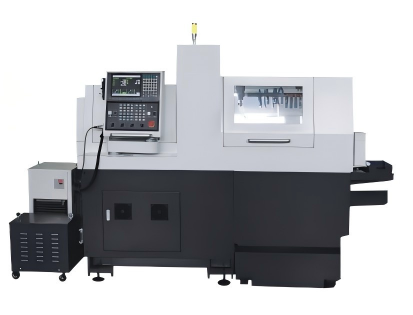
In Swiss turning, the magic happens at scales invisible to the naked eye. Tolerances here aren’t just numbers—they’re the heartbeat of precision, often measured in microns. A deviation thinner than a strand of spider silk can separate a flawless medical implant from a compromised one. This relentless focus on the minuscule separates Swiss machining from conventional methods, where such exactness would be unthinkable.
What makes the micro-tolerance game so compelling is the interplay of forces most machinists never consider. Tool deflection, thermal expansion from minuscule friction, even the subtle spring back of a bar—these phantoms can erode accuracy in an instant. Swiss machines neutralize them by supporting the workpiece with a guide bushing just millimeters from the cut. This localized rigidity transforms a whirling bar of metal into a surgically steady target, allowing cuts to land within fractions of a human hair.
Yet the true art lies in compensating for the unpredictable. Operators learn to read the faintest harmonics of chatter, the slight shift in chip formation when a insert dulls, or the way a material’s hardness varies across a single rod. They nudge offsets by micro-increments—a dance of corrections that can’t be scripted. This human overlay, built on intuition honed over years, gives Swiss-turn components their silent perfection. The edge isn’t just in the machine—it’s in the mind navigating the microscopic unknown.
Machine, Material, Method: A Trifecta of Excellence
Precision engineering begins long before the first cut. The machines we deploy aren’t just tools—they’re the silent partners in every project, calibrated to tolerances that redefine consistency. Rather than chasing trends, we’ve invested in equipment that thrives under real-world demands, where vibration dampening, thermal stability, and adaptive control systems turn raw capability into repeatable artistry. This isn’t about horsepower; it’s about harmony between operator intent and mechanical response, a dialogue refined over countless cycles.
Materials matter in ways that spec sheets can’t capture. Beyond the alloy certifications sits a deeper truth: grain structure, internal stresses, and even the subtle variations from one heat lot to the next shape the final outcome. We’ve moved past the old “best material” debates into a more nuanced space, matching not just the right substance to the task but also predicting how it will behave under the unique dance of our methodology. It’s a supply chain built on relationships with mills and a skepticism toward assumptions—every batch undergoes its own quiet interrogation before it earns a place in our workflow.
The method isn’t a page from a manual. It’s the accumulated intuition of people who’ve seen a perfect setup fail because of a two-degree drift, who know when to override the CAM simulation and trust a fingertip’s feedback. Our process blends the digital and the tactile: finite element analysis meets shop floor improvisation. Every job carves a small history, adding to a tribal knowledge that no certification course can teach. The trifecta becomes powerful not because of any single element, but because each wing of the system constantly informs and adjusts the other two—a living loop of machine, material, and human ingenuity.
Inside the Workshop: Real Stories from CNC Operators
The hum of spindles and the rhythmic clatter of chips hitting the enclosure are the soundtrack of every shift. In this workshop, the machines don’t just cut metal—they carry the fingerprints of the people who run them. Each operator has a story, shaped by years of fine-tuning dials, catching mistakes before they happen, and learning that a fraction of a millimeter can be the difference between scrap and a perfect part.
Take Marcus, a machinist with over two decades on the floor. He once ran a high-priority job where the aluminum kept gumming up the end mill. Instead of calling it quits, he spent his lunch break tinkering with coolant nozzles and feed rates, eventually finding a sweet spot that saved the batch. It’s these quiet, stubborn moments that define a CNC operator’s life—solving problems on the fly, often without fanfare.
What outsiders rarely see is the pride tucked behind those safety glasses. When a complex part comes off the machine and fits perfectly on the CMM, it’s not just a win for the shop—it’s a personal trophy. These stories, shared over coffee in a breakroom thick with the smell of cutting oil, are the real heart of any manufacturing floor.
Beyond Automation: The Human Touch in Precision Manufacturing
True precision in manufacturing has never been solely about machines running at micron-level tolerances. It’s about the seasoned machinist who hears a subtle change in spindle harmonics and knows, without a dashboard alert, that a tool is wearing faster than expected. Their hands, shaped by years of tactile feedback, still fine-tune the final microns that software alone often misses.
When we talk about pushing the boundaries of what’s physically possible, automation handles the repeatable, but it’s human ingenuity that navigates the anomalies. Consider the complex, low-volume components where programming a robot for one-off adjustments is impractical. Here, a skilled technician’s ability to interpret surface finishes under oblique light or make real-time decisions based on material behavior becomes the deciding factor between a precise part and a perfect one.
This isn’t a nostalgia-driven rejection of progress; it’s a recognition that the most advanced facilities are those where automation amplifies human expertise rather than replacing it. The future of precision isn’t a lights-out factory devoid of people—it’s a symbiotic workspace where digital precision and human adaptability converge, creating craftsmanship that neither could achieve alone.
Global Impact: How Chinese Swiss Lathes Shape Industries
From the watchmaking hubs of Switzerland to automotive supply chains in Germany, the influence of Chinese Swiss lathes has quietly reshaped how global industries approach precision manufacturing. These machines, once seen as budget-friendly alternatives, now rival legacy European brands in consistency and capability. The shift isn't just about cost savings—it's about accessibility. Small and medium-sized enterprises from Mexico to Malaysia can now adopt swiss-type turning technology that was previously out of reach, enabling them to produce complex medical implants, aerospace fasteners, and electronic connectors with confidence. The ripple effect is a more distributed and resilient manufacturing landscape, where innovation isn't bottled up in a few high-cost regions.
A striking example lies in the medical device sector. Chinese Swiss lathes have become the backbone of production lines churning out bone screws and dental abutments that meet FDA and CE standards. By delivering repeatable sub-micron accuracy at a fraction of the traditional cost, they've allowed contract manufacturers to take on projects that once required multi-million-dollar investments. In parallel, the consumer electronics industry has leaned on these machines to mass-produce miniature shaft components for vibration motors and camera modules, helping brands keep pace with ever-shorter product cycles. The agility offered by these lathes isn't a minor upgrade—it's a strategic advantage that lets companies pivot quickly in volatile markets.
Beyond individual sectors, the rise of Chinese Swiss lathes signals a broader democratization of high-end manufacturing. As technical support networks expand worldwide and local distributors stock critical spare parts, the old fear of long downtimes has faded. Factories in emerging economies are now competing head-to-head with established players, equipped with the same caliber of technology. This shift doesn't just alter supply chains; it reframes what's possible. When a workshop in Vietnam can produce parts that once only flowed from the Rhine Valley, it forces a rethinking of industrial hierarchies. The narrative is no longer about who builds the machines, but what the world can build with them.
FAQ
A Swiss CNC lathe uses a sliding headstock and guide bushing to support the workpiece very close to the cutting tool, which drastically reduces deflection and vibration. This allows for machining long, slender parts with extreme accuracy—something conventional lathes struggle with. The 'Swiss' name comes from its origins in the Swiss watchmaking industry, where it was developed to produce tiny, intricate components for timepieces.
Over the past two decades, Chinese manufacturers have invested heavily in precision engineering, advanced production facilities, and skilled talent. By combining strict quality control with cost-efficient manufacturing, they’re able to offer Swiss CNC lathes that rival the performance of traditional European brands but at a significantly more accessible price point. This democratizes high-precision machining for smaller workshops and larger factories alike, with shorter lead times and responsive after-sales support.
Industries like medical device manufacturing (bone screws, dental implants), automotive (fuel injector nozzles, sensor parts), and electronics (connector pins) see huge benefits. For example, a medical supplier in Ohio switched to a Chinese Swiss lathe for producing titanium bone screws. They maintained the required ±5 micron tolerance while cutting their machine investment by nearly 40%, which allowed them to add a second machine sooner than planned.
A common misconception is that lower cost equates to lower quality. In reality, many top Chinese builders use the same high-grade spindle bearings, linear guides, and control systems as their European counterparts. They’ve also established partnerships with global component suppliers and adhere to international quality certifications. The key is choosing a reputable manufacturer with a track record—the technology has matured, and the gap is often more about perception than actual performance.
The guide bushing is the heart of a Swiss lathe—it provides that near-tool support which makes the whole process possible. Chinese manufacturers have mastered the precision grinding and fitting of guide bushings to ensure concentricity and smooth material feeding. Many offer both fixed and rotating guide bushings with carbide-lined options for abrasive materials, and they provide the same sub-micron runout accuracy as premium brands when properly maintained.
Beyond the spec sheet, look at the machine’s thermal stability, the rigidity of the bed casting, and the availability of live tooling and subspindle options. Ask about the control system—popular choices like Fanuc or Siemens are a plus. Also, request sample machining data and, if possible, visit a reference user. Good manufacturers will be transparent about their quality control process and offer training and local service support. Don’t just compare prices—evaluate total cost of ownership and the builder’s commitment to continuing development.
Absolutely. Modern Chinese Swiss lathes often come with multi-axis capabilities (up to 9 axes or more) and quick-change tooling systems, making them versatile for prototyping as well as lights-out production runs. Their programmability and rapid setup changes mean you can run 10,000 simple standoffs overnight or switch to a complex medical part with milling, drilling, and thread whirling by afternoon. The flexibility is a major selling point for job shops navigating diverse customer demands.
We’re seeing deeper integration of automation like bar feeders and robotic part removal, plus smart factory features with real-time monitoring and predictive maintenance via IoT. Chinese manufacturers are also exploring new materials for machine construction to dampen vibration further, and there’s a push toward even higher spindle speeds for micromachining. The next generation will likely be more modular, energy-efficient, and easier for less experienced operators to use, continuing to level the playing field globally.
Conclusion
China's Swiss CNC lathes are rewriting the rules of precision manufacturing, pushing tolerances into the microscopic realm where every micron counts. The breakthroughs emerging from Chinese workshops aren't just about tighter specs—they represent a fundamental rethinking of how machine, material, and method converge. Operators speak of a quiet revolution, where advanced toolpaths and thermal compensation systems have elevated repeatability to levels once thought unattainable outside a handful of elite Swiss and German builders. This trifecta of rigid machine architectures, specialty alloys, and adaptive cutting strategies has birthed components that perform flawlessly in medical implants, aerospace actuators, and high‑frequency connectors—domains that refuse to compromise. It’s a story of collective ingenuity, where engineers dissect chip formation under microscopes and tweak spindle harmonics to squeeze out nanometers of error.
Yet the real texture of this excellence lives beyond the automation and g‑code. Walk into any Chinese Swiss‑turning shop and you’ll hear the hum of dialogue between generations: veteran machinists who trust their fingertips as much as renishaw probes, mentoring young programmers who grew up on simulation software. This human touch ensures that the machine’s cold precision is always tempered by intuition—a slight offset adjusted by feel, a tool life stretched because someone noticed a faint change in pitch. Globally, these lathes are quietly shaping industries from Swiss watchmaking to Silicon Valley prototyping, offering a blend of agility and cost‑effectiveness that is redefining supply chains. What emerges is not just a product, but a philosophy: precision excellence isn’t automated into existence, it’s curated by people who treat each stainless‑steel blank as a challenge to their craft.
Contact Us
Contact Person: Tim
Email: [email protected]
Tel/WhatsApp: +86 15522553731
Website: https://www.winnrui-cnc.com/