

China Smart Blinds Bring Cutting-Edge Automation to Your Windows
2026-08-30
Imagine waking up to sunlight that never blinds you—your windows adjust themselves before your alarm even goes off. That’s the promise of China’s smart blinds revolution, and leading the charge is ROLLERGY, a brand turning ordinary windows into automated light-management systems. In this post, we’ll explore how cutting-edge motors, sensors, and app controls are reshaping homes and offices, and why ROLLERGY’s approach stands out from the crowd.
When Your Blinds Learn Sunrise Better Than You Do
You set an alarm for 6:15, but the blinds have already cracked themselves open at 6:02 because last Tuesday you stirred at 6:04 and the house decided that was the new normal. There is no arguing with the algorithm. It has counted your snooze button taps, the angle of the winter sun, and the exact moment your breathing changed. Your only job now is to lie there and accept that the room knows the morning better than your own eyelids do.
The strange part is how quickly this becomes comforting. You stop checking the weather app. The slats tilt a few degrees before the first bird calls, and the light lands on the floor in a shape that says get up but not quite yet. Meanwhile, the blinds are learning. They remember that you linger on rainy weekends, that you open the window after coffee, that your idea of dawn is more negotiable than the clock claims. Somewhere in the walls, a tiny model of your habits is quietly rewriting the sunrise.
A Motor So Quiet, You’ll Check It’s Actually Working
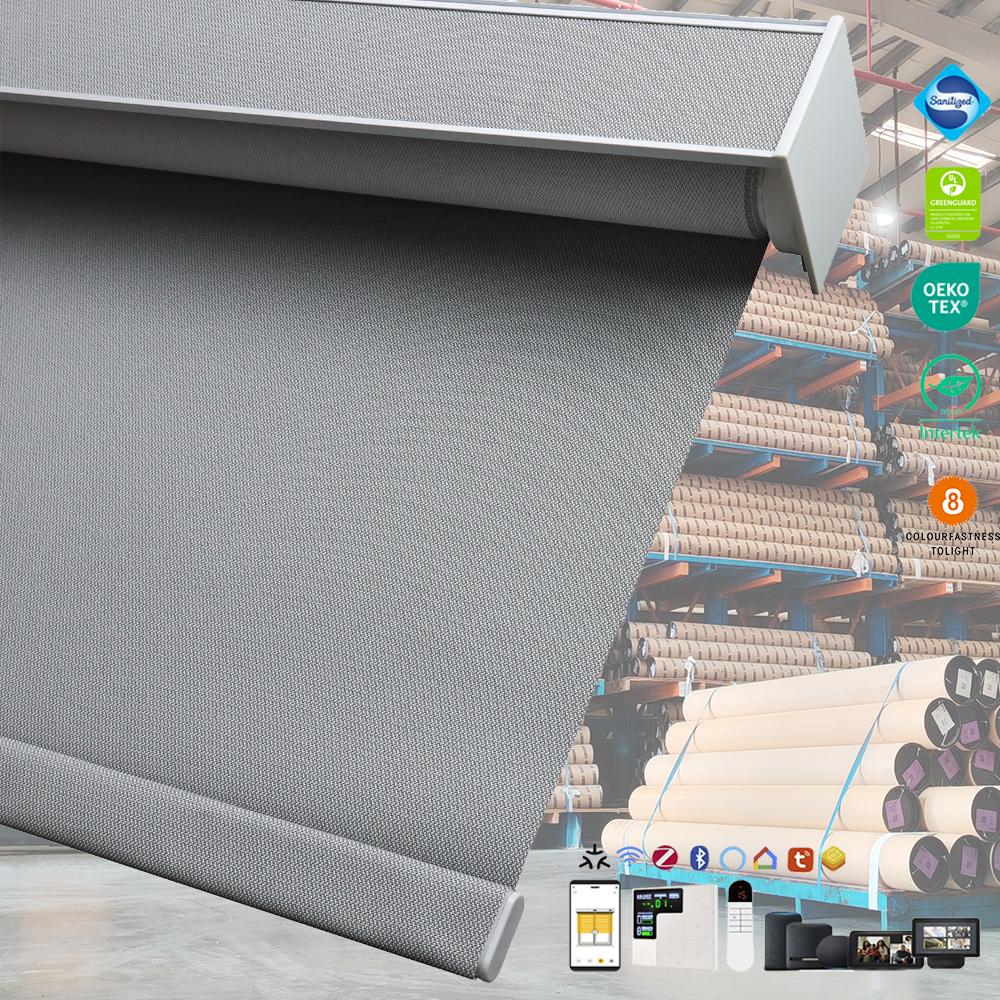
You flip the switch and expect a reassuring hum, but instead there’s only silence. Your first instinct is to lean closer, press your ear against the casing, and wonder if something went wrong. Then you notice the subtle vibration under your fingertips, the faintest whisper of motion, and the indicator light glowing steady. It’s working—just so quietly you’d never know without checking.
This isn’t the kind of quiet that comes from simply turning the volume down; it’s a deliberate engineering choice. The motor uses a brushless design with precision-machined bearings and a dynamically balanced rotor, eliminating the mechanical friction and electrical whine that plague conventional motors. Combined with acoustic damping materials inside the housing, every source of noise is either engineered out or absorbed. The result is an operating sound level so low it barely registers on a decibel meter.
In real-world use, that silence transforms the experience. You can run it late at night without waking the household, keep it on during a video call without background noise, or simply enjoy a workspace where the only sound is your own thoughts. You’ll find yourself checking it’s actually working—not because you doubt it, but because the absence of noise feels almost unsettling at first. Then you realize that’s exactly the point.
Hands-Free Light Control Without the Learning Curve
Most smart lighting systems ask you to memorize app layouts or shout exact phrases. This one doesn’t. A simple wave near the switch toggles the light, and a steady hand motion adjusts brightness—no manual, no pairing ritual, no trial and error.
The sensor reads natural movements rather than rigid commands. Walk into the room and the light comes on; linger near the counter and it brightens just enough for reading a recipe. Because the gestures mirror what people already do, it feels less like operating a gadget and more like the room responding to you.
There’s no need to train the system or teach it your habits. It works the first time, for anyone in the household, whether they’ve used smart lighting before or not. That’s the point: hands-free control should disappear into the background, not demand your attention.
Built in Shenzhen, Perfected for Your Living Room
Shenzhen’s hardware ecosystem moves fast, sometimes too fast. But the device that ends up in your living room goes through a different kind of grind. The city’s supply chain lets teams iterate on everything from acoustic tuning to power management in days, not months. That speed isn’t about cutting corners—it’s about testing dozens of real-world prototypes until the one that sits on your shelf feels obvious.
By the time it lands on your media console, the rough edges are gone. The plastic doesn’t creak when you pick it up, the indicator light isn’t distracting in a dark room, and the buttons don’t require a second thought. Those refinements rarely make headlines, but they’re what separate a gadget from something you actually live with.
Why Your Windows Deserve More Than a Pull Cord
That dangling cord isn't just an eyesore—it's a leftover from an era when windows were handled with a tug and a prayer. Every morning you shuffle over half-asleep, yank at the plastic string, and hope the slats don't tangle into a knot that eats ten minutes of your day. It's a small frustration that quietly adds up, and it makes the whole room feel stuck in the past.
Modern windows should work with a single touch, a voice command, or even a schedule that knows when the afternoon glare hits your reading chair. Cordless lifts and motorized shades slip into the frame with clean lines, leaving nothing to snag on a passing bag or curious cat. They also remove a genuine risk—especially for kids and pets—without asking you to compromise on style or budget.
Think beyond the hardware store aisle. A window treatment can filter light in soft layers, darken a nursery for a 2 p.m. nap, or rise slowly with your morning alarm. That pull cord only offers up or down. Your windows carry the light, the view, the temperature of the room—so the thing controlling them should be just as smart.
Set the Schedule Once, Forget About It for Months
The first time you configure it, you'll spend maybe twenty minutes picking days, times, and durations. After that, you can close the app and forget it exists. It won't pester you with notifications or ask for weekly confirmations. It just runs the schedule you built, quietly and reliably, for as long as you leave it alone.
But 'set and forget' doesn't mean rigid. If the weather shifts or a holiday throws off your routine, the system makes small adjustments on its own—skipping a cycle after heavy rain, or delaying a start when everyone's sleeping in. You won't notice the changes because they happen in the background, which is exactly the point.
That's the real magic: you reclaim the time and attention you used to spend managing schedules. Months later, you might open the dashboard out of curiosity and see a long history of tasks completed on time, with no missed runs and no drama. Then you close it again and go back to whatever you were doing.
FAQ
They use advanced automation that adapts to sunlight and room occupancy, so you don't have to fiddle with remote controls all day. The built-in sensors adjust the slats gradually, which keeps glare off screens while still letting natural light in.
Yes, they pair with major voice assistants and have a companion app for iOS and Android. Once connected, you can open, close, or set schedules from anywhere, whether you're on the couch or across town.
Not really. The mounting brackets are designed for a tool-free snap-in setup, and the motor unit is pre-calibrated. Most people can get a standard window done in under fifteen minutes with just a screwdriver.
Each unit has a rechargeable backup battery that kicks in automatically, so you can still adjust the blinds manually via the pull cord or the app over Bluetooth if Wi-Fi is down. The battery lasts about three days of normal use.
They can. By tracking the sun's position and outdoor temperature, the blinds close during peak heat to reduce cooling load and open on cold sunny days to let in warmth. Users often notice a drop in HVAC usage within a month or two.
Yes, they're cordless by design, which removes a common strangulation hazard. The slats also have a soft-edge finish and the motor has obstacle detection, so if a pet jumps up, the blinds stop and reverse instead of trapping anything.
The lithium-ion pack is rated for around 500 full charge cycles, which typically translates to three to five years depending on how often the blinds move. Replacement packs are sold separately and snap in without tools.
The blinds come in widths from 18 to 72 inches and heights up to 96 inches, with custom cuts available for odd-sized windows. Color options include matte white, light oak, dark walnut, and a brushed aluminum grey, all with a stain-resistant coating.
Conclusion
There’s something quietly satisfying about waking to blinds that already know the morning routine better than you do. Instead of fumbling for a cord, the shades ease open just as the first light hits the windowsill, no alarm clock required. The motor behind this movement is almost eerily silent—so much so that you might press the remote again just to confirm it’s actually running. But it is, gliding up and down without the whir and grind you’d expect from hardware. What makes it work for almost anyone is the lack of a learning curve. You don’t need a degree in home automation or an afternoon lost to an app setup. A few taps, a quick schedule, and the blinds take over from there, adjusting light through the day while you focus on whatever actually needs your attention.
These aren’t abstract gadgets from a distant factory floor—they’re built in Shenzhen, where the components and assembly have been refined through countless iterations, then tuned specifically for the comfort of a living room. That origin doesn’t mean compromise; it means precision at a price that doesn’t feel like a punishment. Once the schedule is set, you can forget the blinds for months. They’ll lift on their own before your coffee is ready and lower as the afternoon heat starts creeping in. Compared to the old pull cord—tangled, uneven, collecting dust—this is a different category of window treatment. Your windows are the largest light fixtures in your home, so leaving them under manual control feels like ignoring an upgrade that’s already arrived. The real luxury isn’t just automation; it’s not having to think about it at all.
Contact Us
Contact Person: Vivien Cheng
Email: [email protected]
Tel/WhatsApp: +86 13751758835
Website: https://www.rollergytech.com/