China OEM Metal Pallet Factory: Crafting Heavy-Duty Solutions for Modern Logistics
2026-06-22
In modern logistics, a pallet is more than just a platform—it's the backbone of supply chain efficiency. When demands turn heavy-duty, only metal delivers. Behind the scenes, Lanyuda, a leading China OEM metal pallet factory, engineers solutions that redefine strength and customization. Let’s uncover what sets their craftsmanship apart.
Why Metal Pallets Are Redefining Warehouse Operations
Switching to metal pallets isn't just an equipment upgrade—it's a fundamental shift in how warehouses handle daily demands. Unlike wood, which splinters and absorbs moisture, or plastic that can warp under heavy loads, steel and aluminum pallets offer a rare combination of strength and predictability. They hold up under extreme weights without bowing, eliminate the risk of contamination in sensitive storage environments, and completely sidestep issues like pest infestations or chemical leaching that disrupt workflows.
What truly sets them apart is the long-term operational efficiency they unlock. Their consistent, precise dimensions make automated retrieval systems run smoother, reducing jams and sensor errors that slow down conveyor lines. Plus, the near-indestructible nature means fewer replacements and less downtime for pallet repairs. Over a five-year period, facilities often see the initial cost offset by the sheer reduction in product damage and equipment maintenance alone.
Beyond durability, metal pallets enable a smarter use of space. Many designs are rackable across multiple configurations, and their slim yet sturdy profiles increase vertical storage density. When every inch of warehouse real estate counts, doubling or tripling the number of pallet positions in existing racks becomes a game-changer. This scalability lets operations grow without expanding their physical footprint—a practical advantage that's hard to ignore.
Inside Our Factory: Where Precision Meets Production
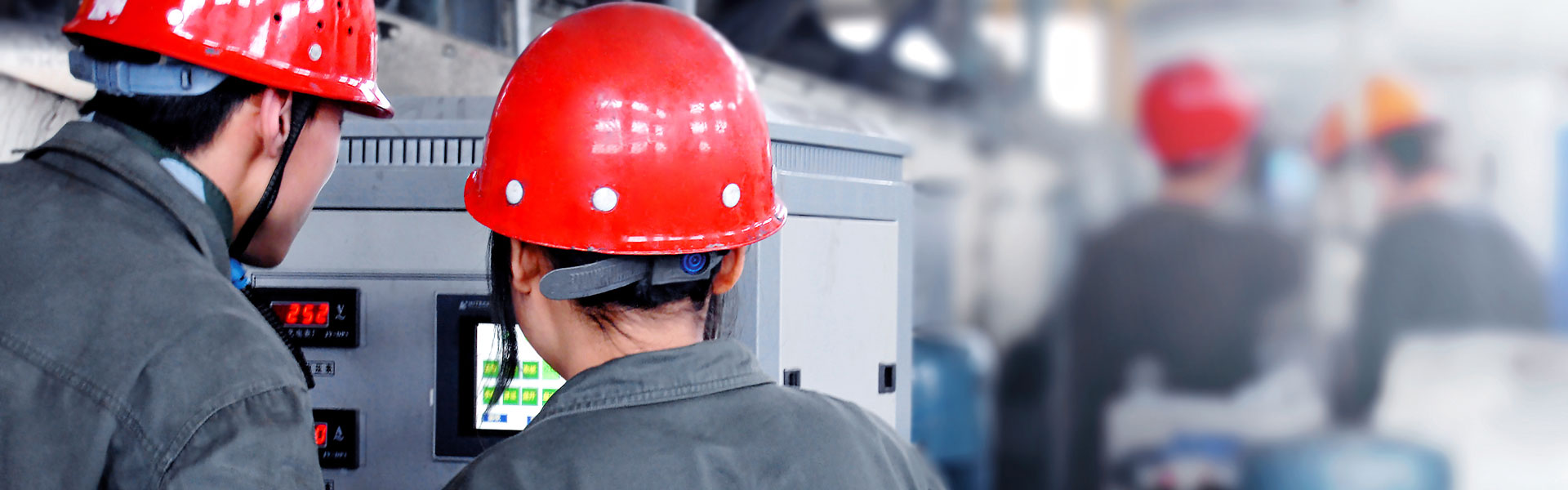
Step onto the production floor and you’ll immediately sense the rhythm of purpose. Rows of CNC machines hum in synchronized motion, each one calibrated to tolerances most would consider extreme. Here, raw materials are not simply cut or shaped—they’re guided through processes where every micron counts. The air is temperature-controlled, the lighting designed to eliminate shadows, and the workflow arranged to minimize unnecessary movement. It’s a space where advanced automation meets old-fashioned attention to detail, ensuring that the parts we produce aren’t just consistent, but genuinely precise.
Behind every product is a chain of decisions that starts long before metal touches machine. Our engineers work directly on the floor, not in some distant office, so adjustments happen in real time. They rely on in-process measurement systems that feed data back instantly, flagging even a hint of deviation before it becomes a problem. We’ve found that this blend of hands-on expertise and digital monitoring catches things that purely automated checks might miss. Whether it’s the finish on a medical component or the fit of an automotive fastener, we don’t wait for final inspection to verify quality—we build it in, layer by layer, right at the source.
Perhaps the most telling detail is how our team reacts when something unexpected happens. There’s no scramble, no panic—just a quiet, collective troubleshooting that draws on years of experience. Operators, toolmakers, and quality technicians huddle around a machine with the ease of people who’ve solved tougher problems before. That culture of shared knowledge means improvements come from every corner. A suggestion from a third-shift machinist might lead to a fixture redesign that shaves seconds off a cycle. In this environment, precision isn’t a specification to hit; it’s a mindset that shapes how we approach every single order, no matter how large or small.
Beyond Standard: Tailored Metal Pallet Systems
Many warehouses stick with off-the-shelf pallets, only to find they can't handle irregular loads or demanding environments. Metal pallets built to your exact specs change that. By matching the dimensions to your products, you eliminate wasted space and reduce the risk of shifting during transport. It's not just about strength—it's about making every square inch count.
Safety is another area where tailoring pays off. Standard pallets might have gaps or edges that don't align with your equipment, creating pinch points or catching hazards. A custom design ensures smooth integration with conveyors and racking, while features like reinforced corners or non-slip surfaces can be added where needed. The result? Fewer accidents and less product damage over time.
Upfront, a tailored system costs more than generic options. But consider the lifespan: metal beats wood or plastic in harsh conditions, resisting moisture, chemicals, and pests. In sectors like automotive, pharmaceuticals, or heavy machinery, this translates to years of reliable service with minimal maintenance. That kind of reliability isn't a luxury—it's a practical choice for operations that can't afford downtime.
Heavy Loads, Light Footprint: The Sustainability Angle
The sheer weight of modern construction and logistics often translates into a massive environmental toll, but a quiet revolution is rethinking that equation. By integrating advanced materials science with smarter operational strategies, companies are now moving immense payloads while shrinking their carbon shadow to levels once deemed impossible. It’s not about doing less—it’s about engineering every kilogram of force and every liter of fuel to deliver the same heavy-duty performance without the planetary cost.
This shift is visible in hybrid drive systems that recover energy during braking, in route-optimization algorithms that cut idle time by double digits, and in high-strength, low-weight alloys that reduce vehicle mass without sacrificing durability. Even the psychology of operators is changing: training programs now emphasize eco-efficient handling techniques that become second nature. The result is a fleet that muscles through demanding tasks while leaving behind cleaner air, quieter job sites, and a data trail that proves sustainability and profitability can coexist.
Long-term, the ambition goes beyond compliance. Forward-thinking firms are pioneering closed-loop material flows, where worn components are remanufactured on-site, and experimenting with alternative fuels brewed from waste streams. Every saved ton of emissions becomes a competitive edge, turning the old paradigm of "dirty but necessary" on its head. The message is clear: you can carry the heaviest burdens without leaving a heavy mark on the earth.
From Blueprint to Delivery: The OEM Journey
Every OEM project starts not with a machine, but with a sketch on a napkin or a detailed CAD file. That blueprint captures the exact specifications—dimensions, materials, tolerances—that will guide every subsequent step. Instead of just ticking boxes, our engineers dissect the design, probing for potential manufacturing snags before a single component is cut. This early dialogue often uncovers simple tweaks that can slash assembly time or improve durability, turning a good idea into a production-ready masterpiece.
The middle phase is where intent meets reality. Raw materials are sourced not from generic catalogs but through a vetted network that prioritizes consistency and certifiable quality. On the floor, technicians calibrate machinery for each unique run, because even micron-level deviations matter. It’s here that the blueprint becomes tactile—first as prototypes tested under real-world conditions, then as final units rolling off the line with every weld, finish, and fitting meticulously checked against the original vision.
Delivery isn’t just about boxing up goods; it’s the final handshake of trust. We coordinate logistics so your product arrives on schedule, whether it’s a single specialized unit or a full container load. And our relationship doesn’t end at the dock. Post-delivery support and iterative feedback loops mean the next blueprint you send us already benefits from what we’ve learned together. That’s how a transactional partnership evolves into a quiet, reliable engine for your growth.
Proven Performance in Extreme Logistics Environments
When supply chains are stretched to their breaking point by unforgiving terrain, brutal weather, or volatile conditions, our logistics solutions don't just survive—they excel. We've earned that reputation through decades of boots-on-the-ground experience in places where failure simply isn't an option. From Arctic ice roads to desert war zones, our teams have repeatedly demonstrated an uncanny ability to deliver precisely what's needed, exactly when it's needed, without drama or delay.
That reliability isn't accidental. It's built into every layer of our operation, from the redundant routing algorithms that adapt in real time to the ruggedized equipment that's been tested well beyond industry standards. We don't just plan for the unexpected—we expect it, and our track record shows it. Clients in disaster relief, military support, and remote industrial operations trust us because we've proven, again and again, that no environment is too hostile for a well-prepared logistics partner.
The numbers speak for themselves, but it's the stories behind them that really matter. Like the time we maintained a 99.8% on-time delivery rate during a monsoon season that grounded every other carrier in the region. Or the operation where we slashed supply-line costs by 40% for a mining project 300 miles above the Arctic Circle. These aren't just statistics—they're proof that when the margin for error disappears, our performance becomes the standard by which everyone else is measured.
FAQ
We primarily utilize high-strength structural steel, and for certain applications, we offer aluminum or stainless steel variants. All materials are sourced from certified mills to ensure consistent quality and load-bearing performance.
Absolutely. As an OEM factory, we engineer solutions from scratch. Whether you need specialized brackets for irregularly shaped machinery or precise dimensions for automated guided vehicles, our team adapts the design to your exact operational requirements.
Metal pallets eliminate risks like splintering, protruding nails, and fire hazards. Their robust structure also prevents sudden collapse under load. Additionally, we integrate features like anti-slip surfaces and smooth corners to protect both personnel and goods.
We offer hot-dip galvanizing, powder coating, and electroplating. For food-grade or chemical-resistant needs, we apply specialized epoxy coatings. The choice depends on your exposure to moisture, chemicals, or extreme temperatures.
Our standard designs handle static loads between 2,000 and 5,000 kg, while racking loads can reach up to 2,000 kg. We can engineer for higher capacities when required, and every pallet undergoes finite element analysis to validate performance.
Yes, we comply with international standards. We can provide documentation such as ISPM 15 exemption for metal pallets, load test reports, and material certifications. Our quality control includes weld inspections and dimensional checks for each batch.
While the initial investment is higher, metal pallets last significantly longer and require minimal repair. You avoid frequent replacement costs, product damage from pallet failure, and sanitation issues. Many customers see a payback within two years due to reduced operational expenses.
Certainly. We design both stackable models for loaded storage and nestable versions that interlock when empty, reducing return freight volume by up to 60%. Our engineers optimize the geometry for your specific shipping and warehousing workflow.
Conclusion
In an era where warehouse efficiency and load integrity are non-negotiable, metal pallets have moved from niche alternatives to core infrastructure. The shift is driven by their unmatched strength-to-weight ratio, resistance to moisture and pests, and compatibility with automated systems—qualities that wood and plastic simply cannot sustain under heavy cyclic use. Our factory in China operates at the intersection of automation and craft: robotic welding cells ensure repeatable joint integrity, while veteran technicians inspect every frame for subtle stress points that a machine might miss. This blend of precision engineering and human oversight means each pallet is not just built to a spec, but to a standard that anticipates the rigors of real-world logistics. When clients need solutions that transcend off-the-shelf dimensions—be it for oversized automotive dies or delicate pharmaceutical cold chain units—we engineer the rack interface, load distribution, and even material grade from scratch, treating pallet design as an integral part of the supply chain rather than an afterthought.
The sustainability story is often simplified to recyclability, but our perspective runs deeper. By designing for longevity and repairability, we extend service life far beyond single-project use, dramatically cutting the carbon footprint per trip. A 3,000-kilogram load handled on a lightweight steel pallet can actually reduce transport emissions compared to heavier traditional pallets that require more fuel per shipment. Our OEM journey converts a sketch or a problem statement into a validated product: structural simulations, prototype testing with strain gauges, and iterative refinements happen under one roof, drastically shortening lead times. This integrated approach proves its worth most vividly in extreme environments—whether it’s sub-zero cold storage where plastic becomes brittle, or a dusty foundry floor where every surface endures abrasion. In these settings, metal pallets don’t just survive; they maintain dimensional accuracy and load ratings cycle after cycle, keeping automated warehouses humming without interruption.
Contact Us
Contact Person: Johnny
Email: [email protected]
Tel/WhatsApp: +86 18151010686
Website: https://lydstorage.com