

Calcium Sulfate Six-sided Van-steel Plate Supplier for Reliable Construction Materials
2026-11-16
When it comes to construction projects that demand both structural integrity and long-term reliability, the choice of subfloor materials can make or break the entire build. Calcium sulfate six-sided van-steel plates have emerged as a game-changer for contractors who refuse to compromise on quality, offering unmatched load-bearing capacity and dimensional stability. Yet sourcing these high-performance panels from a supplier you can trust is often the hardest part of the equation. That’s where Huahong steps in—combining precision engineering with consistent supply to keep your timelines on track. In this post, we’ll explore why these specialized plates are becoming the go-to solution for modern construction and what sets a truly dependable supplier apart from the rest.
Why Builders Keep Requesting This Six-sided Plate
The six-sided plate keeps showing up on workbenches and job sites, and it is not because anyone is chasing a trend. Builders reach for it when the usual rounds and squares fail to hold a workpiece steady under torque. The flat sides give a wrench or a clamp something solid to bite into, so the plate stays put while you drill, tap, or weld. You do not have to fight the rotation, which means fewer slipped tools and straighter holes.
Another reason this shape gets requested is how it handles tight layouts. Six edges distribute pressure more evenly than four, and they leave room for fasteners without crowding the corners. When you are stacking plates in a fixture or lining up a multi-part assembly, that extra geometry gives you better registration points. It is a simple change, but it cuts down on shimming and rework.
Most builders I talk to do not start out asking for a hex plate. They try the standard stock, get frustrated with slippage or awkward clamping, and then somebody remembers seeing a six-sided blank on a previous job. Once they use it, the request becomes second nature. It is not about being clever; it is about having a part that stays predictable under load.
Calcium Sulfate Core: Moisture Resistance Without the Weight
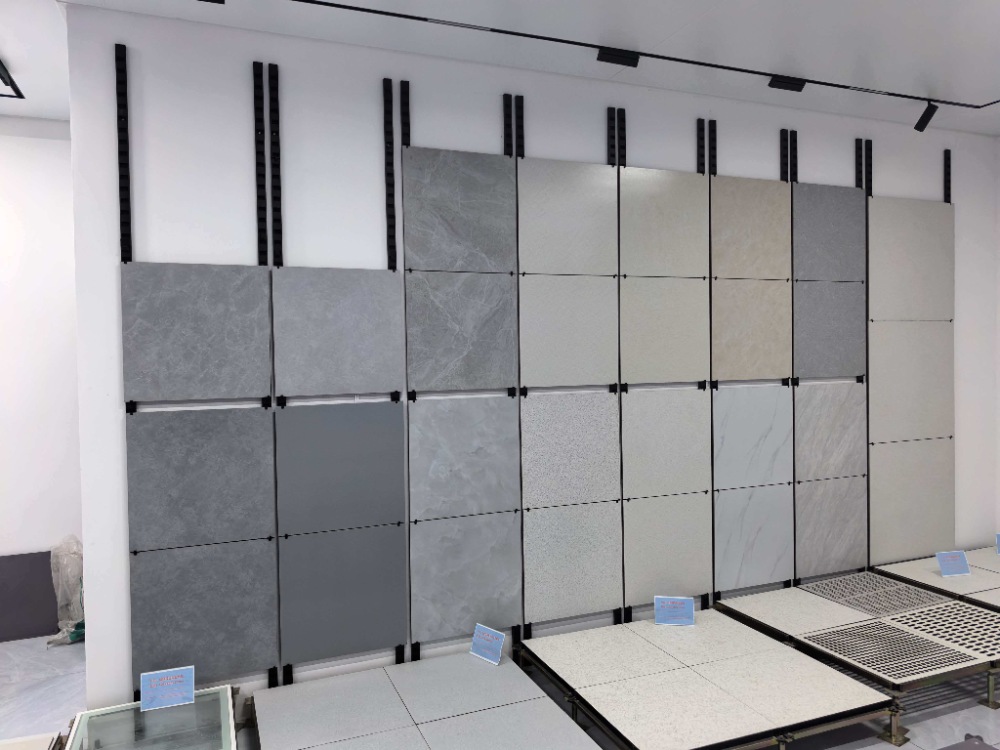
Calcium sulfate cores solve a longstanding problem in drywall and panel construction: how to shed moisture without adding heft. Unlike traditional gypsum boards that rely on dense, paper-faced layers, these cores use a refined crystalline structure that repels water at the surface while keeping the overall panel light enough for single-person handling. Installers often note the difference immediately—no soggy edges after a humid night, no sagging when a roof leak sneaks through during rough framing.
The real trick lies in the way calcium sulfate interacts with airborne humidity. Instead of absorbing moisture and swelling, the core allows water vapor to roll off or evaporate quickly, leaving the structural integrity untouched. That means fewer callbacks for warped seams or softened corners, especially in bathrooms, laundry rooms, and coastal builds where moisture is a daily reality. You get the protective barrier you need without doubling the fastener count or adding a second pair of hands for installation.
Builders who switch to these panels often mention the same surprise: a noticeably lighter lift with better moisture performance than the heavyweight boards they had been using for years. It is not about sacrificing durability for convenience—rather, the chemistry of the core does the heavy lifting, so the panel itself does not have to. For anyone tired of wrestling heavy sheets while worrying about future water damage, this approach feels like a practical upgrade rather than a marketing promise.
Van-steel Edges That Survive Drops and Rough Handling
Most steel edges start to round off or chip after a single hard knock. The van-steel version doesn’t. It’s cut from a heavier cold-rolled plate and then passed through an extra rolling pass, which compresses the grain at the corner instead of leaving it brittle.
You can drop a fully loaded drawer onto these edges from waist height and they won’t fold inward. The corners are slightly over-bent, so the first point of contact is a curved surface rather than a sharp right angle. That spreads the impact across a wider area and keeps the edge from biting into whatever it hits.
On rough jobsites, boxes get kicked, dragged, and shoved against doorframes. The edges stay flat enough that lids still seal, but they’re not so sharp that they tear through gloves or clothing. After months of abuse, you’ll see scuffs, not structural failure.
Ordering Custom Plate Sizes Without the Usual Lead Time
Most suppliers force you into a few standard dimensions and then tack on weeks of waiting if your project calls for something different. That delay usually comes from batching orders or outsourcing the cutting work. When a shop keeps its own laser and shear equipment running daily, a nonstandard size doesn't trigger a special production run. The job simply joins the next available cutting cycle, which often means it ships the same day or the next morning.
Custom dimensions also stop being a pricing problem once the material is stocked in large sheets. A 37.5-inch by 19.25-inch plate, for example, can be pulled from the same 4x8 or 5x10 sheet as a standard size. The only real variable is the cut path. That keeps per-unit cost predictable and lets you order exactly what your design needs instead of forcing the design to fit an off-the-shelf rectangle.
For tight deadlines, this removes the usual trade-off between precision and speed. You don't have to accept a stock size that's close enough, and you don't have to pause the rest of the assembly while the plates arrive. Specify the thickness, alloy, and edge finish, and the part moves straight from cutting to packaging without a separate quoting delay.
From Factory Floor to Foundation: A Supply Chain You Can Audit
Walk into the production hall and you’ll notice the smell of fresh rubber, the rhythmic thud of presses, and workers who don’t flinch when a stranger asks to see the batch logs. That’s not an accident. Every raw material that arrives on the loading dock is tagged with a supplier code, a lot number, and a date. Quality checks happen in plain view, not behind a curtain. If a roll of canvas fails a tensile test, it gets pulled and logged before it ever reaches a sewing station.
The paperwork doesn’t stop at the exit door. From the factory floor to the regional distribution hub, each carton carries a scannable manifest. Trucking records, warehouse temperatures, and handoff signatures are stored in a single ledger that any auditor can open without a lawyer present. You won’t find vague phrases like “ethically sourced” on a slide deck. Instead, you’ll see photos of the loading process, time-stamped GPS pings, and the names of the drivers who moved the goods.
What many companies treat as an afterthought—the final mile after the product leaves the warehouse—is where this chain gets its name. The “foundation” isn’t a building; it’s the end-use program that receives the shipped goods. Every pallet delivered to a school, clinic, or relief site is reconciled against the original factory order. If a box goes missing, the audit trail shows exactly where it fell off. No charity claims, no fuzzy math, just a route you can trace from the first stitch to the last handshake.
The Difference Between Cheap Boards and Reliable Sulfate Panels
When you compare a cheap board to a reliable sulfate panel, the first thing you notice is how they handle moisture. Cheap boards often absorb water quickly, swelling at the edges and losing their shape within a few months. A proper sulfate panel, on the other hand, is engineered with a dense core and consistent binder distribution, so it resists moisture penetration even in humid conditions. This isn't just about longevity—it's about structural integrity. A floor or wall sheathing that stays flat and firm under stress means fewer callbacks and less wasted material on site.
The manufacturing process also sets the two apart. Low-cost boards are usually pressed with minimal quality control, leading to variations in thickness, surface roughness, and internal voids. You can feel the difference when you run your hand over the edge: a cheap board may crumble or flake, while a reliable sulfate panel has a clean, uniform edge that cuts cleanly and fastens without splitting. These panels are produced under tighter tolerances, so every sheet you pull from the stack performs the same as the last. That consistency matters when you're laying out a large floor or sheathing a roof where uneven boards would telegraph through the finish.
Finally, consider long-term value. A cheap board might save you a few dollars upfront, but it often requires replacing or reinforcing after exposure to normal job-site conditions. Reliable sulfate panels are designed to take abuse—stacked outdoors for weeks, rained on, walked over—without delaminating or losing their load rating. Contractors who specify them know they're paying for peace of mind: fewer warped sheets, fewer fastener pops, and a subfloor that stays quiet underfoot. In the end, the difference isn't just in the material. It's in how confidently you can build on it.
FAQ
It's a composite building panel with a calcium sulfate core fully encased on all six sides by vanadium-alloyed steel sheets. The six-sided wrap gives it uniform strength, fire resistance, and dimensional stability, making it suitable for demanding construction projects.
Vanadium additions refine the steel's grain structure, so the casing is tougher and more resistant to impact and wear than ordinary mild steel. This means the panel holds up better during transport, installation, and long-term use in busy environments.
These panels are commonly used for partition walls, raised access floors, cleanroom enclosures, and exterior cladding where fire ratings and moisture resistance are critical. They're also popular in hospitals, laboratories, and industrial facilities.
The core is treated to resist moisture absorption and maintain its dimensions in humid conditions. However, the steel casing provides the primary barrier, so edge sealing during installation is still recommended for prolonged wet exposure.
Depending on thickness and configuration, the panels can achieve up to 2-hour fire resistance. The calcium sulfate core contains chemically bound water that releases as steam under heat, slowing temperature rise on the unexposed side.
Yes, but you need carbide-tipped blades for the steel faces and proper dust extraction for the calcium sulfate core. We recommend factory pre-cutting whenever possible to preserve the six-sided seal and maintain fire and moisture performance.
Look for ISO 9001 certification, third-party fire test reports, and a track record of supplying to major contractors. We also provide batch traceability and material certificates for every shipment so you can confirm composition and performance.
Standard thicknesses and sizes usually ship within 2 to 3 weeks after order confirmation. Custom sizes or special coatings may add another week or two. We keep buffer stock of high-demand panels to handle urgent project needs.
Conclusion
Builders have a short list of materials that get requested again and again, and this six-sided calcium sulfate plate keeps showing up on it. The reason isn't complicated: it handles the realities of a job site without adding extra work. The calcium sulfate core resists moisture without carrying the weight of traditional cement board, so crews can move and cut it faster. Then there's the van-steel edge—formed steel wrapping all six sides—which takes the bumps, drops, and rough handling that would chip or warp lesser panels. When a board arrives intact after being tossed off a truck, word spreads.
What separates this supplier from the usual sources is how they handle everything behind the product. Custom sizes don't come with the usual two-week delay because the cutting lines are set up to shift quickly between dimensions. You can trace a panel from the factory floor to your foundation, with batch records and load manifests available if you ask. That level of visibility matters when you've been burned by cheap boards that swell, crumble, or arrive warped. Reliable sulfate panels cost a bit more upfront, but they don't quietly fail after installation. For anyone who has had to tear out substandard board, that difference is worth every cent.
Contact Us
Contact Person: Hai-Bo Xiao
Email: [email protected]
Tel/WhatsApp: 8618898711810
Website: https://www.huahongfloor.com