

Bidirectional Power Modules Factory: Innovating Efficient Energy Conversion Solutions
2026-05-18
As the demand for smarter energy systems surges, bidirectional power modules are redefining what’s possible in conversion efficiency and grid flexibility. At the heart of this transformation is TPS, a factory where breakthrough engineering meets real‑world application. From EV fast charging to renewable integration, the ability to precisely manage bidirectional power flow is no longer a luxury—it’s a competitive necessity. In this article, we’ll explore how TPS is pioneering modular, high‑density solutions that turn complex energy challenges into seamless, scalable opportunities. Join us as we unpack the innovations driving a new era of energy conversion.
Rethinking Power Flow: How Bidirectional Modules Work
The traditional model of electricity delivery follows a predictable, one-way path from central generators to end users. Rethinking this means recognizing that energy can—and increasingly does—flow in both directions. Bidirectional power modules sit at the heart of this shift, enabling devices and localized grids to not only consume but also supply power, dynamically adapting to real-time conditions. This challenges decades of grid architecture assumptions, turning passive endpoints into active participants that help balance load and stabilize voltage across the network.
Inside a bidirectional module, the key lies in intelligent power electronics that can rapidly switch between rectification and inversion modes. Instead of treating input and output as fixed roles, these modules continuously negotiate power direction based on voltage differentials, frequency signals, or digital commands. This fluidity means a single unit can charge a battery during surplus generation and seamlessly reverse to feed power back when demand spikes. The control algorithms involved are far more nuanced than simple on/off switching—they must account for fault tolerance, grid synchronization, and seamless transfer without destabilizing the larger system.
What truly transforms the power flow paradigm is not just the hardware capability but how it reshapes our thinking about energy. Rather than seeing consumption and production as separate events, bidirectional modules blur those lines. A building with solar panels and storage becomes a microgrid that can island itself during outages or support neighboring blocks. This turns every connected asset into a potential resource, making the entire system more resilient and efficient. The result is a decentralized, organic flow of power that mirrors the way digital networks handle data—packetized, reroutable, and survivable by design.
Efficiency Without Compromise: The Core Engineering Approach
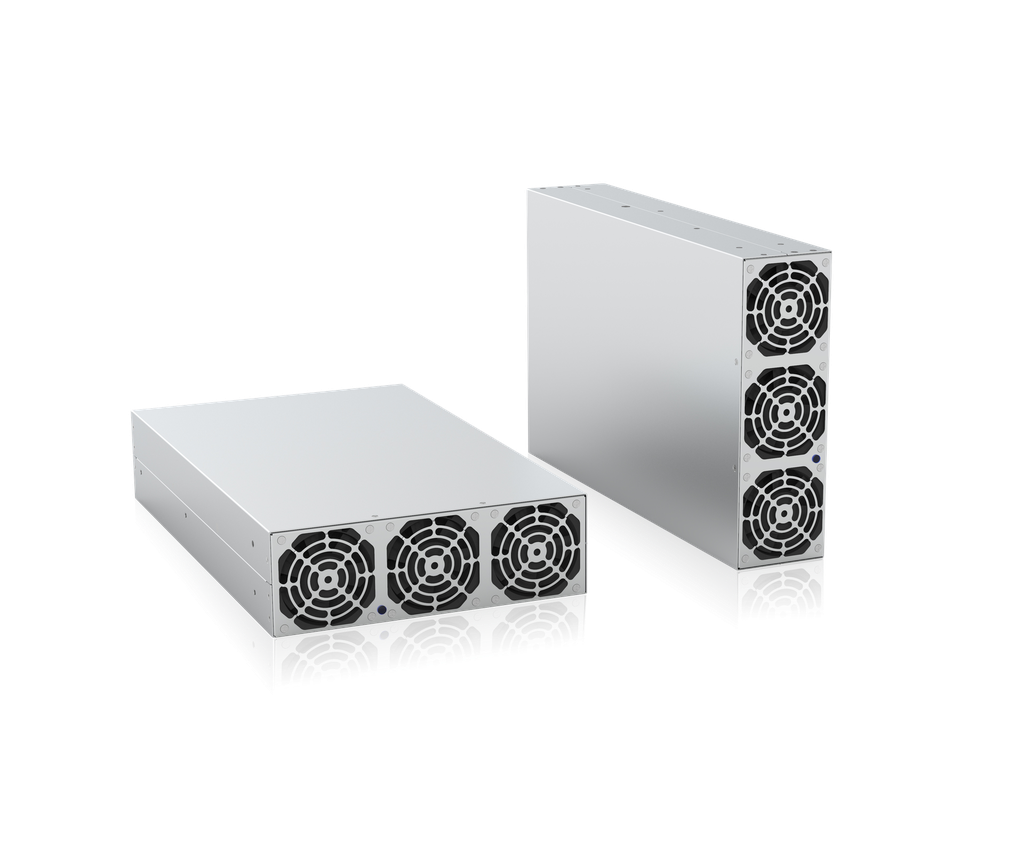
Building systems that don't cut corners requires a disciplined yet adaptive mindset. At its heart, the approach hinges on aligning every technical decision with long-term value, not just immediate speed. Engineers must question whether a shortcut today might create bottlenecks tomorrow. This often means investing in robust testing frameworks and modular architecture from the start, not as afterthoughts.
Crucially, the team culture must celebrate both rapid delivery and meticulousness equally. Code reviews become collaborative sessions where improvements are spotted early, reducing rework. By embedding quality checkpoints into the development cycle rather than treating them as gatekeepers, the process stays lean without sacrificing reliability. The result is a work environment where high standards and high velocity coexist naturally.
Designed for Dynamic Energy Landscapes
Modern energy systems must handle constantly shifting demands and supply sources with precision. Our approach focuses on real-time adaptability, ensuring stability even when renewables like solar and wind fluctuate unpredictably. This isn't about rigid planning—it's about building flexibility into the core architecture.
The underlying intelligence continuously learns from consumption patterns and external conditions. By processing vast data streams without delay, it makes micro-adjustments that prevent waste and reduce reliance on backup fossil fuels. The result is a system that feels almost intuitive, responding to changes before they become problems.
What sets this apart is how seamlessly it integrates with existing infrastructure. There's no need for costly overhauls; instead, it layers adaptive control on top, turning legacy setups into agile, future-ready networks that can evolve alongside the energy transition.
From Concept to Compact: Inside the Development Process
Every compact device starts as a rough idea sketched on a whiteboard or scribbled in a notebook. Those early drawings are messy—full of arrows, question marks, and half-formed thoughts—but they capture the core vision. Engineers and designers huddle around these concepts, pushing back on each other's assumptions, challenging every millimeter of proposed space. The goal isn't just to make something small; it's to make something that works seamlessly despite its size. This phase is less about polish and more about possibility, where a stray comment about hinge placement or thermal flow can completely reshape the trajectory.
Then comes the brutal refinement loop. Prototypes emerge from 3D printers and CNC machines, often held together with tape and optimism. Each physical model exposes weaknesses the CAD model hid: a button that's impossible to reach, a seam that weakens the structure, a component that overheats in minutes. The team gathers around the latest failure, not with disappointment, but with the kind of focus that only comes from a shared puzzle. They strip away bulk, rethink internal layouts, and sometimes ditch a beloved feature that simply can't survive the transition from concept to compact. It's a slow, almost obsessive pruning process—cutting grams, millimeters, and unnecessary complexity without breaking the experience.
By the time the final version lands in someone's hand, the development story is invisible. The smooth curves, the satisfying click of a latch, the weight that feels just right—all of it masks the months of second-guessing and the hundred tiny decisions that didn't make the final cut. What's left isn't a stripped-down compromise but a concentrated expression of the original idea, refined until nothing else can be removed. The result feels almost inevitable, a device that seems like it simply had to exist this way, even if the path to get there was anything but straightforward.
Smart Integration for Modern Grid Demands
The shift toward smarter energy systems isn’t just about adding more technology—it’s about weaving together hardware, data, and control in ways that feel almost intuitive. Today’s grids face pressures no one predicted a decade ago: rooftop solar flooding circuits at noon, electric vehicles drawing sudden loads at dinner time, and businesses demanding carbon accountability down to the minute. Smart integration means these pieces don’t just coexist—they communicate, adapt, and self-correct in real time.
Instead of bolting isolated solutions onto aging infrastructure, system designers now look at how every component—from smart meters to battery arrays—can share context. A voltage fluctuation at a substation triggers a response not just upstream, but across a network of distributed resources that understand the bigger picture. This layered intelligence helps operators see patterns before they become problems, smoothing out the rough edges that used to require manual intervention.
What makes this approach stick is its focus on practical outcomes: fewer outages, cleaner energy mixes, and a grid that actually works with customers rather than around them. By embedding flexibility into the very architecture, utilities can handle tomorrow’s unpredictable demands without constant overhauls—turning what was once a liability into a platform for innovation.
Beyond Conventional: Real-World Impact and Applications
Stepping away from laboratory benchmarks and theoretical models, the real measure of any advancement lies in how it reshapes everyday experiences. This shift is not about chasing headline-grabbing metrics but about embedding solutions into contexts that truly matter—from helping farmers in remote areas diagnose crop diseases without internet access to enabling real-time language translation in classrooms where students speak five different mother tongues. These applications are subtle, often unnoticed, yet they weave themselves into the fabric of daily routines, making technology feel less like a tool and more like a natural extension of human capability.
Consider the quiet transformation in fields where resources are scarce and stakes are high. In rural clinics, for instance, diagnostic assistance systems can flag early signs of diabetic retinopathy from a simple smartphone photo, giving a visiting nurse the confidence to refer a patient before irreversible damage sets in. On the factory floor, anomaly detection algorithms process sound and vibration patterns to predict equipment failures weeks in advance, preventing costly downtime and, more critically, averting safety hazards. These instances rarely make headlines, but they represent a profound shift from innovation as spectacle to innovation as a dependable, behind-the-scenes partner.
The most enduring impact often happens when technology doesn't demand center stage. Take the example of marine biologists using passive acoustic monitoring to track the health of coral reefs by analyzing the sounds of snapping shrimp and fish choruses. Or urban planners who integrate motion pattern data from public spaces to design parks that feel safer and more inviting without ever installing a single camera. Such uses point to a future where progress is measured not by complexity, but by how invisibly it restores, protects, and elevates the ordinary moments that define a life well lived.
FAQ
They enable seamless two-way energy flow, allowing systems to both draw from and feed power back to the grid. This is essential for applications like renewable storage, EV charging, and microgrids, where efficiency and flexibility directly impact operational cost and stability.
Rather than chasing incremental improvements, we focus on rethinking core topologies and thermal management from the ground up. Our engineering team integrates custom control algorithms and wide-bandgap semiconductors early in the design phase, leading to modules that run cooler and respond faster under dynamic loads.
Every percentage point of efficiency gain translates into less waste heat, lower cooling demands, and longer component life. For large-scale deployments like solar farms or industrial storage, even a 1% improvement can mean tens of thousands of dollars in saved energy annually, making our modules a strategic asset rather than a commodity part.
One dairy farm combined solar panels with our modules to both power milking operations and sell excess energy back during peak rates. The bidirectional capability avoided separate inverter and charger installations, cutting upfront cost by 30%, while the smart scheduling feature shifted battery discharge to avoid demand charges.
We subject every module to full-load burn-in cycling for 72 hours before shipment, simulating real grid fluctuations and load steps. Automated optical inspection and partial discharge testing are standard, not optional. This stems from experience in mission-critical applications where field failures aren't acceptable.
We employ liquid-cooling-ready baseplates and patent-pending phase-change material layers that dampen hot spots during rapid power reversals. Combined with digital twin simulations during layout, we can push power density by up to 40% beyond conventional forced-air designs without sacrificing reliability.
Beyond silicon carbide adoption, we are prototyping modules with integrated grid-forming controls that let them stabilize weak grids autonomously. The next generation targets multi-port configurations for direct solar-plus-storage-plus-EV integration, reducing system-level conversion stages and boosting round-trip efficiency further.
Conclusion
Bidirectional power modules are reshaping how energy flows between sources, storage, and loads. Unlike traditional one-way converters, these modules allow current to move in both directions, enabling seamless charging and discharging cycles that respond instantly to grid or load demands. At the heart of this innovation lies a meticulous engineering approach that eliminates the typical efficiency trade-offs. By leveraging advanced semiconductor materials and novel circuit topologies, the factory's designs ensure that conversion losses remain minimal regardless of power direction. This efficiency is paired with an architecture built for unpredictability—whether it's a sudden surge in renewable output or a drop in grid voltage, the modules adapt without missing a beat, making them ideal for today's volatile energy landscapes.
Behind these compact units is an iterative development process that starts with digital twin simulations and moves through rigorous thermal and electrical stress testing. Every component, from the cooling system to the control algorithms, is refined to balance size with performance, resulting in modules that fit neatly into existing infrastructure. Their smart integration capabilities go beyond simple power conversion; they communicate with grid management software to optimize dispatch, support demand response, and enhance power quality. In practice, this technology is already enabling vehicle-to-grid systems, stabilizing microgrids in remote communities, and allowing industrial sites to become energy self-sufficient. The factory's work is not just about building better converters—it's about redefining how we interact with energy, turning every endpoint into a dynamic participant in a resilient, low-carbon network.
Contact Us
Contact Person: Lily
Email: [email protected]
Tel/WhatsApp: +49 (0) 2161 49526-0
Website: https://tps-elektronik.com/en/