

Best Conveyor Chains Manufacturer: What Sets Industry Leaders Apart
2026-08-10
In the world of industrial machinery, conveyor chains are the unsung heroes that keep operations running smoothly. But not all chains are created equal. What truly distinguishes the best manufacturers? It's a combination of engineering excellence, material quality, and relentless innovation. One name that consistently rises to the top is Raydafon, a brand that has redefined what reliability means in the conveyor chain industry. In this article, we'll explore the key factors that set industry leaders apart and why Raydafon is a benchmark for quality.
Material choices that define long-term reliability
Engineers often fixate on design geometry and load calculations while relegating material selection to a secondary decision. But the truth is, no amount of clever structural reinforcement can compensate for a base material that slowly degrades in its operating environment. The molecules themselves must resist the microscopic assaults of time—thermal cycling, corrosion, wear, and chemical attack—long before any visible crack appears. A polymer that turns brittle after a few hundred UV exposure cycles, or a metal alloy that pits in mild saline conditions, undoes years of careful engineering in a matter of months. The foundation of reliability isn’t built on safety factors alone; it’s built on atoms that refuse to weaken.
Take fasteners in marine hardware. Stainless steel 304 might look indistinguishable from 316 on a spec sheet, but the addition of molybdenum in the latter creates a passive layer that stands up to chloride-rich seawater where 304 succumbs to pitting corrosion within a single season. Similarly, seal materials in automotive fuel systems once relied on nitrile rubber—adequate until ethanol-blended fuels became commonplace, at which point swelling and permeability failures skyrocketed. The shift to fluoroelastomers wasn’t driven by a desire for novelty; it was a quiet acknowledgment that the old material couldn’t handle the new chemistry. Long-term reliability emerges when material choices are made not for initial conformance but for sustained performance under real-world conditions, including the ones the design brief forgot to mention.
The most insidious failures often originate at the intersection of mismatched materials. When aluminum and carbon fiber meet in a bolted assembly without proper isolation, galvanic corrosion begins the moment humidity appears. Designers who treat material selection as an isolated property check miss these systemic interactions. A truly reliability-driven approach looks beyond tensile strength and modulus to encompass fatigue behavior in actual service spectra, environmental stress cracking resistance, and compatibility with every fluid and material it will ever touch. It’s the difference between a component that passes a lab test and one that still functions a decade later, untouched by the slow decay that claims its peers.
Precision engineering behind consistent performance
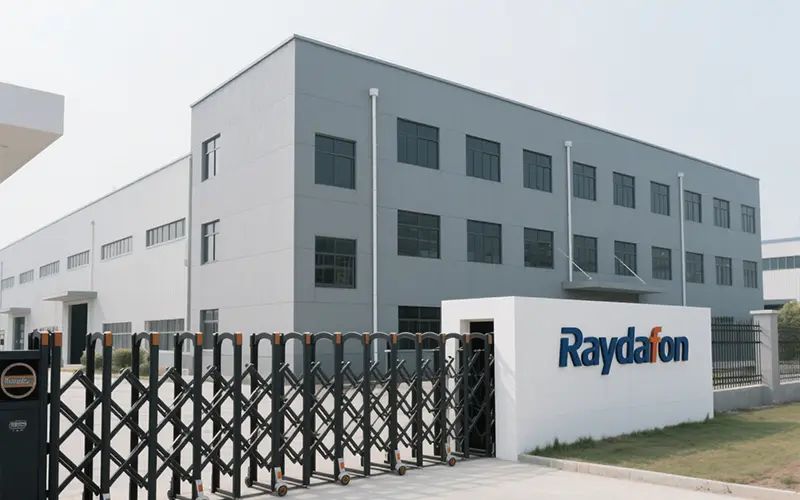
Every component is machined to tolerances that most manufacturers would consider excessive—but here, it’s simply the baseline. The process starts with metallurgical analysis to select alloys that resist deformation under stress, followed by CNC grinding that holds dimensions within microns. Even the surface finishes are controlled, not just for aesthetics, but because a predictable texture eliminates variables during high-speed operation. No statistical outliers get a pass; each unit must match the master gauge before it leaves the line.
That obsession with detail extends to assembly, where fasteners are torqued in sequence using feedback-controlled drivers that log every reading. Bearings are preloaded to eliminate play, and dynamic balancing corrects asymmetries down to fractions of a gram-millimeter. These steps aren’t done for show—they’re the reason a unit can run for thousands of hours without drifting from its initial performance curve.
Field data feeds back into the engineering loop, refining simulations that predict wear patterns years in advance. Instead of relying on generic safety factors, we validate prototypes on custom-built rigs that recreate real-world abuse—thermal cycling, vibration, contamination. The result isn’t just consistency; it’s a reliability baseline that makes maintenance intervals predictable instead of reactive.
Custom solutions that break the mold
We don't believe in one-size-fits-all. Every project starts from scratch, designed around your specific goals, not adapted from some tired template. This means we question every assumption, tossing out conventions that don't serve your vision, so what emerges is truly yours—unpredictable in the best way possible.
Instead of grafting features onto existing frameworks, we build from the ground up with an open mind. The result isn't just different for the sake of it; it's a deliberate departure from the ordinary, engineered to surprise and connect with your audience in a way standard approaches never could.
Supply chain agility without compromising quality
Modern supply chains walk a tightrope between rapid response and consistent output. Agility doesn’t mean cutting corners — it’s about building flexible sourcing networks, modular production setups, and intelligent buffer stocks that absorb shocks without diluting standards. When a supplier falters or demand spikes unexpectedly, having pre-qualified backup partners and transparent quality protocols keeps things moving without frantic, last-minute compromises.
Real-time visibility turns agility into a controlled advantage. By tying live demand signals directly to production schedules and logistics, companies can shift volumes, reroute shipments, or adjust specs on the fly — all while enforcing the same inspection gates and material certifications. The trick is embedding quality checkpoints so deeply into digital workflows that they become automatic, not optional. That way, flexibility never becomes an excuse for deviation.
Ultimately, it’s a culture play. Teams that treat quality as a non-negotiable anchor — no matter how fast the landscape shifts — avoid the trap of reactive chaos. Regular cross-functional war-gaming, where procurement and quality leaders stress-test scenarios together, hardwires resilience into daily decisions. The result is a chain that bends but doesn’t break, delivering exactly what was promised, when it’s needed, regardless of what the world throws at it.
Support systems that extend beyond the sale
A purchase marks the beginning of a relationship, not the end. We operate on the belief that the real work starts once the product reaches your hands. Our teams stay engaged well after the transaction, ready to assist with implementation hurdles, unexpected scenarios, or simply helping you get more value from your investment.
Instead of a one-size-fits-all help desk, you get direct access to specialists who know your account history. They can proactively suggest adjustments based on usage patterns you might not have noticed, turning a support call into a strategic conversation. This approach turns occasional troubleshooting into continuous improvement.
We also maintain a living knowledge base shaped by actual customer experiences—not just generic FAQs. When something new pops up in your industry, our support resources evolve accordingly. It's less about handing you a manual and more about making sure the entire ecosystem around your purchase grows with you.
Sustainability practices that are more than a badge
Sustainability is often treated as a checkbox exercise, with companies proudly displaying eco-labels while their core operations remain unchanged. True sustainability practices go beyond glossy certifications; they require a fundamental rethinking of how resources are sourced, products are designed, and waste is managed. It's about embedding environmental and social responsibility into the DNA of the business, not just the marketing department.
When a company genuinely prioritizes sustainability, you see it in the details that aren't always visible on a label. This might mean investing in regenerative agriculture that restores soil health, implementing circular economy models where nothing goes to landfill, or ensuring fair wages and safe conditions throughout the supply chain. These efforts often involve years of commitment and transparency that goes far beyond what any single badge can convey.
Consumers are becoming more savvy at distinguishing between performative gestures and authentic action. They're looking for evidence of long-term strategies, measurable impact, and a willingness to share both successes and setbacks. The companies that stand out are those that treat sustainability as a journey of continuous improvement, openly communicating their goals and progress without relying on empty platitudes. After all, the most meaningful changes are the ones that don't need a badge to be noticed.
FAQ
It comes down to a relentless focus on engineering precision and material integrity. Leading manufacturers invest heavily in R&D to refine link geometry and heat treatment processes, resulting in chains that withstand higher loads and resist wear far longer than commodity alternatives.
They go beyond standard coatings. Top producers analyze the specific corrosion, temperature, and abrasion challenges of your application, then tailor surface treatments like advanced nitriding or proprietary polymer seals that create barriers against contaminants while reducing friction.
The steel grade and alloy composition directly impact tensile strength and fatigue life. Leaders don't just use off-the-shelf stock; they often collaborate with mills to develop specialized alloys that optimize hardness and ductility for the chain's intended operating conditions.
It's pivotal. Seasoned engineers can model dynamic load distribution and predict failure points using finite element analysis, allowing them to refine pin and bushing fits to eliminate premature stretch. This expertise transforms a good chain into a consistently reliable one.
Rather than forcing standard parts to fit, they start with a thorough audit of your conveyor system and operational demands. Then they co-design configurations—modified attachments, extended pins, or entirely new link profiles—that integrate seamlessly and boost overall line efficiency.
Beyond basic warranty, you should get proactive wear monitoring and predictive maintenance recommendations. Top-tier suppliers offer on-site inspections, installation training, and even performance benchmarking to help you maximize chain service life and minimize unplanned downtime.
Digitization is key. Advanced players use IoT-enabled chains with embedded sensors that track tension, temperature, and elongation in real time. This data feeds into cloud platforms for early warnings, enabling condition-based maintenance rather than reactive fixes.
Look for ISO 9001 as a baseline, but true leaders often hold industry-specific certifications like ISO 16949 for automotive supply chains or DNV for marine applications. Also, ask about their in-house testing regimen—consistent lot-level hardness and tensile testing is a strong quality indicator.
Conclusion
Industry-leading conveyor chain manufacturers distinguish themselves through an uncompromising approach to material selection and engineering precision. The choice of high-grade alloys, specialized coatings, and heat-treated components directly determines a chain’s ability to withstand abrasive environments, extreme temperatures, and continuous heavy loads. It’s not just about using premium raw materials—it’s the metallurgical expertise behind matching the right material to specific operational stresses that prevents premature wear and unexpected downtime. This material science foundation works in tandem with precision engineering, where advanced manufacturing tolerances and rigorous in-line testing ensure every link, pin, and roller performs identically. Such meticulous design eliminates the subtle variations that cause vibration, noise, and uneven load distribution, resulting in the consistent, predictable operation that high-throughput facilities demand.
Yet what truly sets the best apart is their ability to move beyond off-the-shelf thinking. Custom chain solutions—developed through close collaboration with end-users—address unique challenges like restricted space envelopes, chemical exposure, or high-speed indexing. These manufacturers invest in flexible production cells and maintain strategic raw material reserves, enabling them to respond to urgent orders without sacrificing the meticulous quality control that defines their standard products. Equally critical is the support ecosystem: application engineering advice, installation supervision, and predictive maintenance programs extend far beyond the transaction. Finally, authentic sustainability efforts—from energy-efficient manufacturing processes to fully recyclable chain components and take-back initiatives—demonstrate a genuine commitment that goes deeper than surface-level marketing claims, reinforcing long-term partnerships.
Contact Us
Contact Person: Mr. Shen
Email: [email protected]
Tel/WhatsApp: +86-574-87168065
Website: https://www.transmissions-china.com/