

Best Continuous Still: Mastering Efficient Distillation for Superior Spirits
2026-06-09
Discover how the best continuous still transforms distillation into an art of precision, producing spirits of unmatched quality. At the heart of this innovation lies DYE, a brand that redefines efficiency and craftsmanship in every drop.
Unlocking Continuous Still Efficiency: Quality Leap from Mash to Spirit
The shift from pot to continuous distillation isn’t just about speed—it’s a redefinition of how flavor compounds are captured and refined. In a continuous still, the mash enters a tall column where fractionation happens in real time, with temperatures precisely controlled at each plate. This allows distillers to isolate volatile congeners more selectively, pulling heart cuts that are cleaner yet retain the grain’s signature without the smearing effect common in batch runs. The result is a spirit that feels polished from the first pass, with less need for heavy rectification or extended aging to smooth out impurities.
Mastery of the process lies in the details: wash temperature, flow rate, and reflux ratio must dance in sync. A slight tweak in the dephlegmator can shift the separation point between fusel oils and desirable esters, transforming a harsh output into something silky and expressive. It’s this granular control that makes the leap from mash to spirit a genuine quality leap—by catching the sweet spot where fruitiness peaks and harshness tails off, you preserve the soul of the raw material while achieving a clarity that batch methods struggle to replicate.
Efficiency here doesn’t dilute character; it sharpens it. The continuous process demands a disciplined approach, but the payoff is a consistent spirit that can be tailored with precision. Distilleries that embrace this shift often find that their rye becomes spicier, their corn sweeter, and their malt more biscuity, simply because the still is tuned to accentuate those notes rather than letting them blur. In the end, it’s not about replacing tradition but refining the pathway from mash to finished spirit with an engineer’s eye and a craftsman’s palate.
Heart of the System: Choosing the Right Components for Seamless Distillation
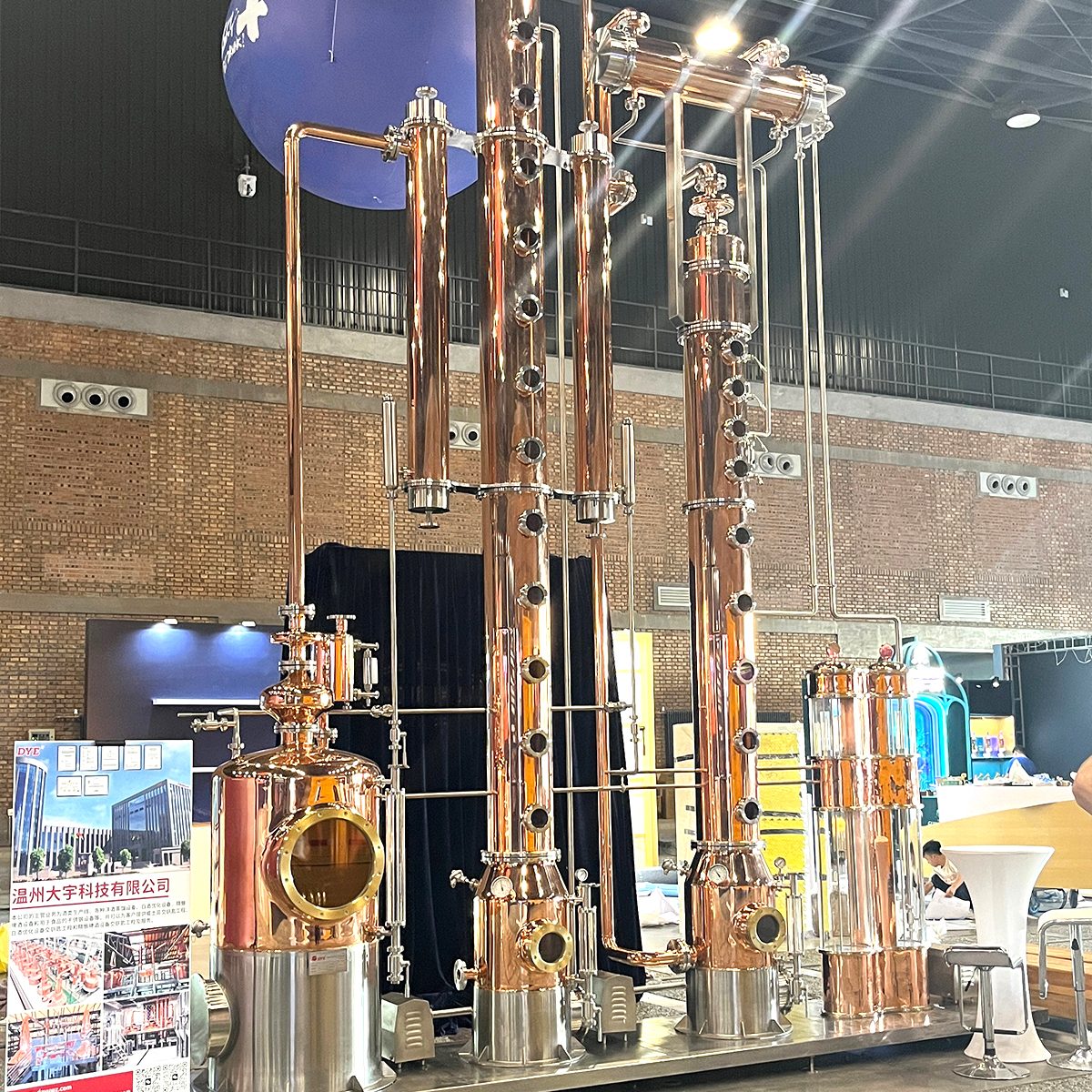
Every distillation setup, whether it's a small lab experiment or a full-scale industrial column, lives or dies by the components you choose. The boiler, column, condenser, and collection system aren't just parts—they're interconnected pieces of a delicate ballet. A mismatched boiler, for instance, can flood your column with vapor too quickly, while an undersized condenser will leave you with escaping vapors and a dangerous situation. It's about understanding how heat input, vapor speed, and cooling capacity mesh together, so the entire process flows without hitches.
Material compatibility often gets overlooked, but it's a silent saboteur. Glass looks beautiful and lets you watch the magic happen, but it's fragile and can crack under thermal shock. Stainless steel handles heat and aggressive washes like a champ, but you lose visibility. Then there are gaskets, seals, and tubing—cheap plastics can leach chemicals or degrade when you least expect it. Investing time in selecting borosilicate glass, PTFE, or high-grade stainless pays off in purity and longevity, especially when you're chasing that perfect cut.
Modularity is the secret weapon of a great distillation rig. Threaded or tri-clamp connections let you swap columns, add reflux controllers, or upgrade condensers as your needs evolve. This isn't just about convenience; it's about future-proofing your system. A kit that locks you into one configuration might work today, but tomorrow's project could demand more plates or a different reflux ratio. Choose components that speak a universal language of fittings, and you'll spend less time fighting leaks and more time refining your technique.
Mastering the Variables: The Precise Dance of Temperature, Flow, and Reflux
Shifting temperature even a few degrees can reshape an entire separation. Too low, and components refuse to part ways; too high, and you risk degrading heat-sensitive molecules or wasting energy. Seasoned operators learn to feel the column—watching top and bottom thermometers as if reading a subtle conversation. Small adjustments ripple through the system, nudging equilibrium until that perfect split appears.
Flow rates demand equal attention. A rushed feed floods the column, blurring separation, while a trickle starves it of productivity. The real art lies in balancing throughput with residence time—enough to let mass transfer happen, but not so much that efficiency crumbles. Every tweak to the feed or draw-off rate rewrites the hydraulic story inside the tower.
Reflux is the variable that ties them together, a looping curtain of condensed liquid that forces rising vapor to prove its purity. Crank it up and you sharpen separation, at the cost of energy and time. Pull it back and the column surrenders resolution for speed. Mastering these three isn’t just about hitting setpoints—it’s about sensing how they dance together, each shift triggering a cascade that only experience can truly anticipate.
Beyond Batch: How Continuous Distillation Reshapes the Spirits Industry
The centuries-old rhythm of pot stills, with their slow, labor-intensive cycles of heating, condensing, and cleaning, once defined the spirits landscape. Batch distillation granted artisans intimate control over cuts and character, but it shackled production to time and repetition. Continuous distillation arrived like an industrial whisper, promising a stream of spirit that never sleeps. By feeding wash in a steady flow against rising steam, the process strips alcohol in a single, relentless motion. It’s a shift from stand-alone artistry to systemized precision, turning distilling into an uninterrupted pulse rather than a series of discrete breaths.
This overhaul reshaped not just scale but sensory identity. Vodka and light rum, once reliant on multiple batch runs to achieve purity, found a natural ally in columns that could hit 96% ABV in a single pass, yielding a blank canvas for filtration and blending. Even whiskey makers, who historically guarded batch pot stills like family heirlooms, began exploring hybrid setups. Continuous stripping columns paired with batch rectifiers let them capture heavy congeners while dialing in efficiency. The result wasn’t standardization so much as a new palette: cleaner base spirits that allowed cask influence to speak more clearly, or botanicals to bloom without earthy competition.
Today, continuous distillation is quietly eroding the false divide between craft and commodity. Small producers harness compact columns to mimic the lightness of column-distilled gin while retaining a hand-built feel, tweaking reflux ratios instead of pot timing. Energy recovery systems shrink carbon footprints, and real-time sensors let distillers chase flavor peaks mid-run. The industry isn’t abandoning the batch—it’s supplementing it with a philosophy of flow, where consistency doesn’t crowd out character, and where the next pour might owe its soul to an uninterrupted beam of vapor rising through steel.
Avoiding Pitfalls: Key Lessons in Continuous Still Operation
Starting up a continuous still without a solid grasp of feed consistency is asking for trouble. Even minor fluctuations in wash composition or flow rate can throw equilibrium out the window, leading to smeared cuts or a drop in proof. Seasoned operators learn to monitor preheater performance and buffer tank levels religiously—it’s the unglamorous grunt work that keeps the spirit clean and the column happy. Ignore it, and you’ll be chasing tails for the rest of the run.
Temperature control deserves more respect than it usually gets. A lot of newbies fixate on the top plate temp and call it a day, but the real story unfolds across the entire gradient. A cold spot mid-column often means liquid is pooling where it shouldn’t, a precursor to choking or flooding. Veteran distillers walk the still, touching inspection ports with the back of a hand, feeling for inconsistencies. It’s a low-tech habit that catches trouble before the sight glasses fog over.
Fouling sneaks up on you. One week your outputs are spot on, the next you’re nudging steam pressure just to hold a steady draw. That gradual buildup of scale or yeast residue in the stripping section doesn’t announce itself with alarms—it shows up as a creeping inefficiency. Practical operators schedule short, frequent CIP cycles instead of waiting for a deep clean. It costs you a few hours of production, but it’s cheap insurance against a surprise shutdown mid-season.
Tomorrow's Still: Smart Controls and Sustainable Practices
At the heart of Tomorrow’s Still lies a network of sensors and adaptive algorithms that constantly fine-tune temperature, pressure, and flow rates. This isn’t just automation for its own sake—it’s a thoughtful response to the real-world unpredictability of raw ingredients, ambient conditions, and energy fluctuations. By learning from each run, the system cuts waste and lifts consistency without stripping away the distiller’s craft.
Sustainability here moves beyond token gestures. Closed-loop water recycling, biomass-powered heating, and heat recovery from exhaust vapors are seamlessly integrated. Every drop of water, every kilowatt of energy is mapped and reused where possible. The result is a process where environmental care becomes a natural byproduct of the pursuit of quality.
What really sets this approach apart is the human element. Operators interface with intuitive dashboards that flag anomalies early, suggest tweaks, and leave room for intuition. It’s a partnership between precision engineering and sensory expertise, ensuring that the final spirit reflects both the efficiency of smart design and the soul of traditional production.
FAQ
Continuous stills provide unmatched consistency and purity by maintaining steady-state distillation, stripping away unwanted compounds while preserving the delicate flavors that define premium spirits.
It runs uninterrupted, feeding wash and drawing off product simultaneously, slashing energy use and labor while ramping up throughput dramatically.
Absolutely. By fine-tuning column plates, reflux ratios, and draw points, distillers can capture nuanced esters and congeners that rival pot-still character.
Deep understanding of heat dynamics, precise control over feed rate and reflux, and meticulous spirit-cut timing turn raw efficiency into artisanal excellence.
Yes, compact models now exist that offer the same precision on a smaller footprint, making continuous distillation viable for boutique producers aiming for distinct, top-shelf spirits.
Switching between recipes is seamless with clean-in-place systems and adjustable parameters, allowing quick transitions from whiskey to rum without cross-contamination.
Regular cleaning of sintered plates, inspection of vapor paths, and calibration of sensors ensure steady operation and prevent off-flavors from fouling.
Conclusion
The quest for superior spirits has driven distillers to refine the continuous still, a system that transforms fermented mash into high-quality alcohol with remarkable consistency. Unlike traditional batch methods, the continuous approach unlocks efficiency by feeding a steady stream of mash through a carefully engineered column, where heat drives a precise separation of alcohol from water and congeners. The heart of this operation lies in selecting the right components—from the reboiler and stripping section to the rectifying plates—each designed to create an uninterrupted flow. Mastering the interplay of temperature, flow rates, and reflux ratio becomes an art; even slight adjustments can shape the spirit’s character, stripping harsh notes or preserving delicate aromas. This dance of variables demands both intuition and rigorous control, yet the payoff is a smooth leap in quality directly from the raw mash.
The impact of continuous distillation ripples far beyond the stillhouse. It reshapes the spirits industry by slashing batch-cycle times, reducing energy consumption, and enabling producers to respond swiftly to market demands without sacrificing craft. However, early adopters often stumble on pitfalls: inadequate monitoring leads to off-flavors, while improper column sizing chokes throughput. Those who learn from these mistakes—implementing real-time sensors and regular maintenance—unlock the system’s full potential. Looking ahead, the next generation of continuous stills integrates smart controls that automatically calibrate settings for optimal yields, paired with sustainable practices like heat recovery and closed-loop water usage. This evolution isn’t merely about automation; it’s about empowering distillers to reliably deliver spirits with a distinct sense of place, proving that efficiency and artistry can coexist beautifully.
Contact Us
Contact Person: Ada Xu
Email: [email protected]
Tel/WhatsApp: 0577-86806088
Website: https://www.dayuwz.com/