

Best ABB Electromotor Selections for Industrial and Commercial Applications
2026-07-04
Selecting the right ABB electromotor can dramatically improve efficiency in both industrial and commercial settings. At Soochee, we understand that every application demands a tailored balance of power, durability, and precision. Whether you're upgrading a production line or optimizing a building's HVAC system, the choices can be overwhelming. This guide cuts through the noise, spotlighting the ABB models that deliver real-world performance and reliability. Let's explore the motors that stand out for their engineering excellence, and see why top-tier integration partners like Soochee make all the difference.
Matching Motor Designs to Industrial Load Profiles
Industrial environments present a wide spectrum of load demands that directly influence motor selection. From steady, unchanging torque requirements in conveyors to the sudden, high-inertia surges of crushers, each application imposes unique stresses on the drive system. Matching a motor to these profiles isn't simply about horsepower; it involves understanding how torque, speed, and thermal behavior evolve during startup and normal operation. The wrong choice can lead to premature winding failure, excessive energy draw, or nuisance tripping—problems that ripple through both maintenance budgets and production schedules.
NEMA design classifications capture the most critical performance variations. Design B motors, with their moderate starting torque and low slip, remain the default for pumps and fans where load rises predictably with speed. However, applications like punch presses or hoists benefit from Design D's high slip and exceptional starting torque, though at a cost to running efficiency. Variable torque loads—common in centrifugal equipment—favor designs that maintain efficiency across a partial speed range, often requiring careful inverter pairing. The real skill lies in recognizing when a custom rotor bar shape or specialized winding can bridge the gap between two standard designs, delivering both startup muscle and steady-state economy.
Today's adjustable speed drives have blurred some traditional boundaries, but they haven't eliminated the need for thoughtful matching. A motor that looks perfect on paper may suffer from harmonic heating or bearing currents when paired with a drive, especially in constant torque applications at low speeds. Field experience shows that the most reliable installations come from evaluating the complete torque-speed envelope—including momentary overloads and voltage dips—rather than just nameplate ratings. As sensor-equipped motors become more common, the ability to log real load profiles and tailor designs accordingly is moving from trial-and-error to data-driven precision.
Why IE4 and IE5 Efficiency Ratings Matter for Your Bottom Line
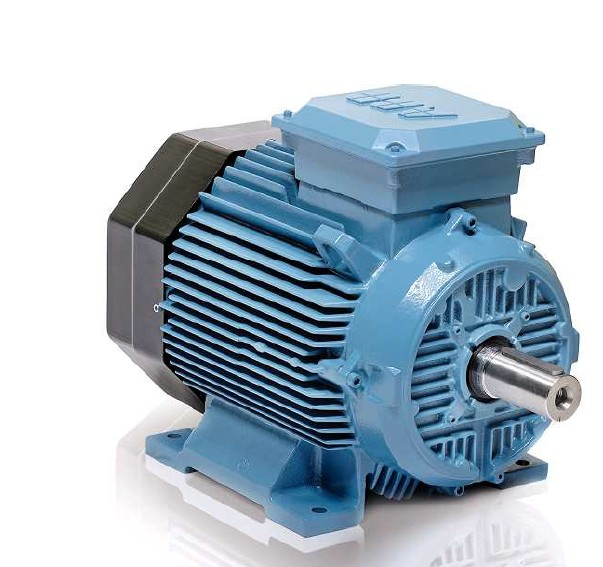
Switching to IE4 or IE5 motors isn’t just a technical upgrade—it’s a direct line to slashing operational costs. These premium efficiency motors convert more of the electrical energy they draw into actual mechanical work, meaning less waste as heat and lower electricity consumption with every hour of operation. For facilities running motors around the clock, even a few percentage points of efficiency gain can translate into thousands of dollars saved annually. It’s the kind of improvement that quietly strengthens your profit margins without any disruptive changes to your processes.
Beyond the kilowatt-hour savings, IE4 and IE5 motors tend to run cooler and experience less thermal stress on their components. That reduced strain leads to longer service intervals and fewer unexpected failures, cutting down on both maintenance labor and expensive downtime. When you’re not constantly replacing or repairing motors, the total cost of ownership drops noticeably. Over a typical motor’s lifespan—often 15 to 20 years—the combined energy and maintenance savings can easily exceed the initial purchase price several times over.
There’s also a growing financial incentive tied to regulatory shifts and corporate sustainability targets. Many regions now tie tax breaks, rebates, or carbon credits to the adoption of high-efficiency equipment, helping offset the upfront cost of IE4 and IE5 units. At the same time, buyers and partners increasingly scrutinize supply chain footprints, so a facility bristling with ultra-efficient motors can become a tangible selling point. What looks like a line-item expense on a capital budget actually becomes a long-term asset that protects your bottom line from rising energy prices and tightens your operational resilience.
Integrating ABB Ability Smart Sensors for Predictive Maintenance
Bringing ABB Ability smart sensors into your maintenance strategy starts with a straightforward hardware retrofit. The sensors mount directly onto existing low-voltage motors, pumps, and bearings using a simple clamp or adhesive, no complex wiring required. Once physically attached, they immediately begin capturing vibration, temperature, and other key health indicators. The real magic happens when this data flows into the ABB Ability cloud platform, where onboard algorithms translate raw signals into actionable insights. Instead of overwhelming maintenance teams with endless graphs, the system highlights only the anomalies that matter, such as early-stage bearing wear or misalignment, so teams can plan interventions during scheduled downturns rather than scrambling after a failure.
One of the underrated advantages of this integration is how it bridges the gap between legacy equipment and modern IIoT architectures without forcing a full rip-and-replace. Many plants are packed with perfectly functional assets that simply lack built-in connectivity. By layering the smart sensor network on top, operators gain a unified view of both new and old machinery. The ABB platform also lets you set custom alert thresholds based on historical trends and operating contexts, avoiding the nuisance alarms common with one-size-fits-all solutions. Over time, the system learns from your specific processes, making the predictive models more accurate and reducing false positives.
To get the most out of the investment, it pays to start with a targeted pilot, maybe on a handful of critical or hard-to-access motors. This lets the maintenance crew build trust in the data and fine-tune the alerting logic before scaling across the facility. The real-world payoff shows up in subtle ways: fewer midnight call-outs for unexpected breakdowns, longer mean time between overhauls, and a parts inventory that actually reflects impending needs rather than guesswork. Many teams discover that the sensors quickly become an extension of their own intuition, offering a digital sixth sense for machinery health that reshapes daily routines from reactive firefighting to measured prevention.
Heavy-Duty Motors Engineered for Harsh Operating Environments
Every component in these motors is chosen to shrug off the challenges that would sideline ordinary equipment. From dust-choked mines to saltwater-lashed offshore platforms, the designs incorporate ruggedized frames, sealed bearings, and specially coated windings that resist corrosion and abrasion. The result is reliable performance in conditions where failure simply isn’t an option.
Attention to thermal management sets these units apart. Active cooling systems, carefully selected insulation materials, and precision-engineered airflow paths keep internal temperatures stable even under continuous load at extreme ambient levels. This focus prevents hotspots and extends service life, particularly in foundries, chemical plants, and other high-temperature settings.
Customization is woven into the design process rather than treated as an afterthought. Available with a range of enclosures, mounting configurations, and ingress protection ratings, these motors are tailored to specific operating profiles. Whether it’s a compact foot-mounted configuration for a cramped pump station or a flange-mounted unit for a subsea actuator, each solution balances power density with the rigidity needed to handle vibration and shock.
Customized Motor Solutions for Unique Commercial Requirements
Every commercial operation has distinct demands that off-the-shelf motors simply can't meet. That's why we collaborate closely with your engineering teams from the very beginning, transforming your specific load profiles, duty cycles, and space constraints into a motor that fits like a glove. Instead of forcing your application to adapt to a standard motor, we tailor each winding, lamination stack, and housing to match exactly what your equipment needs to perform at its peak—no compromises, no wasted energy.
Our approach goes beyond tweaking a few specs. We consider the complete ecosystem of your application: ambient temperature swings, shock and vibration, ingress risks, and even the minutiae of your power supply stability. This lets us recommend specialized coatings, bearing systems, and cooling methods that extend service life dramatically in harsh environments where generic motors would struggle. The result is a drive solution that quietly gets the job done year after year, reducing unplanned downtime and the hidden costs of premature replacements.
What truly sets our process apart is the rapid prototyping and testing loop we’ve built. You won't wait months for a concept; we leverage modular design platforms and in-house testing bays to deliver a functional prototype in a fraction of the typical time. This lets you validate performance in your actual setup early, tweak parameters on the fly, and feel confident that the final motor will integrate seamlessly into your system, handling the unique commercial requirements that define your competitive edge.
Extending Service Life Through Proper Motor Selection and Sizing
Choosing a motor that aligns closely with the actual load demands is one of the most effective ways to avoid premature wear. Oversized motors often run below their optimal efficiency range, cycling on and off more frequently and exposing windings to unnecessary thermal stress. Undersized units, on the other hand, can be pushed beyond their continuous rating, leading to insulation breakdown and bearing damage. A careful analysis of starting torque, steady-state load, and peak demands helps match the motor’s capability to the application, keeping operating temperatures down and extending component life significantly.
The operating environment also plays a pivotal role in motor longevity, and selection should factor in ambient temperature, altitude, and contamination risks. For instance, a motor rated for a 40°C ambient will suffer accelerated aging if installed in a poorly ventilated area where temperatures regularly exceed that threshold. Derating for altitude or selecting sealed frames for dusty settings prevents ingress of particles that abrade bearings and clog cooling passages. By anticipating these real-world conditions upfront, you sidestep the gradual performance erosion that silently shortens service intervals.
Beyond simple horsepower matching, attention to speed-torque characteristics and duty cycle classification ensures the motor operates comfortably within its design envelope. A continuous-duty motor pressed into frequent starts and stops without adequate cooling periods will accumulate heat faster than it can dissipate, leading to insulation fatigue. Similarly, a high-inertia load may require a motor with a higher pull-up torque to avoid stalling and overheating during acceleration. Thoughtful sizing that respects these dynamic requirements reduces electrical and mechanical strain, resulting in a robust system that stays online longer with minimal intervention.
FAQ
Start by matching the motor's duty cycle to your operation. Check the torque requirements, ambient temperature, and whether the environment has dust or moisture. ABB's catalog breaks this down by application, so you can narrow it down quickly without guesswork.
They use high-grade electrical steel and optimized rotors that minimize losses. On HVAC pumps or fans, a switch to an IE4 or IE5 efficiency class can shrink consumption noticeably. Many facility managers see the payback within two to three years just from reduced kilowatt-hours.
The cast iron frame motors, like the M3BP series, are built for harsh duty. They take on vibration, high overloads, and dirty air without premature failure. For extreme conditions, you can add features like insulated bearings and special paint systems.
Yes, ABB offers a modular design approach. You can specify shaft dimensions, mounting arrangements, and even encoder feedback. Their application engineers often work directly with OEMs to adapt standard platforms, which keeps lead times reasonable compared to a full custom build.
Bearings are the main focus. Most units ship with sealed-for-life bearings, but in continuous duty you'll want to regrease periodically. Vibration checks every few months catch misalignment early. ABB's digital condition monitoring tools now give you a heads-up before anything goes sideways.
Uptime is everything. Their synchronous reluctance motors run cooler than traditional induction types, which matters when you're packing equipment into tight spaces. The absence of rotor losses also means less heat is dumped into the room, so the cooling coils don't work as hard.
It comes down to your site's supply and the motor size. Up to about 500 kW, low voltage is usually simpler and cheaper to install. Beyond that, medium voltage makes sense because it cuts cable size and starting current. ABB helps with the technical comparison if you share your site's single-line diagram.
Conclusion
Selecting the right ABB electromotor for industrial and commercial applications goes well beyond just matching horsepower to a machine. It starts with a careful assessment of the load profile—constant torque, variable speed, or cyclic duty—and matching motor designs that can handle starting currents, peak loads, and idle periods without wasting energy or overheating. The latest IE4 and IE5 efficiency ratings are no longer just a regulatory checkbox; they directly cut operating costs and reduce carbon footprints, often paying back the premium in a matter of months. Meanwhile, ABB's Ability smart sensors turn every motor into a data-rich asset, monitoring vibration, temperature, and load conditions to predict failures before they happen, slashing unplanned downtime and maintenance expenses.
In harsher settings like chemical processing plants or dusty commercial bakeries, standard motors struggle. ABB's heavy-duty motors, engineered with enhanced enclosures, advanced insulation, and corrosion‑resistant materials, thrive where others fail, ensuring reliability in extreme temperatures and washdown environments. For unique commercial requirements—such as HVAC systems in massive convention centers or water features in upscale properties—ABB's customized motor solutions deliver the exact speed, mounting, and efficiency profile needed. Ultimately, proper motor selection and sizing, grounded in a thorough understanding of the application, not only preserves energy but significantly extends service life, preventing unnecessary strain and premature failure, and keeping both industrial and commercial operations running smoothly for years.
Contact Us
Contact Person: Jenny Jaa
Email: [email protected]
Tel/WhatsApp: 0086 152 9510 6006
Website: https://www.china-motor-supplier.com