

Aseptic Bag in Box: A Curated Recommendation List for Safe Liquid Packaging
2026-09-26
Ever wondered why some aseptic bag-in-box systems perform flawlessly for years while others quietly fail? The difference often comes down to the details most buyers overlook. In this curated list, we spotlight reliable options for safe liquid packaging across food, beverage, and pharmaceutical applications. Among them, Kody keeps proving why it's a go-to for brands that refuse to compromise on sterility and strength. Dive in to see which recommendations align with your next production run.
Why Aseptic Bag-in-Box Keeps Liquids Safer Longer
The real advantage of aseptic bag-in-box isn’t just sterile filling—it’s what happens after the seal is broken. Unlike rigid bottles that gulp air every time you pour, the flexible bag collapses as liquid leaves, creating a vacuum that prevents outside air, and the microbes riding on it, from ever entering. That means the product inside stays in the same low-oxygen, low-contamination environment from first pour to last.
The multi-layer barrier film does more than hold liquid. It actively blocks oxygen, light, and moisture vapor, all of which degrade flavor, color, and nutritional value over time. Aseptic processing pairs this barrier with ultra-high-temperature sterilization, so the liquid is commercially sterile before it ever touches the bag. The result is a shelf life measured in months—often without refrigeration—without relying on preservatives.
There’s also a practical safety factor in dispensing. Bag-in-box systems typically use a one-way valve or tap that prevents backflow, so even if the outer carton is handled by multiple people, the product path remains sealed. This closed-loop design is why aseptic bag-in-box is trusted for everything from dairy and juices to sensitive pharmaceutical liquids.
Barrier Films, Fitments, and Fill Ratios: What Actually Matters
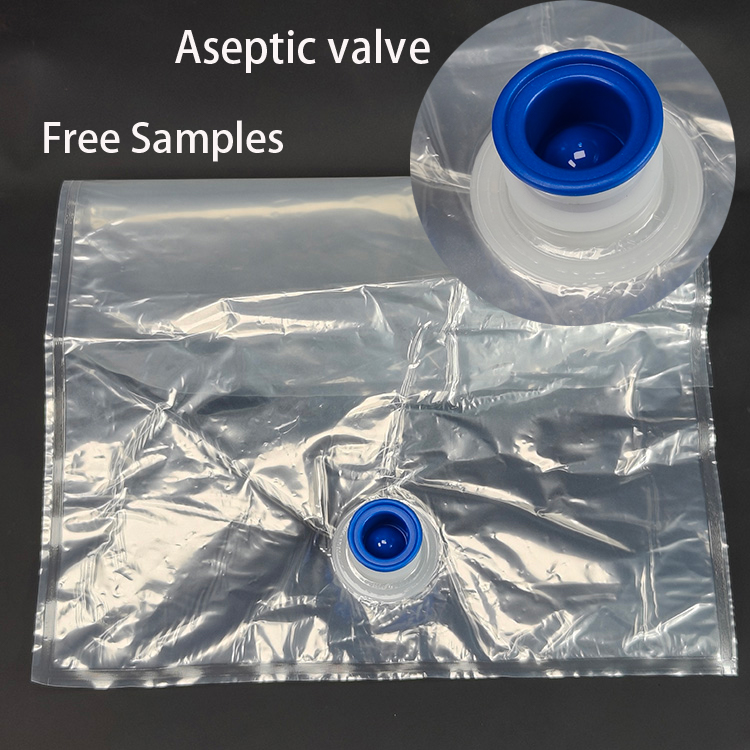
Most evaluations start with barrier film specs like oxygen and moisture transmission rates, but real-world shelf life often hinges on fitments and seal areas. A high-performance film does little if a cheap spout or cap leaks, allowing oxygen ingress that spoils the product within weeks despite excellent film data.
Fill ratio is another overlooked variable. Overfilling leaves insufficient headspace, which can cause pressure spikes during thermal processing and stress the fitment seal or burst the pouch. Underfilling wastes package volume and drives up logistics costs, so the optimal ratio depends on product density, retort conditions, and pouch geometry, not a generic rule.
In practice, if you can only improve one thing, verify the heat-seal compatibility between fitment and film first, then set the fill ratio based on actual pressure tests. Barrier properties only need to meet a baseline; what matters most is the integrity of the entire closure system under real conditions.
Matching the Right Bag-in-Box to Your Liquid’s Behavior
Every liquid brings its own set of demands to a bag-in-box system. Viscosity, acidity, oxygen sensitivity, and even the presence of small particulates can alter how the film, tap, and connector need to perform. A thin water-like fluid may dispense cleanly from a simple gravity-fed tap, while a thicker syrup or concentrate often requires a wider bore, a more robust valve, and film that can withstand repeated flexing without cracking.
Oxygen and light barriers are rarely one-size-fits-all. Citrus juices, wines, and certain dairy-based products degrade quickly when exposed to oxygen, so the inner film layers must be selected for their gas-blocking properties rather than just their cost. Similarly, acidic liquids can corrode standard metalized films or adhesives over time, which calls for alternative barrier coatings or liner materials that keep the package intact from first pour to last.
The fill and discharge process also reveals a lot about a liquid’s behavior. Products that foam during filling need a bag design that reduces splashing and air entrapment, while liquids that settle or separate benefit from a more flexible chamber that can be gently agitated before tapping. Even the connector and tap placement matter: bottom-exit bags work well for low-viscosity fluids, but side-exit options often give better control when the liquid’s flow rate changes with temperature or storage conditions.
Curated Picks for Beverages, Dairy, and High-Acid Products
Finding the right formulation support for beverages, dairy, and high-acid foods often means balancing pH stability, flavor retention, and shelf life. The picks below focus on ingredients and processing aids that handle acidic conditions without breaking down or altering taste. You’ll notice we lean toward options with clean solubility and consistent batch performance, since those tend to reduce reformulation headaches.
For dairy applications, careful attention goes to protein interactions and heat stability. Whether you’re working with fermented drinks, cream-based sauces, or high-acid fruit blends, the chosen additives and stabilizers are meant to keep texture smooth and prevent separation over time. Some of these selections also play well with cold-chain distribution, which matters when storage conditions vary between facilities.
High-acid products, including citrus-based beverages and vinegar-forward dressings, demand materials that resist corrosion and off-flavors. We highlight picks that have been cross-tested in low-pH environments and continue to perform without metallic notes or gelling issues. This narrows the field to a few reliable standbys rather than a long list of untested alternatives.
The Sterility Killers: Handling Mistakes That Shorten Shelf Life
A damp autoclave load is the most common way a package loses its sterile shelf life. When steam condenses inside the wrap because the dry cycle was cut short or the tray was overloaded, the paper side becomes a damp wick. Bacteria move through that moisture within hours. Pulling a load early to save ten minutes can quietly ruin every pack on the rack. Let the chamber finish its full cool-down, and if you feel even slight warmth or dampness on a pack, treat it as unsterile.
Sterile wraps don't fail from age alone; they fail from being handled like ordinary boxes. A fingernail catching the edge of a pouch, a rigid container bumped against a cart corner, a label peeled off too quickly—these tiny tears open routes that no visual check will catch. Carrying packs with two hands, keeping peel pouches flat instead of rolled, and inspecting seals under magnification when a drop occurs prevents most of this. Shelf life isn't just a date printed on the wrap; it's shortened every time the barrier gets flexed or stretched.
Where packs wait matters as much as how they were prepared. Shelves near autoclave vents go through heating and cooling cycles that make the wrap breathe, pulling in room air and whatever contaminants drift in. Store sterile goods in a closed cabinet away from foot traffic, and don't let packs touch walls or the floor. Keep temperature steady and watch for signs of condensation on metal shelving. If a package has been moved more than three times, mark it for early use—each transfer is another chance for a corner to crease or a seal to crack.
Beyond Price: Maintenance, Waste, and Real Cost of Ownership
A low sticker price rarely tells the whole story. The equipment that seems like a bargain often demands frequent fluid changes, specialized parts, and labor hours that quietly erase the initial savings. Owners who track these line items over a couple of years usually discover the "cheap" option has cost more than the premium one.
Then there's the matter of what happens when the item reaches the end of its useful life. Disposal fees, recycling mandates, and components that cannot be resold or repurposed add another layer of expense that never appears on the purchase invoice. Some products are designed to be stripped down and recovered; others are essentially sealed boxes headed for a landfill, and that difference matters financially.
A realistic ownership calculation includes downtime, replacement intervals, and residual value. Spreadsheet comparisons that stop at the checkout line are incomplete. The products that hold their value tend to be the ones with accessible service networks, modular parts, and a clear path for responsible disposal—qualities that reveal themselves only after months or years of regular use.
FAQ
You want a multi-layer film that pairs aluminum foil or metallized polyester with polyethylene. A strong oxygen barrier below 1 cc/m²/day is usually needed for sensitive liquids like wine or juice. Also check flex-crack resistance if the bag will be transported frequently.
It can, but the approach changes. High-acid liquids like fruit juices or concentrates tolerate hot-fill or flash pasteurization, so the bag doesn't need as aggressive a sterilization step. Low-acid products such as dairy or plant-based drinks demand UHT treatment and a fully validated aseptic filler to prevent any spoilage risk.
In food service, 3 to 20 liters is the sweet spot, with 10L and 20L bags common for syrups, sauces, and dispensed wine. Retail packs usually fall between 1.5 and 5 liters. Going beyond 20 liters makes manual handling difficult and often requires dedicated dispensing hardware, which shifts the cost-benefit balance.
The bag collapses as product is drawn out, so no air enters to replace the liquid. That keeps oxygen and microbes out of contact with the remaining product. Many aseptic liquids stay usable for weeks or months after first opening, while a rigid bottle or pail lets air in and accelerates spoilage.
For thicker products like ketchup, mayonnaise, or fruit purees, choose a wider bore fitment and a tap or membrane that can tolerate back pressure. Avoid designs with narrow passages where product can collect and dry out. Seals made from silicone or EPDM usually hold up better across temperature fluctuations than standard rubber.
The bag and fitment are typically sterilized with gamma irradiation, electron beam, or hydrogen peroxide before filling. The filling line must preserve that sterility through sealing. Validation relies on spore challenge tests plus routine monitoring of critical parameters like temperature, pressure, and dwell time at each control point.
Lower weight, less breakage, and better oxidation control after opening are the main drivers. A bag-in-box wine can remain fresh for four to six weeks on a counter, while a bottle usually degrades within a few days once opened. The format also reduces transport weight per liter and is easier to dispense in bars and events.
Conclusion
Aseptic bag-in-box packaging earns its place in safe liquid handling because it combines a sterile fill environment with a collapsible, hermetically sealed barrier that shuts out oxygen, light, and microbial entry long after the tap is first opened. Unlike rigid containers that draw air in as product is dispensed, the bag deflates without headspace replacement, so beverages, dairy, and high-acid products hold their sensory and microbial stability for months. The real performance, though, rests on details that are easy to overlook: multi-layer barrier films with EVOH or aluminum layers, correctly sized fitments that resist torque and cracking, and a fill ratio that leaves enough headspace for flexing without overstretching the film. Matching the laminate structure to the liquid’s behavior matters as much as the sterilization step itself, since acidic juices, fatty dairy, and still water each stress the packaging differently.
In practice, the best choices are rarely the cheapest. A curated shortlist for aseptic bag-in-box should prioritize proven fitments, validated seal integrity, and film combinations matched to oxygen sensitivity and pH, not merely nominal volume. Handling remains the hidden sterility killer: rough transport, improper spiking, and punctured outer cartons can undo even the best aseptic fill. Maintenance of filling lines, regular integrity testing, and realistic waste projections drive the true cost of ownership far more than the initial bag price. Taken together, a disciplined, product-specific recommendation—covering barrier layers, fitment style, fill ratio, and operator handling—delivers a shelf-stable, low-waste system that beats both glass and rigid plastic for many liquid applications.
Contact Us
Contact Person: Cindy Lee
Email: [email protected]
Tel/WhatsApp: 8613622669331
Website: https://www.dgkody.com