
Agricultural Machinery Parts Supplier: How to Find Durable Parts for Your Farm Equipment
2026-10-25
Breakdowns don't wait for a convenient moment, and neither should your search for farm equipment parts. If you're tired of suppliers who treat durability as an afterthought, Zhaoyuqi offers a different standard. Here's how to spot durable agricultural machinery parts and choose a supplier that actually keeps your equipment in the field.
Why the Cheapest Replacement Part Rarely Survives a Full Season
It starts with the metal itself. Budget replacement parts often skip the heat treatment or use softer steel blends that wear quickly under constant friction. The teeth on a cheap mower blade, for instance, dull after a few weeks of hitting thick grass, forcing you to run the engine harder just to get a clean cut. That extra strain then transfers to the spindle bearings and belt, which were never designed for the added load. Before the season ends, you are replacing the part you already replaced—and sometimes the parts around it.
Fit and finish tell the same story. A discount spindle might bolt on, but the tolerances are loose enough to create micro-vibrations at full RPM. Those vibrations loosen hardware, wear out seals, and eventually crack the housing. Even something as simple as a deck belt can fail early if the rubber compound lacks the heat resistance of an OEM or premium aftermarket belt. The initial savings disappear the moment you spend a Saturday afternoon redoing the same repair while the grass keeps growing.
There is also the matter of how the part handles real weather and debris. Cheap plastic pulleys warp in direct sun. Low-cost idler arms bend when they clip a root or a rock. Quality replacement parts are engineered for those repeated small impacts, not just the ideal conditions in a showroom. If you want the repair to last from the first spring mow to the final leaf cleanup, spending a little more on the part up front usually costs less than a mid-season breakdown and the downtime that comes with it.
How to Read Material Codes and Heat Treatment Marks on Wear Parts
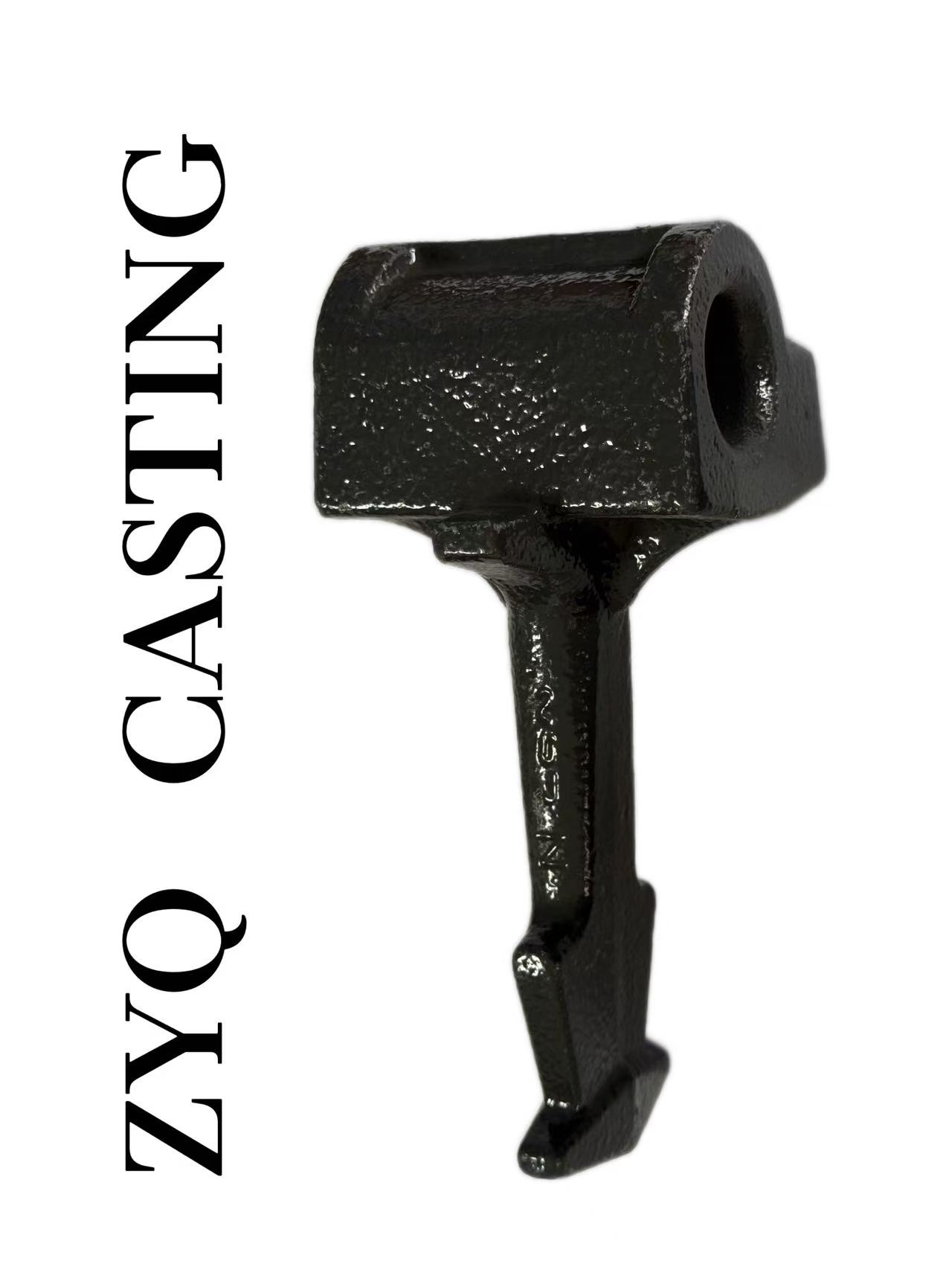
Material codes on wear parts often follow a short numeric or alphanumeric system that indicates alloy composition and hardness range. For example, a casting marked HB500 usually means the surface hardness is around 500 Brinell, while AR400 refers to abrasion-resistant plate with a nominal hardness of 400 BHN. Check the foundry’s datasheet because the same code can shift slightly between manufacturers.
Heat treatment marks are typically stamped near the part number as letters like Q, T, H, or a combination such as Q&T for quenched and tempered. On cast manganese steels, you might see A for solution-annealed, which means the part has been softened for impact toughness and will work-harden in service. If the mark reads N or Normalized, the part was air-cooled from austenitizing to refine grain structure without full quenching.
Cross-checking both marks matters because a material code tells you the alloy class, but the heat treatment mark reveals the final mechanical condition. A part stamped 42CrMo4 + QT is not the same as the same alloy delivered as-rolled or annealed. When marks are missing or worn away, use a portable hardness tester and compare the reading to the expected range for common grades like 400–500 BHN for quenched wear plate or 180–220 BHN for austenitic manganese steel before installation.
Questions to Ask a Supplier Before You Order a Single Bearing
Ordering one bearing is not the same as buying a box of them. You have no room for error, so the first thing to pin down is whether the supplier can measure the actual unit they are shipping instead of pointing you to a catalog spec. Ask for the dimensional report, the radial play, and the cage material in writing. If they hesitate or tell you it is within tolerance, move on.
Delivery details matter more than most buyers expect. A single bearing can sit in a warehouse for months before it reaches you, and poor packaging leads to rust before you even open the box. Ask how it will be wrapped, whether it gets a VCI bag or oil paper, and what the real lead time is — not the best-case estimate.
Finally, clarify the return or replacement path. If the part arrives with a dinged race or noisy rotation, you need to know who covers the shipping and how fast a replacement goes out. A supplier who sells singles should still offer clear support, not a one-time sale and silence.
Local Dealer vs. Online Wholesaler: Which One Actually Stands Behind the Part?
When the box shows up with a part that doesn't fit, the local dealer hands you a replacement across the counter without asking for a return authorization number. The online wholesaler sends a canned email with a link to a portal, and you're suddenly the shipping department. One of these businesses has skin in the game when it comes to your downtime; the other has a warehouse and a call queue.
Warranty claims reveal the difference faster than a spec sheet. The local guy remembers your name, your truck, and the fact that you've bought three alternators this year. If a part fails, he makes a phone call to his own supplier while you're still standing there. The online wholesaler makes you prove you installed it correctly, then waits for a return label to be scanned before anyone even thinks about sending a replacement.
Standing behind the part isn't just about the refund policy listed in twelve-point type. It's about whether anyone answers the phone when you call with a problem on a Friday afternoon. A local dealer has a reputation tied to every transaction. An online wholesaler can lose a hundred customers and still hit next month's sales target. The real question isn't who has the lower price today—it's who will still pretend to know you when something goes wrong.
Signs a 'Durable' Part Was Just Rebranded Imported Cast Iron
Grainy, sandpaper-like cooking surface that's been sprayed with a dark coating is one of the easiest giveaways. When a manufacturer doesn't machine or polish the interior, food sticks, and the "pre-seasoned" label is just a thin layer of oil hiding a rough import casting. True durable cast iron gets smoother with use because the iron itself is dense, not because someone painted over the pits.
Pick it up by the handle and see if the weight sits awkwardly. A rebranded import often has a generic handle hole that doesn't align with the pour spouts, or the side walls are unevenly thick, causing it to tip when empty. On a flat counter, the bottom might rock slightly. These aren't quirks of handmade goods—they're signs of low-cost blank castings that were bought in bulk, finished quickly, and given a new name.
Look for a foundry mark, a city, or even a rough gate scar from the casting process. If the packaging is all about heritage and toughness but the iron itself has no origin trace, it probably came from a container of unmarked pieces. A small domestic foundry usually leaves some evidence, whether a stamped logo or a ground-off sprue. When the story is heavy but the metal is anonymous, the "durable" part is just a rebrand.
Building a Maintenance Kit That Reduces Your Downtime by Half
Start with the failures you actually see. Most downtime isn't random—it's a loose belt, a clogged filter, or a sensor that's been dirty for weeks. Pull your last six months of work orders and mark every part that failed more than once. Those parts, plus the tools to swap them without a second trip, are the core of your kit. Don't just toss in a multimeter and call it done; include the exact wrench sizes, a spare relay or two, and a laminated card with torque specs and reset procedures for your most finicky machines.
Then make the kit visible and mobile. A wall-mounted cabinet in the maintenance office looks organized but adds ten minutes of walking every time a line stops. Use a wheeled case or a set of labeled pouches that can ride on a cart to the point of failure. Add a simple checklist on the lid: every shift ends with a two-minute audit of consumed items, and anything used gets replaced before the next production run. That habit, more than the contents themselves, is what cuts downtime—you stop reacting and start having the right part in your hand before the machine even cools down.
FAQ
Start with how they handle a simple inquiry. A supplier that asks about your machine's model, working conditions, and typical soil type before recommending anything is usually more reliable than one that just pushes a part number. Also ask about their return policy and whether they keep wear data or failure records on the parts they sell.
They can be, but it depends on the part's function. For non-safety items like replacement pins, bushings, or simple brackets, a well-made aftermarket piece often matches OEM quality at a lower cost. For engine internals, hydraulic valves, or anything with tight tolerances, stick with OEM or a supplier that provides documented testing.
Look for the material specification, not just 'heavy-duty' on the label. Good suppliers will list grades like 4140 steel or boron-hardened alloys. If that information isn't available, ask for hardness test results or check for visible signs like rough casting, uneven machining, or corrosion on new stock.
Local suppliers often know regional soil types, common crop residue conditions, and which brands hold up on nearby farms. That context can save you from buying a part that works well in sandy soil but fails in rocky ground. Plus, if a part breaks mid-season, a local shop may be able to get a replacement the same day.
It's huge. A plow blade made from standard mild steel will wear down far faster than one made from boron or high-carbon steel that's been heat-treated. The extra upfront cost usually pays off because you're not swapping blades every few weeks during heavy tillage.
For older machines, sometimes an upgraded aftermarket part is actually better than the original design, especially if the OEM stopped improving that component. But for anything that affects safety, engine timing, or hydraulic pressure, OEM or a certified equivalent is the safer route.
Ask two or three neighboring farmers which suppliers they actually reorder from, not just who they bought from once. Then check those suppliers' shelves for parts that match your most common repairs. A supplier that stocks what you break most often is more valuable than one with a giant catalog and zero local inventory.
Conclusion
Finding a truly durable part for farm equipment takes more than just comparing prices. The cheapest replacement often fails before the season ends because it lacks proper heat treatment or uses brittle imported cast iron. Learn to read the material codes and hardness marks stamped on wear parts—look for standards like AR400 or 65 HRC, and ask the supplier directly for the original mill certificate. Before ordering even a single bearing, question them about load ratings, seal materials, and whether they have tested the part in real field conditions. A local dealer may cost a bit more, but they usually stand behind the part with immediate warranty support, while an anonymous online wholesaler often disappears when a shaft snaps in mid-harvest.
One telltale sign of a rebranded import is a smooth, uniform surface with no forging lines or stamped lot numbers—real durable parts show machining marks and traceable batch codes. Instead of trusting glossy photos, build a maintenance kit with parts you have personally inspected: heavy-duty flails, hardened bushings, sealed bearings with triple-lip seals, and high-grade fasteners. Keeping these on hand can cut your downtime in half because you are not waiting days for a shipment or gambling on a rush-order substitute. When you find a supplier who can explain exactly how the steel was hardened and who offers a warranty that covers wear, not just manufacturing defects, stick with them—your equipment and your harvest schedule will thank you.
Contact Us
Contact Person: Nico Yin
Email: [email protected]
Tel/WhatsApp: 8618561567088
Website: https://www.ductileironparts.com/